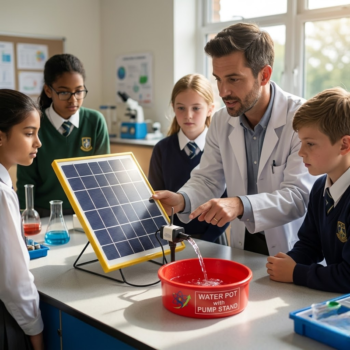
Solar Energy Kits brings together nine working models and kits that turn sunlight into electricity and then into motion, light or pumping. Students see photovoltaic conversion happen as a fan spins, a car moves, an LED glows or water is lifted. The range suits school science, environmental studies and STEM clubs, and runs from single-purpose models to multi-activity kits.
What the range includes
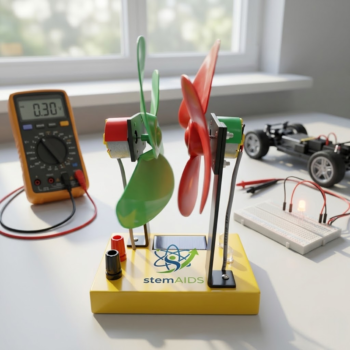
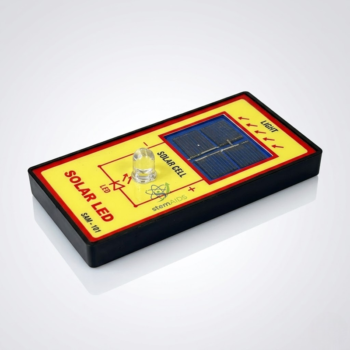
For a first demonstration, single-output models show one result clearly: the Solar Powered Fan Model, Solar Electricity Fan Model, Solar LED Lighting Model and Solar Energy Car Model.
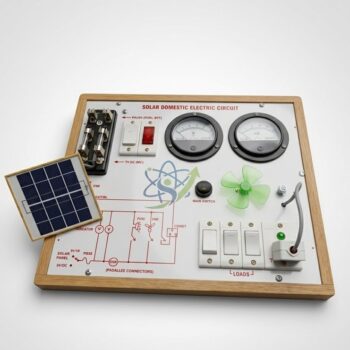
Two models link solar power to everyday systems: the Solar Pump Working Model drives a water pump, and the Solar Home Circuit Apparatus shows solar electricity feeding a basic household-type circuit.
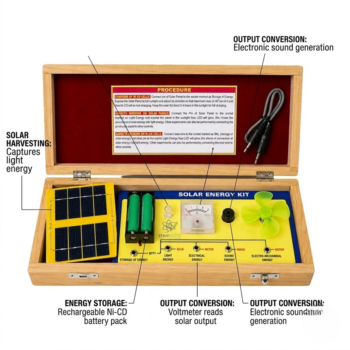
For wider investigations, the Multi-Activity Solar Energy Kit and Solar Power Educational Kit support several comparative activities, while the Solar and Wind Energy Dynamo Model sets solar beside wind power and dynamo generation.
Choosing for your class
- Primary and middle classes: a single-output fan, LED or car model shows energy conversion with very little set-up.
- Lessons on renewable energy at home and on farms: the pump and home circuit models connect the science to water supply and lighting.
- Fair-test investigations: a multi-activity kit lets students change one factor, such as panel angle or shading, and compare the results.
- Comparing energy sources: the solar and wind dynamo model puts two renewable sources side by side.
Getting reliable results
Solar cells give their highest output in direct sunlight with the panel facing the light squarely, and output drops on cloudy days or when part of the panel is shaded. On poor-weather days, a bright lamp held close to the panel can stand in for the sun. Keep panel surfaces clean and dry, and store the models away from damp.
Related Categories
- General Items lists wind, water turbine and windmill models that pair well with solar lessons.
- Stem Kits adds energy models such as biogas generation and a thermocouple generator.
- Electrical and Electronics includes a solar cell performance analysis apparatus for senior classes.
Frequently Asked Questions
How does a solar panel make electricity?
A solar panel is made of photovoltaic cells. When light falls on a cell, its semiconductor layers free electrons that flow as direct current through the connected motor, LED or circuit. More light gives more current, which is why a model runs faster in bright sun.
Will a solar model work indoors or on a cloudy day?
It will run, but more slowly or not at all, because output depends on light intensity. For indoor lessons, hold a bright lamp close to the panel; outdoors, choose a sunny period around midday and point the panel towards the sun.
What can students investigate with a solar energy kit?
Common investigations test how panel angle, distance from a lamp, partial shading or a coloured filter over the panel change motor speed or LED brightness. Each test changes one variable and keeps the rest the same, which builds fair-testing skills.
What energy changes does a solar fan model show?
Light energy is converted to electrical energy in the panel, then to kinetic energy in the motor and fan blades. Some energy is also lost as heat and sound, which is a useful starting point for explaining efficiency.
Is a solar energy kit suitable for a science fair project?
Yes, because the result is easy to see and to measure. A simple project can record fan speed or LED brightness at different panel angles or times of day and present the findings as a graph with a short conclusion.
Last updated: November 2026
Showing all 9 results