









Sale
In Stock
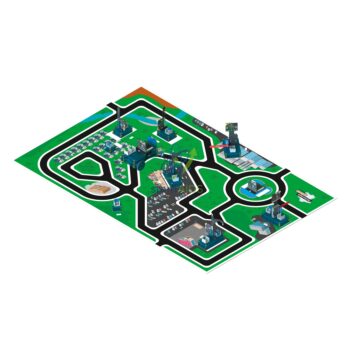
Solar Energy Car Model
Original price was: ₹900.00.₹440.00Current price is: ₹440.00.
The Solar Energy Car Model is an educational renewable-energy model used for demonstrating how photovoltaic electricity can power a small motor-driven vehicle. It is intended for students, science teachers, STEM laboratories and educational institutions that need a practical teaching aid for exploring solar energy, electric motors, energy conversion and vehicle motion.
Product Description
The STEMAids Solar Energy Car Model supports hands-on learning about photovoltaic technology and renewable-energy applications. In a typical solar-powered vehicle, a photovoltaic cell or panel converts incident light into electrical energy, which powers an electric motor. The motor then transfers mechanical motion to the vehicle’s drive system.
The exact solar component, motor, transmission arrangement, wheel configuration and electrical circuit used in this STEMAids model are . Solar-panel output, motor rating, dimensions, speed and construction materials are also not currently published. Explore related solar energy kits for complementary renewable-energy demonstrations.
Key Features
- Solar-energy demonstration: supports practical teaching of photovoltaic electricity generation.
- Visible energy conversion: connects light energy with electrical energy and mechanical vehicle motion.
- Electric-motor learning: helps students understand how electrical input can produce rotational motion.
- Renewable transportation concept: introduces the use of solar power in mobility and engineering applications.
- Hands-on STEM value: suitable for classroom demonstrations, project learning and science exhibitions.
- System-level learning: helps learners identify the energy source, electrical circuit, motor and mechanical output as parts of one system.
- Performance specifications: panel rating, motor rating, gearing and vehicle speed are .
Technical Specifications
|
Specification |
Detail |
|
Product Name |
Solar Energy Car Model |
|
Brand |
STEMAids |
|
Product Category |
Solar energy educational model / renewable energy STEM model |
|
Core Concept |
Photovoltaic energy conversion and motor-driven vehicle motion |
|
Capacity |
Not applicable |
What’s Included in the Kit
- Solar Energy Car Model assembly
- Photovoltaic solar component
- Electric motor
- Wheels, axles and drive components
- Connecting leads, switch or circuit components
- Instruction or activity guide
Applications / Uses
- Demonstrating photovoltaic energy conversion in school science lessons.
- Teaching the conversion of electrical energy into mechanical motion.
- Introducing electric motors and simple vehicle-drive systems.
- Discussing renewable energy and sustainable transportation.
- Investigating how light conditions can affect a solar-powered system.
- Supporting STEM projects, science clubs and exhibitions.
- Complementing STEMAids STEM kits for schools.
How to Use the Solar Energy Car Model
- Place the model on a level, unobstructed surface suitable for vehicle movement.
- Inspect the photovoltaic component, motor, wheels and electrical connections.
- Position the solar component under the light conditions specified for the confirmed product configuration.
- Place the vehicle on the test surface and observe whether the motor drives the wheels.
- Where the supplied instructions permit, change the light intensity or panel orientation and observe the vehicle response.
- Discuss the energy pathway from incident light to electrical output, motor rotation and translational vehicle motion.
- Remove the model from the light source or switch it off after the activity.
Safety note: Use under teacher or laboratory supervision. Keep fingers, hair and loose objects away from rotating wheels and gears. Avoid short circuits, keep electrical components dry and do not exceed the confirmed voltage or current ratings.
Care & Maintenance
- Keep the photovoltaic surface clean and free from dust.
- Inspect electrical leads, wheels, axles and motor connections before use.
- Remove debris that may obstruct wheel or gear movement.
- Store the model where the solar panel, wheels and drive components cannot be bent or crushed.
Why Choose STEMAids
STEMAids is the STEM education brand of Eduscope Smart Learning Solutions Private Limited, a New Delhi-based manufacturer of STEM kits, DIY science kits, TLM kits, LEP kits and educational science models. The company publishes ISO 9001:2015 certification, Udyam manufacturing registration and an active Importer-Exporter Code for international orders. STEMAids maintains dedicated renewable-energy and physics teaching ranges and supports institutional, bulk and tender procurement. Browse its physics laboratory products for complementary teaching apparatus.
Frequently Asked Questions
What is a Solar Energy Car Model used for?
It is used to demonstrate how photovoltaic energy can produce electrical power for a motor-driven vehicle. It supports lessons on renewable energy, motors, electricity and energy transformation.
How does a solar energy car model work?
A photovoltaic element converts incident light into electrical energy. That electrical output powers a motor, which transfers mechanical motion to the wheels through the model’s drive arrangement.
Does the solar car need a battery?
The energy-storage configuration of this STEMAids model has not been verified. Some educational solar vehicles operate directly from photovoltaic output, while others may use energy storage, so this specification should be confirmed before publication.
Does the car work indoors?
Operation depends on the photovoltaic component and the intensity and spectrum of the available light. The minimum operating light conditions for this model are .
Can students investigate the effect of light intensity?
Where permitted by the product instructions, students can compare vehicle response under different illumination conditions. Results depend on factors including photovoltaic output, motor load, friction and the model’s drive system.
Does the Solar Energy Car Model have certification?
No product-specific certification has been verified. Manufacturer-level certifications and registrations should not automatically be presented as certification of this individual educational model.
Bestsellers
Sale
Sale

Sale

Sale

Sale

Sale
Sale

