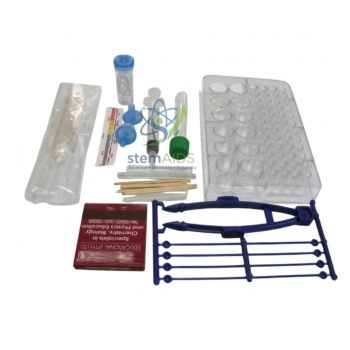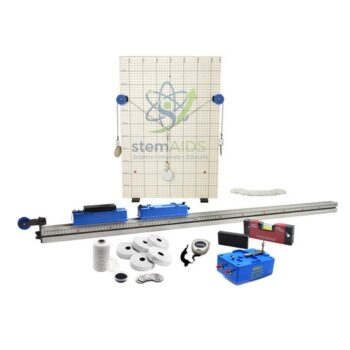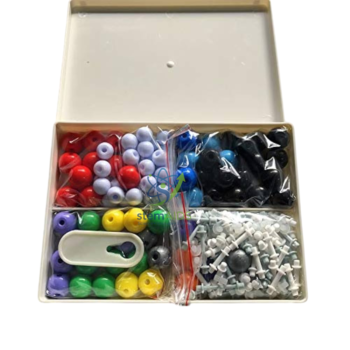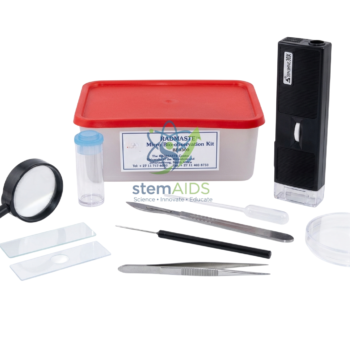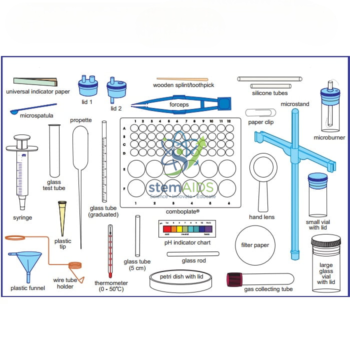
LEP Kits (Lab Experiment Practice Kits) are ten boxed practical kits that let students carry out real experiments at small scale, with the equipment for a topic kept together in one case. The range spans microchemistry, electricity and magnetism, mechanics, waves and optics, biology observation and molecular modelling, plus a primary microscience kit for younger learners.
Kits in the range
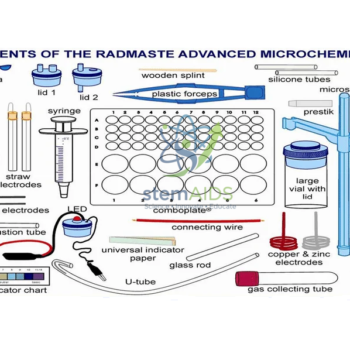
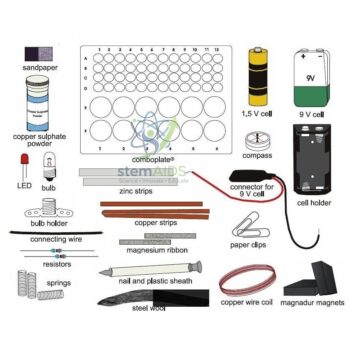
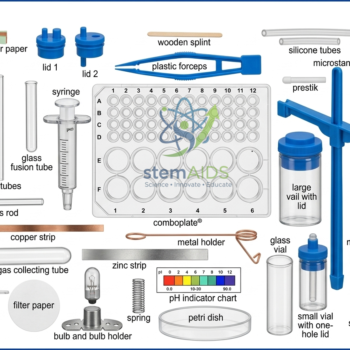
Chemistry: the Basic Microchemistry Kit and Advanced Microchemistry Kit cover reaction rates, equilibrium, titration, acids and bases and gas formation at microscale, with the advanced kit adding redox reactions, electrochemical cells and electrolysis. The Learner’s Molecular Modelling Kit supports bonding, molecular shape and isomerism.
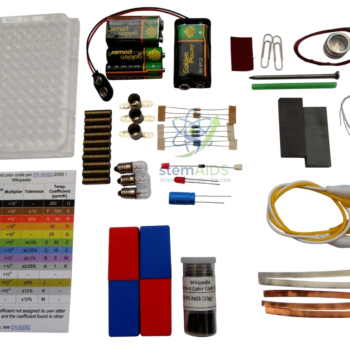
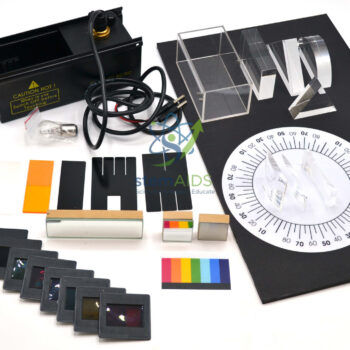
Physics: the Basic Electricity Kit and Basic Microelectricity Kit for circuits and the magnetic effect of current, the Forces, Motion and Dynamics Kit for Newton’s laws, friction and Hooke’s law, and the Waves, Sound, Light and Optics Kit for mirrors, lenses, prisms and sound.
Biology and primary science: the Microscale Biology Kit, the Micro Bio-observation Kit and the Primary Microscience Kit.
How to choose
- Primary classes: the primary microscience kit covers air, water, soil, food, heat, states of matter, simple electricity and magnetism.
- Secondary chemistry: start with the basic microchemistry kit and move to the advanced kit for electrochemistry and electrolysis.
- Schools without a full laboratory: microscale kits need only a small bench area and small volumes of chemicals per group.
- Plan one kit per small group so that every student handles the equipment rather than watching a demonstration.
Related Categories
- Stem Kits adds single-topic demonstration apparatus and coding kits.
- Chemistry Lab Equipments supplies full-scale glassware once students move beyond microscale.
- Educational Science Models offers larger molecular, atomic and crystal model sets.
Frequently Asked Questions
What is microscale chemistry?
Microscale chemistry carries out standard experiments with drops and fractions of a millilitre instead of tens of millilitres, using well plates, small syringes and vials. The chemistry is the same, but less reagent is used, less waste is made and every student can do the practical.
Why are microscale experiments considered safer?
Smaller volumes mean smaller quantities of hazardous chemicals, less heat and gas from each reaction and smaller spills. The usual laboratory rules, including eye protection, still apply.
What is in a basic electricity kit?
A basic electricity kit usually contains a battery holder, bulbs and lamp holders, switches, connecting wires, crocodile clips, resistors, a buzzer and a small motor. Students build open and closed circuits and compare series and parallel arrangements.
Which LEP kit is suitable for primary school?
The Primary Microscience Kit is the one made for primary learners. It covers air, water, soil, food, heat, states of matter, simple electricity, magnetism and plants, while the other kits are aimed at middle and secondary school practicals.
What does a molecular modelling kit help students understand?
Ball-and-stick models show how atoms join through covalent bonds and what shape the molecule takes. Students use them to see bond angles, functional groups and isomers, including mirror-image molecules that are hard to picture from flat drawings.
Last updated: November 2026
Showing all 10 results