
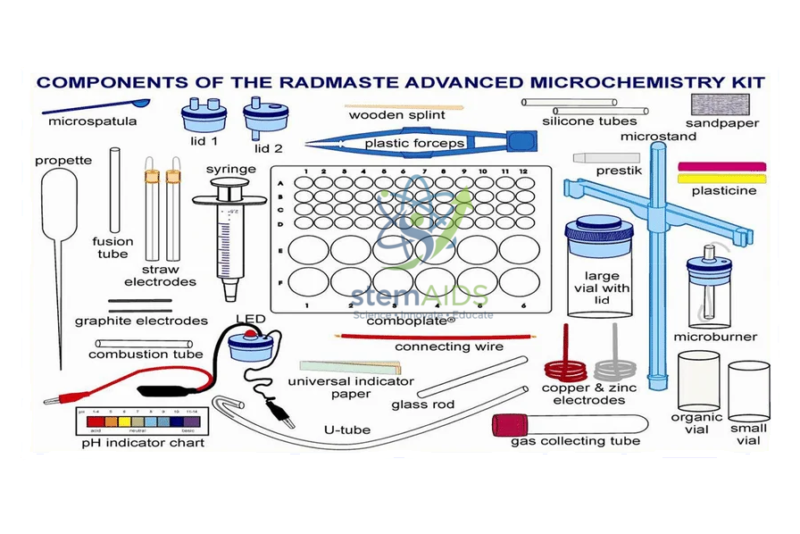
The StemAids Advanced Microchemistry Kit is an educational microscale chemistry experiment kit designed for senior secondary, higher secondary, college foundation, STEM, and teacher-training laboratories. It allows learners to perform advanced chemistry experiments using small quantities of chemicals, compact apparatus, and reusable micro-scale equipment.
Product Description
The StemAids Advanced Microchemistry Kit is developed for practical chemistry learning where students need hands-on experience in chemical reactions, electrochemistry, gas collection, conductivity, titration, equilibrium, acids and bases, catalysts, and reaction-rate studies. It supports safe, economical, and curriculum-friendly experimentation by reducing chemical consumption and laboratory waste.
Compared with conventional full-scale chemistry apparatus, this kit uses microplates, small wells, pipettes, electrodes, gas-collection accessories, and miniature experiment components. This makes practical chemistry easier to manage in schools, colleges, mobile science labs, science clubs, and limited-space laboratories.
The kit is suitable for individual students, pairs, or small groups and can be used for teacher demonstrations, guided inquiry activities, practical examinations, and STEM-based learning programs.
Product Specifications
| Parameter | Details |
|---|---|
| Product Name | Advanced Microchemistry Kit |
| Brand | StemAids |
| Product Type | Advanced microscale chemistry experiment kit |
| Learning Level | Senior secondary, higher secondary, college foundation, STEM labs, and teacher-training programs |
| Experiment Format | Microscale chemistry practicals using small reagent quantities and compact apparatus |
| Core Experiment Topics | Mole ratios, catalysts, reaction rates, equilibrium, titration, acids and bases, redox reactions, gas collection, simple conductivity, electrochemical cells, and electrolysis |
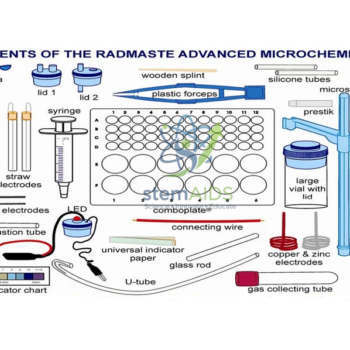
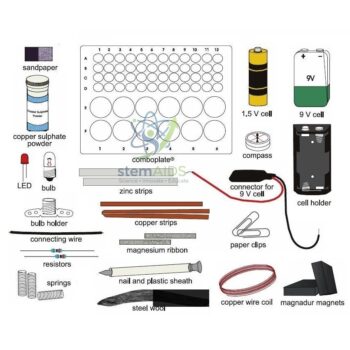
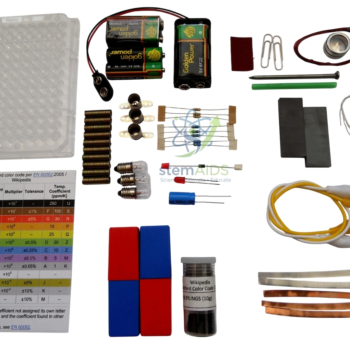
| Typical Kit Components | Comboplate or microplate, pipettes, microspatula, forceps, gas-collecting lid, connecting wire, current indicator or LED, copper electrode, zinc electrode, cotton wool, small tubes, syringe, stirring rod, and experiment accessories depending on kit configuration |
| Manual / Guide | Student experiment manual and teacher guide depending on supply configuration |
| Reusable Components | Yes, most plastic, metal, and accessory components are reusable after proper cleaning |
| Chemical Supply | Chemicals may be included or supplied separately depending on institutional requirement and kit version |
| Storage | Supplied in a storage box or compartment case depending on configuration |
| Safety Requirement | Teacher supervision, PPE, chemical safety rules, and proper waste disposal are required |
| Application | Advanced school chemistry practicals, STEM experiments, microscale electrochemistry, guided inquiry activities, and laboratory demonstrations |
| Suitable For | Schools, colleges, science clubs, chemistry departments, STEM labs, teacher-training institutes, and educational laboratories |
Key Features
- Designed for advanced microscale chemistry experiments
- Supports electrochemistry, gas testing, titration, equilibrium, redox, and conductivity practicals
- Uses small quantities of chemicals to reduce cost and waste
- Compact apparatus supports practical work in limited laboratory space
- Reusable components help reduce recurring laboratory expenses
- Suitable for individual, pair, or small-group learning
- Useful for guided inquiry, teacher demonstrations, and practical examination preparation
- Helps improve observation, measurement, analysis, and conclusion-writing skills
- Suitable for senior chemistry classrooms and STEM education programs
How to Use
- Read the experiment manual and teacher instructions before starting the activity.
- Place the StemAids Advanced Microchemistry Kit on a clean, dry, stable laboratory bench.
- Wear suitable PPE such as safety goggles, gloves, and lab coat.
- Select the required microplate, pipette, electrode, gas lid, wire, or accessory for the experiment.
- Use only the recommended small quantity of reagent or solution.
- Add chemicals carefully into the assigned microplate wells or apparatus.
- For electrochemistry experiments, connect electrodes and wires according to the manual.
- For gas experiments, use the gas-collecting lid or approved collection accessory as instructed.
- Observe colour changes, gas formation, precipitate formation, pH change, current indication, temperature change, or other reaction evidence.
- Record observations, readings, calculations, and conclusions in the practical notebook or worksheet.
- Dispose of chemical residues according to laboratory safety procedure.
- Wash, dry, and return reusable components to the kit box after use.
Applications
- Senior school chemistry practicals
- Advanced microscale chemistry experiments
- Electrochemical cell demonstrations
- Electrolysis of water experiments
- Simple conductivity testing
- Gas collection and gas testing activities
- Acid-base and pH experiments
- Microscale titration practicals
- Equilibrium and reaction-rate studies
- Redox reaction and metal displacement experiments
- STEM, teacher-training, and science club activities
Safety and Handling Guidelines
- Use the kit only under teacher, instructor, or trained adult supervision.
- Always wear safety goggles, gloves, and lab coat during experiments.
- Use only small quantities of chemicals as mentioned in the experiment procedure.
- Do not taste, smell directly, or touch chemicals with bare hands.
- Do not mix unknown chemicals or perform unapproved reactions.
- Handle acids, bases, oxidising agents, and reducing agents with extra care.
- Keep flammable materials away from flame, heat, sparks, and electrical circuits.
- Use gas-collection accessories only as instructed in the manual.
- Dispose of chemical residues according to school or laboratory SOP.
- Wash hands thoroughly after completing experiments.
- Store chemicals separately and securely if supplied with the kit.
- Keep the kit away from small children when not in supervised use.
Quality and E-E-A-T Notes
The StemAids Advanced Microchemistry Kit supports evidence-based science education by encouraging direct experimentation, observation, measurement, comparison, calculation, and conclusion writing. Microscale chemistry reduces reagent volume, chemical exposure, waste disposal burden, and cleanup time while improving student participation in practical chemistry learning. For reliable results, experiments should be performed according to the manual, under trained supervision, and with proper laboratory safety practices.
FAQ
1. What is the StemAids Advanced Microchemistry Kit used for?
It is used for advanced microscale chemistry experiments in schools, colleges, STEM labs, chemistry departments, and teacher-training laboratories.
2. What makes it different from a Basic Microchemistry Kit?
The advanced kit generally includes additional accessories for experiments such as gas collection, simple conductivity testing, electrochemistry, electrochemical cells, and electrolysis.
3. What experiments can be performed with this kit?
Experiments may include mole ratios, catalysts, reaction rates, equilibrium, titration, acids and bases, gas testing, conductivity, electrochemical cells, and electrolysis.
4. Are chemicals included with the kit?
Chemical supply depends on the selected kit configuration. Some versions may include chemicals, while institutional versions may require chemicals to be supplied separately.
5. Is the kit reusable?
Yes, most apparatus items such as microplates, pipettes, electrodes, wires, forceps, and gas-collection accessories are reusable after proper cleaning.
6. Is this kit suitable for senior secondary students?
Yes, it is especially suitable for senior secondary and higher secondary chemistry practicals because it supports more advanced topics than basic microscale kits.
7. Can it be used for electrochemistry?
Yes, the kit can support electrochemistry activities when supplied with suitable electrodes, connecting wires, indicators, and required reagents.
8. Can students perform experiments individually?
Yes, the kit can be used for individual learners, pairs, or small groups depending on the number of kits and classroom planning.
9. Why is microchemistry useful in schools?
Microchemistry helps reduce chemical use, waste, cleanup time, storage space, and practical cost while increasing hands-on participation.
10. Does the kit require a full chemistry laboratory?
Many activities require less space than conventional practicals, but proper supervision, PPE, chemical handling rules, and waste disposal procedures are still required.
11. How should the kit be cleaned?
Rinse reusable apparatus with water or suitable cleaning solution according to the chemical used. Dry all components before returning them to the kit box.
12. How should the kit be stored?
Store clean and dry components in the kit box. Store chemicals separately in labelled containers according to laboratory safety guidelines.
Why Choose StemAids?
StemAids educational science kits are selected for practical learning, safe classroom use, and curriculum-supportive laboratory work. The StemAids Advanced Microchemistry Kit supports advanced chemistry learning, reduced chemical consumption, student participation, economical lab operation, and hands-on STEM education for schools, colleges, science clubs, teacher-training institutes, and institutional laboratories.
SEO Keywords
StemAids Advanced Microchemistry Kit, Advanced Microchemistry Kit, Microscale Chemistry Kit, Advanced Chemistry Practical Kit, School Chemistry Kit, Chemistry Experiment Kit, Micro Chemistry Kit for Students, Electrochemistry Kit, Gas Collection Chemistry Kit, STEM Chemistry Kit, Educational Chemistry Kit, Senior Secondary Chemistry Kit


Reviews
There are no reviews yet.