






















In Stock
Universal Reagent Reservoir
Graduated V-Shaped Basin: Features a precision-molded longitudinal trough with molded-in graduation marks that facilitate maximum liquid recovery and reduce dead volume, optimizing the use of expensive enzymes and molecular probes.
Heavy-Walled Polypropylene Construction: Manufactured from medical-grade, chemically inert polymers that are fully autoclavable at 121°C, ensuring a sterile, DNase/RNase-free environment for sensitive genomic and proteomic applications.
₹315.00
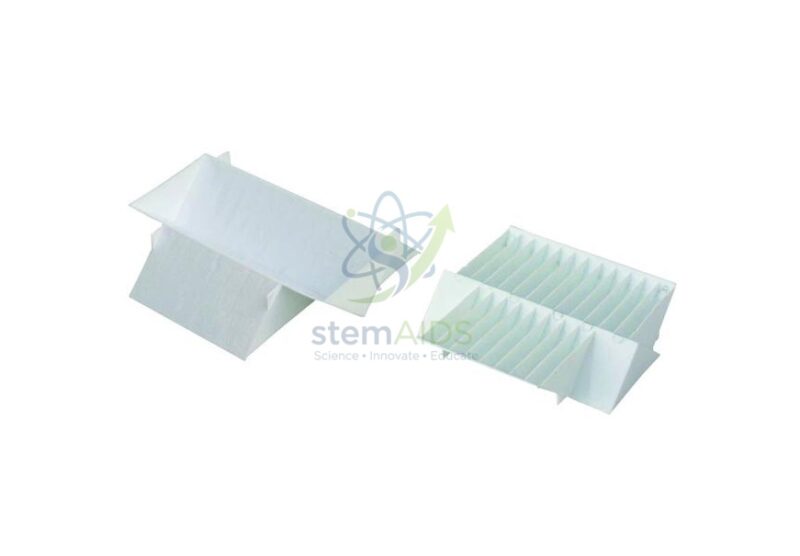
Quick Answer: A universal reagent reservoir is a long, low-walled trough from which a multichannel pipette draws liquid into all of its tips in a single stroke. The listing photo appears to show two formats: an open trough and one divided into narrow channels.
Open and Divided Troughs
In the listing photo, one trough has an open, sloping floor and the other has its floor split by a row of ribs into parallel lanes. An open trough suits a single reagent for a whole plate. A divided trough holds several liquids at once, one per lane, so each tip of a multichannel pipette can pick up a different standard, sample or dilution in the same stroke.
The listing does not define universal, and sellers generally use the word for troughs meant to suit multichannel pipettes of different makes. Compared with the plain reagent reservoir listed separately, this one is presented as the general-purpose option. No volume, material or sterility status is given. Polystyrene troughs are usually single-use; polypropylene ones are generally autoclavable and can be washed for reuse with the same reagent.
A trough is only one part of a multichannel station: tips should be racked in a pipette tips box so a full row loads in one press, and the plate should sit next to the trough so the pipette travels the shortest distance.
Specifications
| Item | Reagent trough for multichannel pipetting |
| Formats in photo | Open trough with sloping floor, and a trough divided by ribs into lanes |
| Use | Holding working volumes of buffer, reagent or sample |
| Pairs with | Multichannel pipettes and microplates |
| Volume, material and sterility | Confirm at enquiry |
Applications
- Adding the same buffer, substrate or stop solution to a row of ELISA plate wells
- Running several reagents side by side from the lanes of a divided trough
- Setting up serial dilutions across a microplate in biotechnology practicals
- Dispensing stains or wash solutions in microbiology and cell-culture teaching labs
Care & Handling
- Pour in only what the current step needs; leftover reagent is discarded, not returned to its stock bottle.
- Label each trough, or each lane of a divided trough, before filling so reagents are not confused.
- Use a fresh trough for each run with biological or hazardous material, and dispose of it under local waste rules.
- If reusing a polypropylene trough, wash it, rinse with distilled water and dry it inverted before storage.
Why Choose LabEquip
Biotechnology departments setting up microplate practicals tend to buy troughs for every multichannel station, often in both open and divided forms. LabEquip carries this reservoir among its chemistry lab equipment; ask about formats and quantities through the contact page.
Frequently Asked Questions
What does universal mean for a reagent reservoir?
The listing does not define it. Sellers generally use the word for troughs intended to suit multichannel pipettes of different makes, so if you use a particular pipette, check that its tips reach the floor of the trough.
When is a divided reservoir useful?
When each tip of a multichannel pipette must pick up a different liquid, such as a set of standards or samples. Each lane holds one liquid, so a whole row of different solutions can be moved to a plate in one stroke.
How much reagent should be poured into the trough?
Enough to cover the tip ends for the whole step, plus a little for the liquid that stays on the trough floor. Pouring far more than needed wastes reagent, since leftovers should not go back into stock.
Can the reservoir be autoclaved?
That depends on the plastic. Polypropylene troughs are generally autoclavable, while polystyrene troughs are not and are usually treated as disposable. The material of this listing should be confirmed before autoclaving.
How do I avoid air gaps when filling tips from a trough?
Hold the pipette vertically, lower all the tips to the same depth below the surface and release the plunger slowly. Tilting the pipette or drawing up too fast leaves some tips short of liquid.
Can one trough be used for different reagents in turn?
Only with thorough rinsing between them, and it is simpler and safer to use a separate trough for each reagent. Traces of a previous reagent can spoil an assay.
Last Updated: September 2026
You must be logged in to post a review.
Bestsellers






Reviews
There are no reviews yet.