


















In Stock
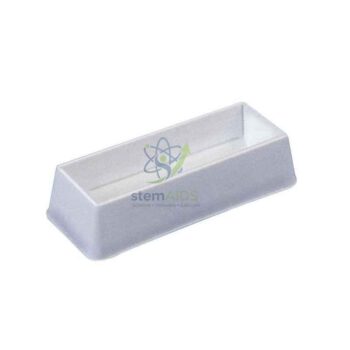
Quartz Beaker Low Form with Spout
Extreme Thermal Threshold: Maintains structural integrity at continuous operating temperatures of 1050°C with a near-zero coefficient of thermal expansion, 5.5 x 10⁻⁷ C enabling direct transfer from red heat to cold water without fracture.
High Spectral Transmission: Exceptional optical clarity across ultraviolet and infrared wavelengths, facilitating precise photochemical reactions and analytical spectroscopy unavailable in standard borosilicate glass.
₹650.00
Quick Answer: A low form quartz beaker is a squat, spouted beaker made of fused quartz (fused silica) instead of glass. It is chosen for high-temperature heating, sudden temperature changes and trace-element work, where borosilicate glass would soften, crack or add contamination.
Where Quartz Does What Borosilicate Cannot
Fused quartz is almost pure silicon dioxide with a very low coefficient of thermal expansion. A quartz beaker therefore tolerates temperature shocks that would crack a borosilicate low form beaker, and it keeps its shape far above the temperature at which borosilicate begins to soften. That suits evaporating solutions to dryness at high temperature and digesting samples in hot acid.
Purity is the second reason. Borosilicate contains boron, sodium and aluminium oxides that can leach into hot acid and raise blank values in trace-element analysis, whereas quartz adds far less. The low form shape with spout gives a wide base for even heating on a hot plate and a controlled pour when a digest is transferred to a volumetric flask.
Quartz has clear limits. Hydrofluoric acid, hot phosphoric acid and hot strong alkalis dissolve silica, and alkali residues on the surface, including fingerprints, can cause devitrification when the beaker is strongly heated. Quartz beakers are therefore usually kept for the methods that need them.
Specifications
| Material | Fused quartz (fused silica) |
| Form | Low form beaker with formed pouring spout |
| Thermal behaviour | Very low thermal expansion and high thermal-shock resistance (general properties of fused quartz) |
| Chemicals to avoid | Hydrofluoric acid, hot phosphoric acid, hot or molten alkalis |
| Capacity | Confirm at enquiry |
Care & Handling
- Handle the quartz beaker with clean gloves and wipe it with ethanol before strong heating, so skin alkali does not trigger devitrification.
- Store it in a padded rack: quartz resists heat shock but is still brittle when knocked.
- Heat evenly and avoid holding a flame on one spot.
- Dedicate beakers to specific methods and label them, which keeps trace-level blanks low.
Applications
- Acid digestion of soil, plant or food samples on a hot plate before trace-metal analysis by AAS or ICP
- Evaporating solutions to dryness above the working range of borosilicate glass
- Work that moves a vessel from a hot plate into a cold bath, where thermal shock would crack glass
- Preparing samples for boron or sodium determination, where borosilicate would contaminate the result
Why Choose LabEquip
A low form quartz beaker is bought mainly by analytical, environmental and materials-testing labs, often in small numbers for particular methods. LabEquip lists this item in its Lab Glassware section; mention the capacity and the method you run when you contact LabEquip, so a suitable size can be matched.
Frequently Asked Questions
What is the difference between a quartz beaker and a borosilicate beaker?
They look alike, but fused quartz is almost pure silica, withstands much higher temperatures and sudden temperature changes, and releases fewer trace elements. Borosilicate is adequate for most routine heating and mixing, so quartz is kept for the jobs glass cannot do.
Can a quartz beaker be heated over a direct flame?
Fused quartz tolerates direct flame far better than glass because it barely expands when heated. Spread the heat rather than concentrating it on one spot, and check the item’s temperature rating before taking it to very high temperatures.
Which chemicals should not be used in quartz?
Avoid hydrofluoric acid in any form, hot concentrated phosphoric acid, and hot or molten alkalis such as sodium hydroxide or sodium carbonate fusions, all of which dissolve silica. Hot nitric, hydrochloric and sulfuric acids are handled well.
Why has my quartz beaker turned cloudy after heating?
That is usually devitrification, where the surface begins to crystallise. It is triggered by alkali contamination such as fingerprints, salt residue or detergent left on the surface before strong heating. A devitrified beaker is weaker and should be retired.
Is quartz necessary for trace-metal analysis?
Not always, but it helps when blank values matter. Borosilicate can release boron, sodium and other elements into hot acid digests, while quartz releases far less. For school or water-quality work at higher concentrations, borosilicate glass is usually adequate.
How should a quartz beaker be cleaned for trace work?
Soak it in dilute nitric acid, rinse several times with deionised water and dry it in a clean area. Avoid sodium-containing detergents before high-temperature use, and never use abrasive brushes, which scratch the surface and trap contaminants.
Last Updated: September 2026
You must be logged in to post a review.
Bestsellers


Sale


Sale



Reviews
There are no reviews yet.