


In Stock
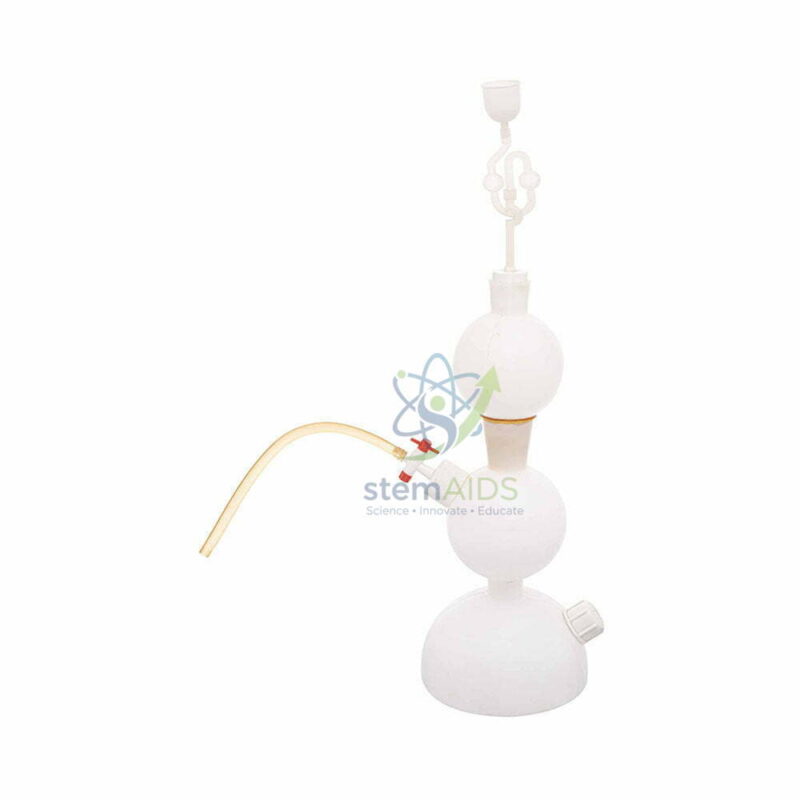
Kipps Apparatus, Plastic
High-Density Polyethylene Architecture: Constructed from chemically inert, medical-grade polyethylene that offers superior resistance to concentrated acids and remains shatterproof under internal gaseous pressure.
Precision-Molded Three-Chamber System: Features a modular design with hermetically sealed joints and a heavy-duty leak-proof stopcock, allowing for precise, intermittent gas flow regulation and simplified internal decontamination.
₹800.00
Quick answer: A Kipp’s Apparatus is a self-regulating apparatus used to generate a controlled supply of gas — such as hydrogen sulfide or carbon dioxide — by reacting a solid with a liquid reagent, commonly used in college and research chemistry laboratories, always under proper ventilation. Kipps Apparatus, Plastic is priced at approximately ₹800 (indicative market benchmark, incl. GST, August 2026).
The Kipp’s Apparatus generates gas on demand through a simple, self-regulating design: a solid reagent sits on a perforated shelf inside the middle chamber, and when a valve is opened, liquid reagent rises to contact the solid and starts the gas-producing reaction; closing the valve causes the liquid to recede below the solid, automatically stopping gas production until the valve is reopened. This makes it a convenient way to generate a steady, controllable supply of gases such as hydrogen sulfide (commonly used in qualitative inorganic analysis) or carbon dioxide, without needing to run and monitor a separate reaction setup each time gas is needed. Because some gases generated this way — particularly hydrogen sulfide — are toxic, this apparatus must always be used inside a fume hood or well-ventilated area with appropriate safety protocols, and only by properly supervised, trained users. The plastic (shatterproof polymer) construction offers a more break-resistant alternative to the traditional glass version for regular laboratory use.
Technical Specifications
| Parameter | Detail |
|---|---|
| Product Type | Kipp’s Apparatus, plastic construction |
| Typical Use | Self-regulating generation of gases such as hydrogen sulfide or carbon dioxide |
| Safety Note | Toxic gases such as hydrogen sulfide require fume hood use, proper ventilation and trained supervision — follow institutional chemical safety protocols |
| Advantage Over Glass | Shatterproof construction, more durable for regular lab use |
| Typical Use Setting | College and research-level qualitative inorganic chemistry laboratories |
| Price | Approx. ₹800 (indicative market benchmark, incl. GST, August 2026) |
| Exact dimensions/technical detail | Not independently verified for this listing — confirm with STEMAids before specifying in a tender |
Applications
- Generating controlled hydrogen sulfide gas for qualitative inorganic analysis (under fume hood)
- Generating carbon dioxide gas for chemistry demonstrations and experiments
- Teaching self-regulating gas-generation apparatus design in advanced chemistry coursework
- General on-demand gas supply for reactions requiring a specific reagent gas
Care & Maintenance
- Always operate in a fume hood or well-ventilated area appropriate to the gas being generated
- Clean and rinse the chambers thoroughly after use to remove residual reagent
- Store empty and dry, with the valve in the closed position, when not in active use
Why Choose STEMAids
STEMAids supplies a wide range of Chemistry Lab Equipments including Economy Calorimeter for related laboratory and classroom needs. Eduscope Smart Learning Solutions Private Limited is a Udyam-registered micro manufacturing enterprise (UDYAM-DL-06-0069460) and ISO 9001:2015 certified, supplying schools, colleges and vocational institutes across India and for export.
Frequently Asked Questions
Is it safe to use this apparatus to generate hydrogen sulfide?
Hydrogen sulfide is toxic and must only be generated and used inside a fume hood or well-ventilated area, following institutional chemical safety protocols and under trained supervision — never in an unventilated classroom setting.
How does a Kipp’s Apparatus regulate gas production automatically?
Opening the valve allows liquid reagent to rise and contact the solid reagent, starting the reaction; closing the valve causes the liquid to recede below the solid, automatically stopping gas production until reopened.
What gases can this apparatus generate?
It is commonly used to generate gases such as hydrogen sulfide (for qualitative inorganic analysis) or carbon dioxide, depending on the reagents used — always follow appropriate safety protocols for the specific gas being generated.
Why choose plastic over glass for this apparatus?
Plastic (shatterproof polymer) construction is more break-resistant than traditional glass, offering added durability for regular laboratory use, though glass may still be preferred for certain chemical-compatibility needs.
Are exact chamber capacities available for tender specification?
Exact chamber capacities have not been independently verified for this listing. Institutions preparing tender documents should confirm precise specifications directly with STEMAids before finalising procurement paperwork.
Is STEMAids a registered manufacturer of this product?
Yes. Eduscope Smart Learning Solutions Private Limited is a Udyam-registered micro manufacturing enterprise (UDYAM-DL-06-0069460) and is ISO 9001:2015 certified. See the About page for full registration and certification details — manufacturer-stated, verify before citing in procurement documents.
Last updated: 29 August 2026.
You must be logged in to post a review.
Bestsellers





Reviews
There are no reviews yet.