
























In Stock
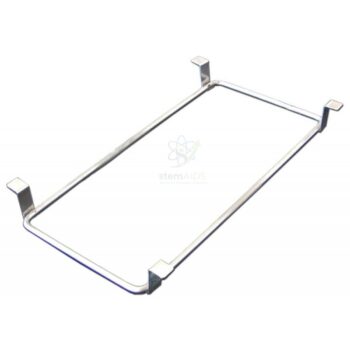
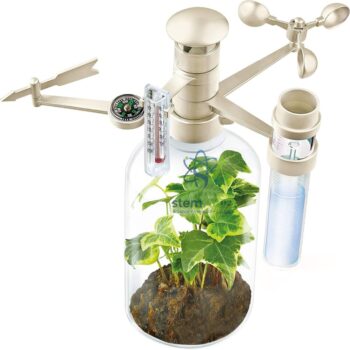
Assembly with Clearance & Fermentation Chamber
Montage à dégagement & Enceinte de fermentation enables students to quantify CO2 evolution rates relative to substrate concentration, reinforcing evidentiary data analysis skills.
Modular Chemically Inert Components allow for iterative testing with diverse fungal and bacterial taxa without cross-contamination or material degradation.
$2.99
Quick Answer: The Assembly with Clearance & Fermentation Chamber is a teaching set-up in which yeast ferments a sugar solution inside a closed fermentation chamber, and the carbon dioxide released escapes through a delivery tube, where it can be counted as bubbles, collected over water or passed through limewater.
What the Fermentation Assembly Shows
Yeast (Saccharomyces cerevisiae) switches to fermentation when oxygen is scarce, breaking glucose down into ethanol and carbon dioxide. In this assembly the yeast suspension and sugar solution sit in a chamber that is closed except for the outlet tube, so all the gas has to leave that way. Seeing gas emerge shows fermentation is happening; measuring how fast it emerges shows how quickly.
The word ‘clearance’ in the product title appears to be a translation of the French dégagement, which in a laboratory context means the release or delivery of gas. Read that way, the name describes a fermentation chamber fitted with a gas-release tube, the standard arrangement for school fermentation work. The listing does not itemise the parts, so the chamber material, stopper and tubing supplied should be checked before a class set is ordered.
Leading the outlet into limewater gives the classic confirmation that the gas is carbon dioxide, as the limewater turns milky. Leading it under an inverted measuring cylinder full of water collects the gas so a volume can be read, which gives better data than counting bubbles of uneven size.
Specifications
| Type | Fermentation chamber with gas-release (delivery) outlet |
| Organism usually used | Baker’s yeast, Saccharomyces cerevisiae |
| Gas produced | Carbon dioxide, identified with limewater |
| Measurement options | Bubble counts, or gas volume collected over water |
| Title note | ‘Clearance’ read as gas release (French dégagement) |
| Parts supplied | Confirm at enquiry |
Fermentation Investigations
- Comparing fermentation rates at several water-bath temperatures
- Testing which sugars yeast can ferment, for example glucose, sucrose and lactose
- Showing that fermentation continues without oxygen by covering the suspension with a thin layer of oil
- Linking fermentation to bread-making and brewing in food technology lessons
Care & Handling
- Make up the yeast suspension in warm, not hot, water; very hot water kills the yeast before the experiment starts.
- Check that the stopper and tube joints are gas-tight before starting, or gas escapes around the seal and the rate appears low.
- At the end, lift the outlet tube out of the limewater before the chamber cools, so liquid is not sucked back into it.
- Wash the chamber and tube in warm soapy water after use and rinse well; dried yeast residue is hard to remove and encourages mould.
Why Choose LabEquip
Biology teachers use fermentation assemblies for anaerobic respiration practicals at secondary level, and microbiology and food science courses use them to introduce fermentation products. LabEquip also offers a microbial fermentation testing tube for small-scale sugar tests, and this assembly is listed in General Lab Products.
Frequently Asked Questions
What does ‘clearance’ mean in the name of this assembly?
It appears to be a translation of the French word dégagement, which here means the release of gas. The name therefore describes a fermenting vessel with a gas-release tube, not anything to do with clearance or spacing.
How can I prove the gas is carbon dioxide?
Bubble it through limewater. Carbon dioxide reacts with the dissolved calcium hydroxide to form insoluble calcium carbonate, so the clear limewater turns milky. A control with no yeast should produce no gas and no change.
Which variables can students investigate with this assembly?
Temperature, sugar type, sugar concentration and the amount of yeast are the usual independent variables. The rate is measured as bubbles per minute or as the volume of gas collected in a set time, with other factors kept constant.
Why include a control in a fermentation experiment?
A control set up with boiled yeast, or with water in place of sugar, shows that the gas comes from living yeast using sugar. Without it, gas released from warming liquid could be mistaken for fermentation.
What temperature should the yeast be kept at?
Yeast ferments slowly when cool and is killed by heat. The rate usually rises from room temperature into the low-to-mid 30s °C and falls at higher temperatures as the yeast enzymes are damaged, so a water-bath series shows a clear peak.
Is the ethanol produced a safety concern?
In school-scale fermentations the amount of ethanol is small, but the liquid is a laboratory culture and not for drinking. Pour it away with plenty of water and keep laboratory containers separate from food containers.
Last Updated: September 2026
You must be logged in to post a review.
Bestsellers




Reviews
There are no reviews yet.