
















In Stock
Plastic-Backed Thermometer
₹275.00
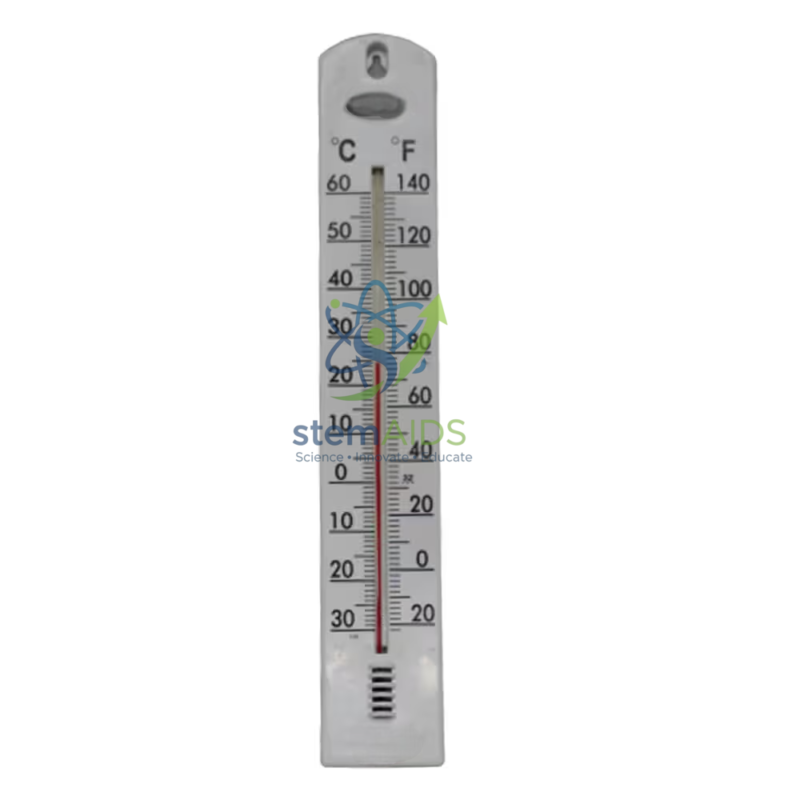
Quick Answer: A plastic-backed thermometer is a liquid-in-glass thermometer mounted on a flat plastic backing that carries the printed scale and protects the tube. The listing photograph shows a red liquid column with Celsius and Fahrenheit scales and a hanging hole at the top, suited to air-temperature readings in classrooms, greenhouses and weather studies.
Reading Air Temperature Reliably
A thermometer shows the temperature of whatever its bulb is in contact with, and for air that is easily disturbed. In direct sunlight the bulb absorbs radiation and reads well above the true air temperature; near a heater, a wall or a warm hand it picks up their heat. For a fair reading, hang the thermometer in shade with air moving freely around it, wait a few minutes for the column to settle, and read with the eye level with the top of the liquid to avoid parallax error.
The plastic backing is what makes this style practical for everyday use. The printed scale sits right beside the column, the backing takes knocks that would crack a bare tube, and the hole at the top lets it hang on a wall, a greenhouse post or the inside of a weather screen. The red liquid visible in the listing photograph normally indicates a coloured spirit filling rather than mercury, but the filling and the temperature range are not stated in the title and should be confirmed.
In biology the same thermometer supports simple investigations: comparing temperature in sun and shade, recording daily maxima in a greenhouse over a week, logging temperature alongside seed germination, or noting air temperature during pond sampling. It is not designed for heating experiments, where a laboratory glass thermometer that can be immersed and clamped is the right tool.
Applications
- Daily air-temperature records at a school weather station or in a classroom
- Comparing sun, shade and microclimates around the school grounds
- Monitoring greenhouse or germination-room temperatures
- Recording air temperature during field sampling
Care & Handling
- Hang the thermometer where it cannot swing against walls or be knocked by doors.
- Keep it away from open flames and hot plates; it is not designed for heating experiments.
- If the column separates into sections, stand the thermometer upright and gently cool the bulb so the liquid rejoins before use.
Specifications
| Item | Liquid-in-glass thermometer on a plastic backing |
| Scales | Celsius and Fahrenheit, per the listing photograph |
| Column | Red liquid shown in the listing photograph |
| Mounting | Hanging hole at the top of the backing |
| Range, divisions and filling | Confirm at enquiry |
Why Choose LabEquip
Schools usually buy plastic-backed thermometers in sets for weather records and simple biology investigations. LabEquip lists them in Biology Lab Products; for humidity as well as temperature, the sling psychrometer uses the same style of thermometer. Tell us the number you need through the LabEquip contact page.
Frequently Asked Questions
Why does the thermometer read higher in the sun?
The bulb absorbs sunlight directly and warms above the surrounding air. For true air temperature, hang it in shade with air moving around it, or inside a ventilated weather screen.
How long should I wait before reading it?
Allow a few minutes after moving it to a new place. Read once the column stops moving, with your eye level with the top of the liquid.
What should I do if the liquid column has split?
Stand the thermometer upright and cool the bulb gently, for example in cold water, so the liquid contracts and the sections rejoin. Tapping the backing lightly can help. Check the reading against another thermometer afterwards.
Can this thermometer be used in water?
The bulb can be dipped briefly into cool water for a quick reading if the backing tolerates wetting. It is not meant for hot liquids or heating experiments; use a laboratory glass thermometer for those.
Where should it be hung for weather records?
In shade, about head height above the ground, away from walls, heaters and air-conditioning outlets. A slatted weather screen gives the most consistent readings.
How do I convert Fahrenheit to Celsius?
Subtract 32 from the Fahrenheit reading and multiply by 5, then divide by 9. The dual scale on the backing lets students check their answer directly.
Last Updated: September 2026
You must be logged in to post a review.
Bestsellers




Reviews
There are no reviews yet.