














In Stock
Bat Houses
Gîtes à chauves-souris Features a textured interior surface and landing pad with 1.5 mm horizontal grooves, providing essential grip for roosting bats while facilitating secure vertical movement within the chamber.
Calibrated Thermal Architecture utilizes multi-chambered internal spacing and heat-absorbent exterior finishes to maintain a stable microclimate of 27 °C to 38 °C, essential for the development of neonatal pups in professional nursery colonies.
₹1,085.00
Quick Answer: Bat Houses, also called bat boxes, are small shelters fixed to a wall, tree or post that give bats a safe place to roost. Schools and ecology groups put up a bat box to support local bats and to study them without disturbing them.
How a Bat House Works
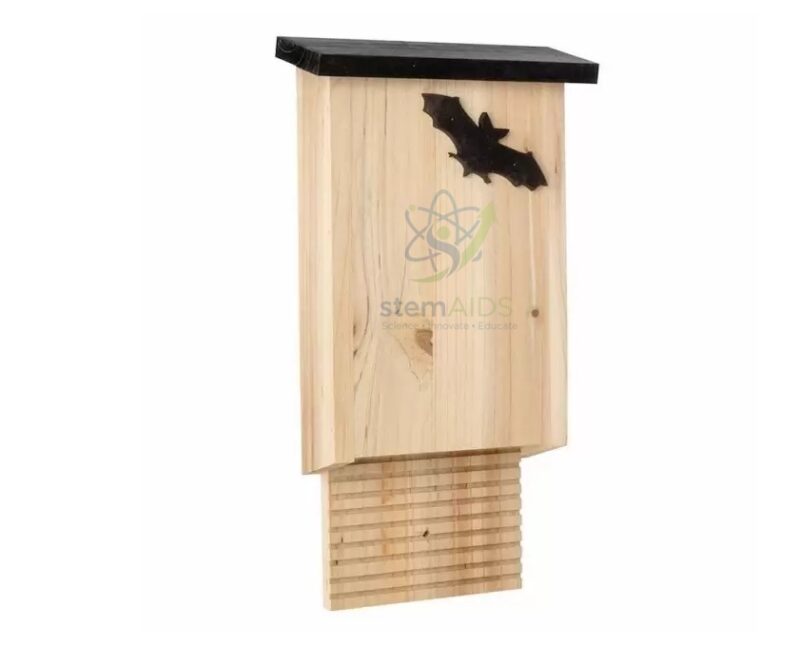
Bats roost by day in narrow, sheltered crevices: under loose bark, in cracks in trees and in gaps in buildings. Many of these natural roosts have been lost, and a box replaces some of them. The version in the product photo is a tall wooden box with a sloping roof, an entrance slot underneath and a grooved landing area below it, the usual design for crevice-roosting bats. Bats land on the rough surface, crawl up through the slot and cling to the walls inside.
Siting matters more than design. Bat conservation groups commonly advise fixing boxes at least 3 to 5 metres above the ground, sheltered from strong wind, with a clear flight path to the entrance and no bright lights shining on it. Boxes that catch the sun for part of the day warm up, which suits breeding females in cooler climates, and putting up two or three facing different directions lets bats choose a temperature. Occupation can take a year or more, so patience is part of the lesson.
In many countries bats and their roosts are legally protected, so once a box is in use it should not be opened or disturbed. Instead, look for droppings beneath it, which are dry and crumble into fragments of insect remains, and watch the entrance at dusk as the bats emerge. The listing does not state the dimensions, the wood used or the fixings supplied.
Projects with a Bat House
- School-grounds biodiversity projects that add roosting habitat
- Dusk emergence counts as a long-term monitoring activity for eco-clubs
- Lessons on nocturnal animals, echolocation and insect-eating mammals
- Surveys of bat activity with a bat detector, where one is available
Siting and Upkeep
- Do not paint or treat the inside of the box; bats need a rough surface to grip and can be harmed by chemical wood treatments.
- Fix it firmly so it does not swing, and check the fixings once a year outside the breeding season.
- Never open or disturb an occupied box; where bats are legally protected, inspections need a licence.
- Wear gloves if collecting droppings from below the box, and wash hands afterwards.
Specifications
| Type | Roosting box for bats |
| Design shown in the product photo | Wooden box with sloping roof, entrance slot underneath and grooved landing area |
| Mounting | Wall, tree or post, well above ground |
| Uses | Habitat provision and non-invasive bat monitoring |
| Dimensions, wood type and fixings | Confirm at enquiry |
Why Choose LabEquip
Schools, nature reserves and eco-clubs put up bat boxes as a long-term habitat project that pupils can monitor year after year. They are part of LabEquip’s biology lab products; for quantities and fixing details, use the contact page.
Frequently Asked Questions
Where should a bat house be placed?
High up, at least 3 to 5 metres where possible, on a wall, tree or post sheltered from strong wind, with a clear flight path to the entrance and no artificial light shining on it. Placing it near hedges, trees or water, where bats feed, helps.
How long does it take for bats to use a bat house?
It varies. Some boxes are used within months, but many take a year or more and some are never used. Putting up several boxes in different positions improves the chance that one suits the local bats.
How can you tell if bats are using the box?
Look for droppings on the ground or wall below it, and watch the entrance from about sunset on a warm evening to count bats as they leave. Bat droppings are dry and crumble into fragments of insect remains.
Is it legal to open a bat box?
In many countries, including the UK and much of Europe, bats and their roosts are protected, and opening an occupied box requires a licence. Check local wildlife law before any inspection and rely on watching from outside instead.
Why are bats important?
Many bats eat large numbers of night-flying insects, including crop pests and mosquitoes. In warmer regions other species pollinate flowers and disperse seeds, so bats support both farming and wild plant communities.
Should the box be treated to protect the wood?
Only on the outside, if at all, and only with a product considered safe for bats, applied well before the box goes up. The inside should stay rough and untreated.
Last Updated: September 2026
You must be logged in to post a review.
Bestsellers




Reviews
There are no reviews yet.