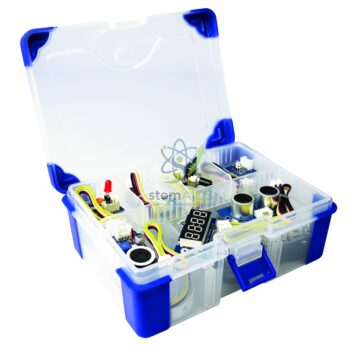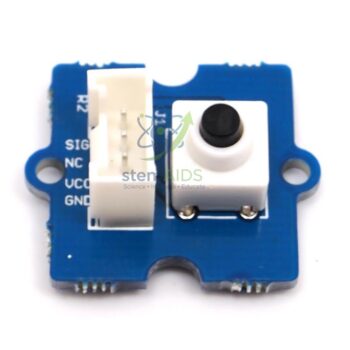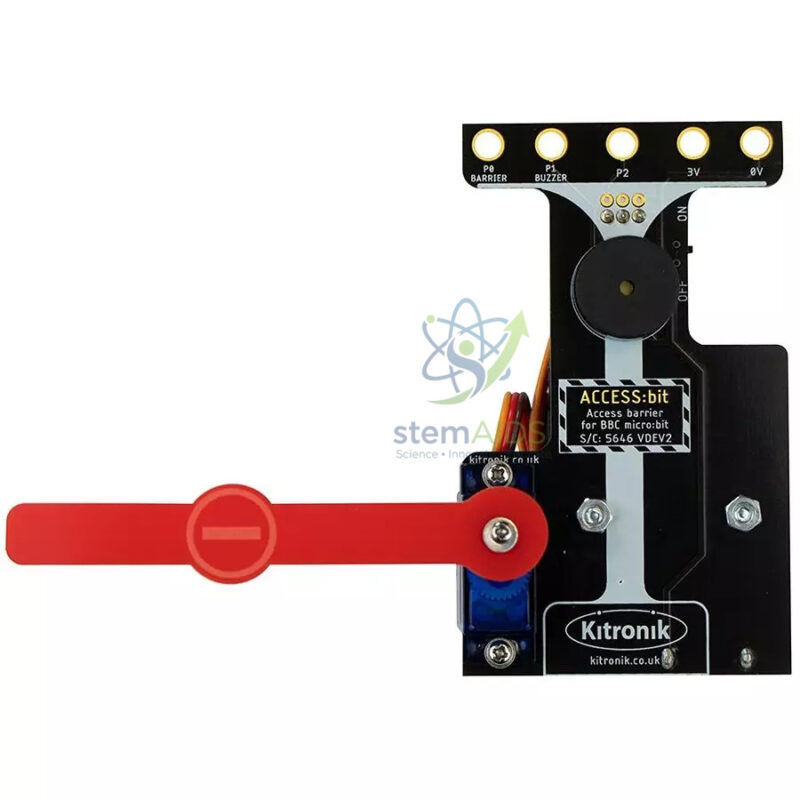
The StemAids Micro:bit Barrier Accessories kit is an educational access-barrier model designed for BBC micro:bit based coding, robotics, STEM learning, smart city projects, automation demonstrations, and classroom traffic-control activities. It allows students to build and program a working barrier gate using a servo motor, micro:bit board, and simple coding logic.
This barrier accessory is suitable for schools, STEM labs, ICT classrooms, robotics clubs, maker spaces, coding labs, and science exhibition projects. Students can use it to create parking barriers, railway crossing models, entry-exit gates, toll booth demonstrations, smart campus models, and automated access control systems.
Product Overview
The StemAids Micro:bit Barrier Accessories kit helps learners understand how software can control a physical moving object. The barrier arm can be raised or lowered using a 180° servo motor controlled by the micro:bit. A buzzer can be used for warning sounds, while the micro:bit LED matrix can display symbols, arrows, stop signs, or access messages.
The kit is ideal for teaching servo control, timing, conditional logic, input-output programming, automation, and smart city concepts. It can be combined with buttons, ultrasonic sensors, light sensors, RFID modules, traffic light modules, or streetlight models to create more advanced STEM projects.
Key Features
- Working Barrier Gate Model: Demonstrates an automatic access barrier using a micro:bit and servo motor.
- 180° Servo Motor: Moves the barrier arm up and down for realistic gate operation.
- Built-In Buzzer Support: Allows warning sound or access alert functions during operation.
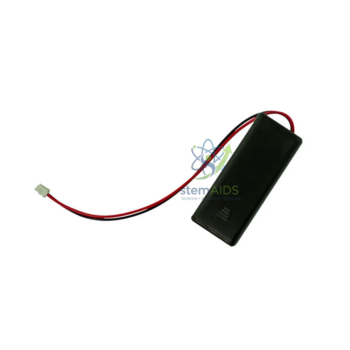
- Integrated Battery Holder: Common configurations include a 3×AAA battery holder for portable project use.
- micro:bit Compatible: Designed for use with BBC micro:bit boards, subject to kit version and fitting.
- MakeCode Friendly: Suitable for block coding, JavaScript, Python, and MicroPython activities.
- Smart City Project Ready: Useful for toll gate, parking gate, railway crossing, road safety, and access-control models.
- Classroom Demonstration Kit: Helps students learn automation through hands-on project building.
Product Specifications
| Product Name | Micro:bit Barrier Accessories |
|---|---|
| Brand | StemAids |
| Product Type | micro:bit Access Barrier / Servo Gate STEM Accessory |
| Compatible Board | BBC micro:bit V1 or V2, depending on kit design and fitting |
| Main Movement Component | 180° servo motor |
| Output Function | Barrier arm movement and buzzer sound indication |
| Power Source | Integrated 3×AAA battery holder or compatible power source depending on supplied model |
| Common Kit Contents | Barrier board, access barrier arm, 180° servo motor, buzzer, screws, nuts, and battery holder depending on configuration |
| Programming Platforms | Microsoft MakeCode, JavaScript, Python, MicroPython, and compatible micro:bit editors |
| Approximate Dimensions | Height 89 mm, width 125 mm with barrier extended, depth 30 mm with servo mounted |
| PCB Thickness | Approx. 1.6 mm |
| Application Area | STEM labs, ICT classrooms, robotics labs, smart city projects, coding clubs, and maker spaces |
| Recommended Users | Students, teachers, STEM trainers, robotics learners, coding beginners, and institutional buyers |
How to Use the StemAids Micro:bit Barrier Accessories
- Assemble the Barrier: Fix the servo motor, barrier arm, screws, and nuts as per the kit assembly guide.
- Attach the micro:bit: Place the compatible BBC micro:bit board into the barrier accessory connector or mounting position.
- Insert Batteries: Insert 3 AAA batteries into the battery holder if the model uses battery-powered operation.
- Open Coding Editor: Use Microsoft MakeCode, Python editor, or another compatible micro:bit programming platform.
- Program Servo Movement: Create code to rotate the servo and raise or lower the barrier arm.
- Add Buzzer Alert: Program the buzzer to sound when the barrier opens, closes, or detects a condition.
- Download Code: Transfer the program to the micro:bit using a USB cable.
- Test the Barrier: Switch on the project and check whether the barrier opens and closes correctly.
- Expand the Project: Add buttons, ultrasonic sensors, traffic lights, or RFID modules for advanced access-control models.
Educational Benefits
The StemAids Micro:bit Barrier Accessories kit helps students learn automation in a practical and visual way. It connects coding concepts with real mechanical movement, making programming more engaging and easier to understand.
- Introduces servo motor control using micro:bit
- Helps students learn loops, conditions, timing, and input-output logic
- Supports smart city, parking, toll gate, and railway crossing models
- Useful for robotics, automation, IoT, and STEM project learning
- Encourages hands-on problem-solving and project-based learning
- Suitable for classroom demonstrations, coding clubs, and science exhibitions
Applications
- Automatic parking barrier model
- Railway crossing gate project
- Toll plaza model
- Smart city access gate
- School campus entry-exit model
- Servo motor coding activity
- Robotics and automation project
- Road safety and traffic control demonstration
- Science fair and exhibition project
- micro:bit STEM classroom activity
Why Choose StemAids Micro:bit Barrier Accessories?
StemAids provides practical STEM education products for schools, ICT labs, coding classrooms, robotics labs, and maker spaces. The Micro:bit Barrier Accessories kit is a useful classroom tool for teaching automation, servo movement, access control, and smart city project design.
With its servo-driven barrier arm, buzzer support, battery-powered operation, micro:bit compatibility, and beginner-friendly programming approach, this accessory helps students build real working models while developing coding confidence and engineering thinking.
Safety and Maintenance Guidelines
- Use only with compatible micro:bit boards, batteries, and accessories.
- Insert batteries with correct polarity and switch off the unit after use.
- Do not force the barrier arm manually while the servo is active.
- Keep fingers away from the moving barrier arm during operation.
- Disconnect power before changing connections or adjusting the servo.
- Do not connect the servo to an unsupported voltage or power source.
- Keep the kit away from water, dust, excessive heat, and physical impact.
- Use under teacher or trainer supervision in school laboratories.
Google E-E-A-T Focus
This product content is prepared for school procurement teams, STEM coordinators, ICT teachers, robotics trainers, coding educators, and institutional buyers. It focuses on practical classroom use, verified barrier accessory features, safe handling, micro:bit compatibility, and educational value to support Google E-E-A-T principles of experience, expertise, authoritativeness, and trustworthiness.
Frequently Asked Questions
1. What are StemAids Micro:bit Barrier Accessories used for?
They are used to build a programmable access barrier or gate model using a BBC micro:bit board and servo motor.
2. Is the micro:bit board included?
The micro:bit board may or may not be included depending on the supplied package. It should be confirmed before purchase.
3. What does the servo motor do?
The servo motor moves the barrier arm up and down according to the program written on the micro:bit.
4. Can beginners use this kit?
Yes, it is beginner-friendly and can be programmed using Microsoft MakeCode block coding.
5. Can it be programmed using Python?
Yes, it can be programmed using Python or MicroPython if the correct servo control method and pin settings are used.
6. Does it require batteries?
Many barrier accessory kits use a 3×AAA battery holder for portable operation. Battery requirement depends on the supplied model.
7. Can it be used for smart city projects?
Yes, it is ideal for smart city projects such as parking barriers, toll gates, railway crossings, and automated entry systems.
8. Can sensors be added to the barrier project?
Yes, compatible sensors such as ultrasonic sensors, buttons, light sensors, or RFID modules can be added for advanced automation projects.
9. Is it suitable for STEM labs?
Yes, it is suitable for STEM labs, ICT classrooms, robotics clubs, coding labs, maker spaces, and school innovation programs.
10. What coding concepts can students learn?
Students can learn servo control, timing, loops, conditions, input-output programming, automation logic, and system design.
SEO Keywords
Micro:bit Barrier Accessories, StemAids Micro:bit Barrier Accessories, micro:bit barrier gate, micro:bit access barrier, micro:bit servo barrier, micro:bit parking gate project, micro:bit railway crossing project, STEM barrier kit, micro:bit automation project, micro:bit smart city model, servo gate for micro:bit, MakeCode barrier project, micro:bit robotics accessory, access gate coding kit.


Reviews
There are no reviews yet.