
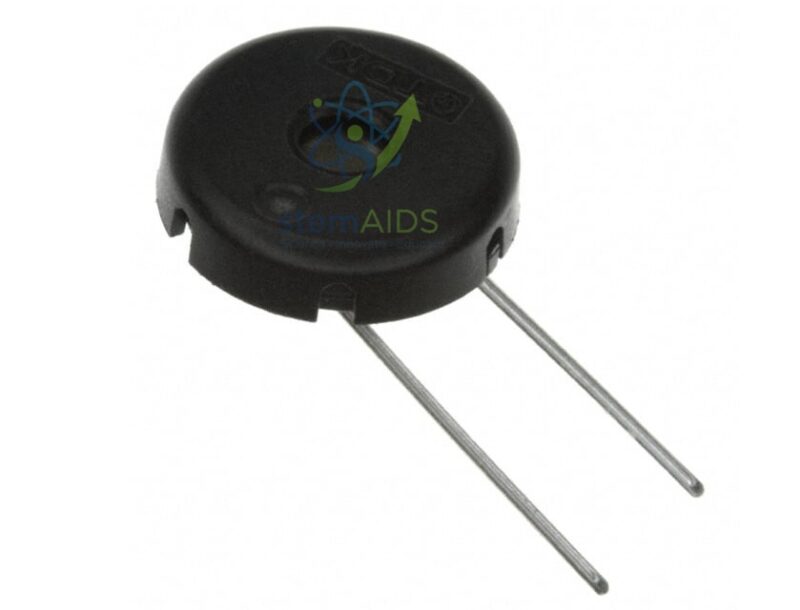
Quick Answer: The Electromagnetic Buzzer is a sounder in which a current in a small coil makes a thin ferromagnetic diaphragm vibrate against the pull of a permanent magnet, producing a tone. The electromagnetic buzzer serves in physics practicals as an audible indicator and as a compact example of the magnetic effect of a current at work.
Inside the Buzzer
Behind the sound opening sits a thin, springy iron-alloy disc held just above a coil wound on a small iron core, with a permanent magnet giving a steady pull on the disc. Current in the coil strengthens or weakens that pull, and the disc flexes. If the current is switched on and off, or alternates, many times a second, the disc vibrates at the same rate and pushes the air into a sound wave of that frequency.
Two forms exist. A self-drive or indicator buzzer contains a small oscillator circuit and sounds as soon as direct current is applied with the right polarity. A transducer type has no oscillator and needs an alternating or pulsed signal, for example from a signal generator or microcontroller, and its pitch follows the drive frequency. Which form this buzzer takes should be confirmed before ordering, since it decides how it is wired.
Electromagnetic Versus Piezoelectric
Piezo buzzers use a ceramic element that bends when a voltage is applied across it, so they draw very little current. The coil-driven type draws more, because its sound comes from a coil acting on an iron disc, and it illustrates the magnetic effect of a current where a piezo sounder illustrates the piezoelectric effect. Having both on the bench, with the piezoelectric disc as the second, makes a good comparison lesson on two quite different ways of turning electrical energy into sound.
Specifications
| Type | Electromagnetic (magnetic) buzzer |
| Principle | Coil and magnet vibrate a ferromagnetic diaphragm |
| Forms made | Self-drive (DC) or transducer (AC or pulsed drive) |
| Use | Audible indicator; electromagnetism demonstrations |
| Drive form, voltage range and frequency | Confirm at enquiry |
Uses in the Lab
- Audible indicator in alarm, timer and continuity circuits
- Demonstrating the magnetic effect of a current in an everyday device
- Measuring the sound frequency with a microphone and oscilloscope
- Comparing the current drawn by electromagnetic and piezoelectric sounders
Care & Handling
- Observe the polarity marks when connecting a self-drive buzzer of this kind to a DC supply.
- Do not exceed the rated voltage, as the coil can overheat if overdriven for long periods.
- Keep iron filings and dust away from the sound opening, because the magnet will draw them onto the diaphragm.
- Avoid holding the buzzer close to the ear while it sounds.
Why Choose LabEquip
Schools and colleges use coil-driven buzzers both as practical indicators and to teach electromagnetism, often alongside 6 V buzzers for general circuit work. LabEquip supplies them within our physics lab equipment range; ask through the contact page which drive form suits your circuits.
Frequently Asked Questions
How does an electromagnetic buzzer make sound?
A current in a small coil changes the magnetic pull on a thin iron-alloy diaphragm. When the current changes many times a second, the diaphragm vibrates at that rate and sets the air vibrating, which we hear as a tone.
What is the difference between an electromagnetic and a piezoelectric buzzer?
An electromagnetic buzzer uses a coil and magnet to move a metal diaphragm, so it draws more current. A piezoelectric buzzer uses a ceramic element that bends when a voltage is applied and draws very little current. Both give a tone, but they illustrate different physical effects.
Does the buzzer need a DC or an AC supply?
A self-drive buzzer contains its own oscillator and sounds on direct current with the correct polarity. A transducer type has no oscillator and needs an alternating or pulsed signal. The form of this buzzer should be confirmed at enquiry so that it can be wired correctly.
Why is there a magnet inside the buzzer?
The permanent magnet holds the diaphragm under a steady pull, and the coil’s current adds to or subtracts from it. This lets the diaphragm move both ways from its rest position, giving a stronger, cleaner vibration than a coil acting on an unmagnetised disc.
How can I measure the buzzer’s frequency?
Place a microphone near the buzzer and connect it to an oscilloscope, then read the period of the waveform and take its reciprocal. A phone sound-analysis app gives a quick estimate of the main frequency as well.
Why does the buzzer get quieter as the battery runs down?
A weaker supply drives less current through the coil, so the magnetic force on the diaphragm and the size of its vibration both fall. A self-drive buzzer may also stop oscillating once the voltage drops below its working range.
Last Updated: October 2026






Reviews
There are no reviews yet.