
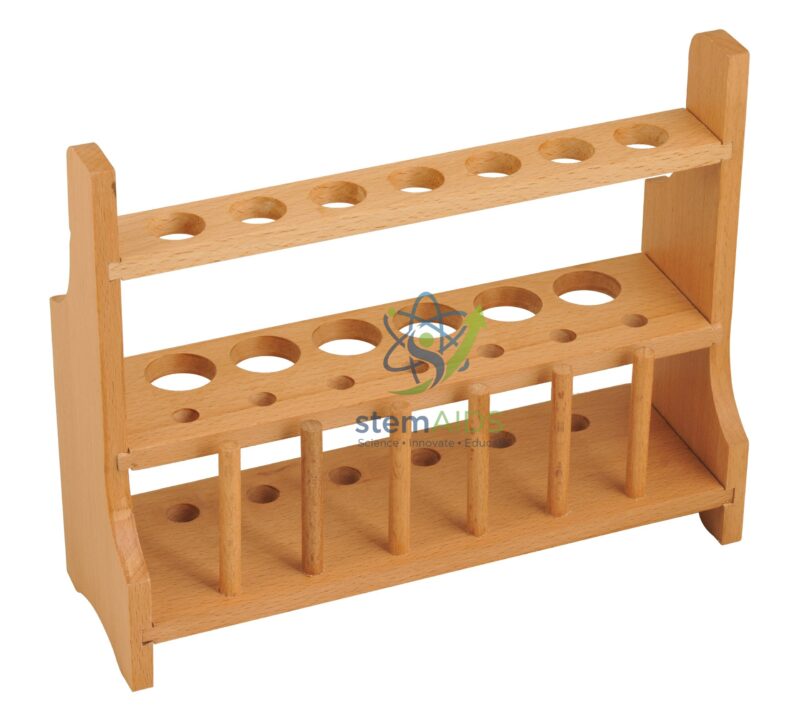
Quick Answer: The Test Tube Stand and other Laboratory Products of Steamed Beech listing covers laboratory woodware made from steamed beech, shown in the listing photograph as a steamed beech test tube stand with two tiers of holes and a row of drying pegs. The other beech items in the range are not itemised in the title.
What Steaming Does to Beech
Beech is a hard, heavy hardwood with a fine, even grain, which is why it is used for tool handles, kitchen boards and laboratory woodware. Steaming the sawn timber before drying changes its colour to an even pinkish brown and helps relieve internal stresses, so the finished pieces are less prone to twisting. Unsteamed beech is paler and more variable in colour.
For a test tube stand, those properties mean holes that keep their spacing, a base that stays flat on the bench and joints that hold together through years of classroom use. The photograph shows a two-tier rack: an upper row of holes that guides the tubes, a lower tier that supports them, and a row of upright pegs along the base where washed tubes can be hung upside down to drain.
The title mentions ‘other laboratory products’ without listing them. Beech is also used for items such as pipette, funnel and burette stands, but which pieces this listing includes should be confirmed when ordering. For single wooden stands, see the wooden test tube stand with drying pegs and the wooden stand without pegs.
Specifications
| Material | Steamed beech wood (as titled) |
| Pictured item | Two-tier test tube stand with a row of drying pegs |
| Wood character | Hard, fine even grain; even pinkish-brown colour after steaming |
| Scope of listing | Test tube stand plus other beech woodware (not itemised) |
| Hole count, sizes and other items | Confirm at enquiry |
Applications
- Holding test tubes upright during qualitative analysis or food tests
- Draining washed tubes upside down on the pegs
- Displaying a series of tubes for colour comparison, such as an indicator or dilution series
- Furnishing a school lab with matching wooden bench fittings
Care & Handling
- Wipe spills off the beech promptly; wood absorbs liquids, and acids and dyes can stain or soften it.
- Do not autoclave or soak wooden stands; heat and prolonged wetting cause cracks and warping.
- Let wet tubes drain on the pegs over a tray or sink rather than onto the wooden base.
Why Choose LabEquip
Schools that prefer the warm look and quiet feel of wooden bench fittings often standardise on beech. LabEquip lists this beech range in General Lab Products; tell us which pieces you need on the contact page.
Frequently Asked Questions
What is steamed beech?
Beech timber that has been steamed before drying. Steaming gives the wood an even pinkish-brown colour and helps relieve internal stresses, making the finished pieces more stable.
Is a wooden test tube stand suitable for chemicals?
It is fine for general school work, but wood absorbs liquids, so wipe spills straight away. Strong acids, alkalis and dyes can stain or damage the surface.
What are the pegs on the base for?
Washed test tubes are hung upside down on the pegs so that water drains out and air can dry the inside.
Which other products are included in this range?
The title refers to other steamed beech laboratory products without naming them. Beech woodware commonly includes stands for pipettes, funnels and burettes; ask which pieces are available when you enquire.
Can wooden stands be sterilised?
Not by autoclaving or oven heating, which crack and warp wood. Wipe them with a disinfectant or alcohol, and use metal or plastic racks where sterile handling is required.
How is beech different from other woods for lab use?
Beech is hard, heavy and fine-grained, so drilled holes keep clean edges and the stand resists denting. Softer woods mark and splinter more easily.
Last Updated: September 2026






Reviews
There are no reviews yet.