





In Stock
Stainless steel sand bath
₹12,350.00
Quick Answer: The Stainless steel sand bath is a rimmed, rectangular stainless steel tray that is filled with clean, dry sand and heated on a hotplate; flasks, beakers and crucibles are set into the sand, which spreads heat around them more evenly than a bare plate.
How a Sand Bath Works
Sand conducts heat slowly but holds a great deal of it, and it can be packed around the curved base of a flask. Setting glassware into a stainless steel sand bath therefore gives a gentle, surrounding heat instead of a hot spot where the glass touches the plate. Unlike a water bath, sand is not limited by the boiling point of water, and unlike an oil bath it cannot smoke, spill as a hot liquid or catch fire.
The trade-off is control. Sand is hotter at the bottom of the tray than near its surface, so the depth at which a flask sits sets its temperature, and the bath responds slowly when the hotplate setting changes. A thermometer buried to the same depth as the flask gives the most useful reading.
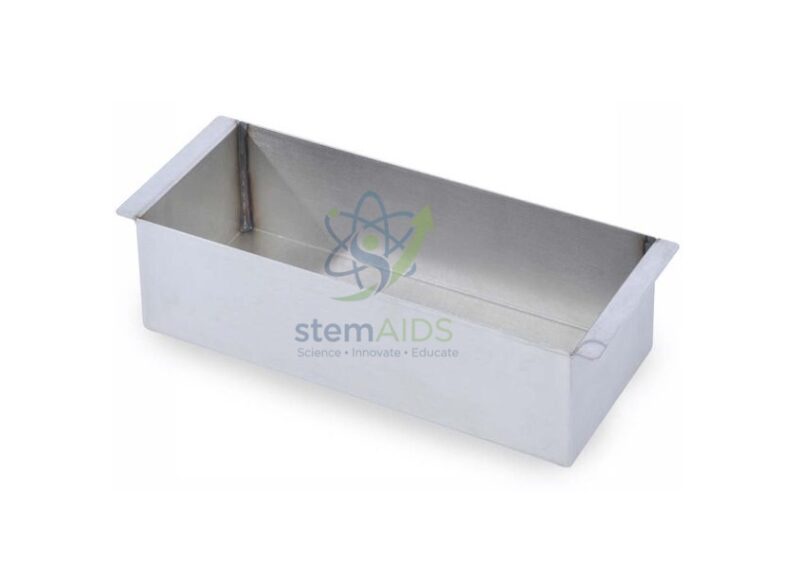
The photo shows a plain rectangular tray with a turned-out rim, which makes it easy to lift and to pour the sand out. Stainless steel stands up to damp sand and spilled reagents far better than mild steel. Tray dimensions are not in the title and should be matched to the hotplate top.
Applications
- Heating flasks for reactions or distillations above water-bath temperature
- Slow evaporation of solutions in dishes or beakers without spattering
- Drying and gentle heating of crucibles in teaching labs
- Warming round-bottomed flasks when no heating mantle of the right size is available
Specifications
| Type | Sand bath tray |
| Material | Stainless steel, as titled |
| Shape | Rectangular with a rim, as pictured |
| Heat source | A hotplate, used separately |
| Fill | Clean, dry, washed sand |
| Tray dimensions | Confirm at enquiry |
Care & Handling
- Use clean, dry, washed sand; damp sand spits and crusts when heated.
- Heat gradually and keep a thermometer in the sand at flask depth.
- Remember that sand stays hot long after the hotplate is off, and lift the tray only when it is cool.
- Sieve out spilled solids and replace contaminated sand rather than reheating it.
Why Choose LabEquip
Chemistry teaching labs and small synthesis benches use a sand bath as a simple way to heat beyond water-bath range without oil. For a 500 mL round-bottomed flask the Thermal adapter 500 mL is another dry option, and a hotplate such as the LCD Magnetic Heating Stirrer Pack can serve as the heat source; both are in General Lab Products.
Frequently Asked Questions
What kind of sand should be used?
Clean, dry, washed sand such as sea sand or silica sand sold for laboratory use. Fine dust and damp sand should be avoided, because they crust, spit and give uneven heating.
How is the temperature of a sand bath measured?
Bury a thermometer or probe in the sand at the same depth as the flask base. The sand is hotter near the tray floor, so a reading at the surface underestimates what the flask receives.
When is a sand bath better than a water or oil bath?
When the temperature must go above what water allows and hot oil is unwelcome. Sand cannot boil, smoke or ignite, although it responds more slowly to changes in setting.
How deep should the flask sit in the sand?
Bury it until the sand reaches roughly the level of the liquid inside. Deeper burial gives more heat; lifting the flask slightly is a quick way to cool it.
Can the sand be reused?
Yes, if it stays clean and dry. Sieve out debris after use, and replace sand that has absorbed spilled chemicals, which could release fumes when reheated.
What are the main burn risks?
Sand and tray keep their heat long after the hotplate is switched off, and hot sand looks exactly like cold sand. Use tongs and heat-resistant gloves, and label a cooling bath as hot.
Last Updated: September 2026
You must be logged in to post a review.
Bestsellers




Reviews
There are no reviews yet.