






In Stock
Solar Constant and Greenhouse Effect
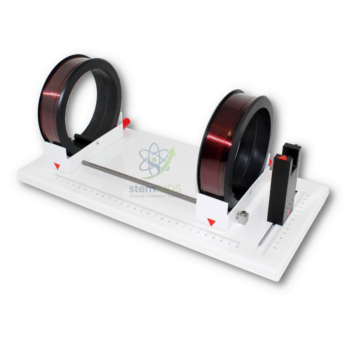
Maquette constante solaire et effet de serre, Multi-Point Thermometric Access Ports, supports accurate student Data Acquisition and the Calculation of thermal equilibrium curves under varied simulated atmospheric conditions.
Ruggedized Thermal-Stable Chassis Ensures sustained Application of experimental protocols in high-occupancy laboratory environments, significantly reducing the Total Cost of Ownership (TCO).
₹4,300.00
Quick Answer: The Solar Constant and Greenhouse Effect apparatus is an earth science teaching set for estimating how much solar energy reaches each square metre of a surface, by measuring the temperature rise of an absorber in sunlight, and for relating that energy input to the greenhouse effect.
Measuring the Sun’s Energy Input
The solar constant is the power of sunlight arriving on one square metre facing the Sun, just outside Earth’s atmosphere, at the planet’s average distance from the Sun. The International Astronomical Union adopted a nominal value of 1361 watts per square metre in 2015. At the ground the figure is lower, because the atmosphere absorbs and scatters part of the light, and it changes with the Sun’s height in the sky, cloud and haze.
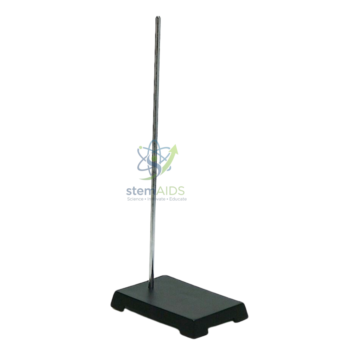
A classroom estimate uses a simple energy balance. A blackened absorber, often a small container of water or a metal block of known mass and heat capacity, is exposed to direct sunlight with its surface facing the Sun. From the temperature rise in a measured time, the energy absorbed per second is calculated and divided by the exposed area. The result is the solar power reaching the ground at that place and time, which students compare with the value above the atmosphere. The listing does not give the parts included, so confirm the absorber, sensors and any stand before ordering.
The second half of the title links that input to the greenhouse effect. Energy in must balance energy out: the Earth absorbs sunlight and radiates infrared back to space, and greenhouse gases slow the escape of that infrared, so the surface warms until balance is restored. Starting from a measured input turns the greenhouse effect into a quantitative idea rather than just a diagram.
Specifications
| Type | Solar energy and greenhouse effect teaching apparatus |
| Quantity estimated | Solar power per square metre at the surface |
| Method | Temperature rise of an absorber of known mass and heat capacity |
| Reference value | 1361 W/m² above the atmosphere (IAU nominal value, 2015) |
| Conditions needed | Clear sky, absorber facing the Sun |
| Parts supplied | Confirm at enquiry |
Applications
- Estimating solar power at the school site on a clear day
- Comparing readings at different times of day or in different seasons
- Calculating an energy balance and introducing the greenhouse effect with numbers
- Linking to solar panel and solar cooker projects
Measurement Tips and Care
- Keep the absorber surface square to the Sun and adjust it as the Sun moves during longer runs.
- Record the starting temperature in the shade, then time the exposure precisely.
- Shield the apparatus from wind, which carries heat away and lowers the estimate.
- Never look at the Sun while aligning the apparatus; judge alignment from the absorber’s shadow instead.
Why Choose LabEquip
Physics and geography teachers use this apparatus to turn the Sun’s energy into a number students calculate themselves. LabEquip lists it in General Lab Products, and the Greenhouse Effect Model and Infrared Trapping complements it with a direct comparison of warming with and without infrared-absorbing gas.
Frequently Asked Questions
What is the solar constant?
It is the power of solar radiation received per square metre on a surface facing the Sun, above the atmosphere, at Earth’s average distance from the Sun. The International Astronomical Union adopted a nominal value of 1361 watts per square metre in 2015.
Why is the value measured at school lower than the solar constant?
The atmosphere absorbs and scatters part of the incoming light, and more is lost when the Sun is low or the sky is hazy. Heat also escapes from the absorber during the experiment, which lowers the estimate further.
How is solar power calculated from the temperature rise?
Multiply the absorber’s mass by its specific heat capacity and by the temperature rise to get the energy absorbed, divide by the time to get power, then divide by the area facing the Sun to get watts per square metre.
Why is the absorber painted black?
A matt black surface absorbs most of the light falling on it and reflects little, so nearly all the incoming energy heats the absorber. A shiny surface would reflect much of it and give a low reading.
How does the experiment connect to the greenhouse effect?
Earth’s temperature settles where incoming solar energy balances outgoing infrared. Greenhouse gases reduce the infrared escaping to space, so the surface warms until balance returns. Knowing the input makes that balance easier to discuss with numbers.
When should measurements be taken?
On a clear, calm day around midday, when the Sun is highest and its light passes through the least atmosphere. Repeat the readings on several days to see how much conditions affect the result.
Last Updated: September 2026
You must be logged in to post a review.
Bestsellers





Reviews
There are no reviews yet.