
















In Stock
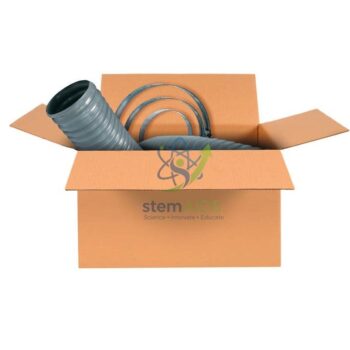
Rubber Tubing,Euro, Extra Soft
Extra-soft rubber formulation with low Shore hardness, enabling gentle sealing and reduced mechanical stress on connected apparatus
Uniform bore and wall thickness, ensuring consistent flow performance and reliable compatibility with standard Euro laboratory fittings
₹465.00
Quick Answer: The Rubber Tubing, Euro, Extra Soft is extra soft rubber tubing: a very pliable, low-hardness laboratory tube that stretches easily over glass hose nozzles, so connections to condensers, manometers and other glassware can be made with little force and a low risk of breaking the glass.
Softness as a Safety Feature
A common cause of hand injuries in teaching labs is pushing tubing onto glass: the student grips the glass nozzle, pushes hard, and the glass snaps. The softer the tubing, the less force is needed. This grade expands readily over the nozzle’s ridge and then contracts to hold it, which makes it a sensible choice for condenser water connections, U-tube manometers and gas delivery from small generators, where the glassware is thin.
The trade-off is that very soft tubing flattens easily. It handles water at mains pressure through a condenser, gentle gas flows and air lines, but it is not a vacuum tube: under suction it collapses, and for pumps the Vacuum Tube, Rubber is used instead. It also kinks more readily around tight bends, so runs should be laid out in gentle curves.
The word ‘Euro’ in the title is not explained on the listing and may refer to a pattern or size series. The bore and wall sizes available, and the rubber compound, should be checked before ordering so the tubing matches existing glass nozzles.
Specifications
| Item | Extra soft laboratory rubber tubing |
| Hardness | Extra soft grade: low force needed to fit over glass nozzles |
| Suited to | Low-pressure water, gas and air connections |
| Not suited to | Vacuum lines, where soft walls collapse |
| Rubber compound, bore and wall | Confirm at enquiry |
Applications
- Water inlet and outlet connections on Liebig and other condensers.
- Connecting U-tube manometers and gas syringes in physics and chemistry practicals.
- Gas delivery from small gas-generation set-ups to collection vessels.
- Air lines to aquaria, aerators and simple pneumatic demonstrations.
Care & Handling
- Wet the glass nozzle before sliding the tubing on, and hold the glass close to the end being fitted.
- Secure condenser water connections with a clip if the flow is strong, since very soft tubing can slip.
- Store coils loosely, out of sunlight and away from electric motors, which produce ozone that cracks rubber.
- Replace lengths that have become sticky, hard or split at the ends.
Why Choose LabEquip
Teaching labs that want safer glassware connections for students, and technicians assembling condensers and manometers, are the usual buyers of extra soft rubber tubing. LabEquip lists it with the other tubing grades in General Lab Products, including Rubber Tubing, Soft; share your nozzle sizes via the contact page.
Frequently Asked Questions
What is extra soft rubber tubing used for?
It is used where tubing must be fitted to and removed from glassware easily, such as condenser water lines, manometers and low-pressure gas or air connections.
How does it differ from standard soft tubing?
It has a lower hardness, so it stretches over nozzles with less force and seals well on small or thin glass fittings, but it collapses and kinks more readily.
Can extra soft tubing be used for vacuum filtration?
No. Its soft wall flattens under suction. Use thick-walled vacuum tubing for filter pumps and vacuum lines.
What does ‘Euro’ mean in the name?
The listing does not define it; it may denote a pattern or size series. Ask for the bore and wall dimensions when enquiring so the tubing matches your fittings.
How do I stop soft tubing slipping off a condenser?
Push it well past the nozzle’s ridge, fit a tubing clip or cable tie on the water inlet if the pressure is high, and open the tap gradually.
Why has my rubber tubing become sticky?
Natural rubber degrades with heat, light, ozone and some chemicals, turning sticky or brittle. Degraded tubing tears and leaks easily and should be replaced.
Last Updated: September 2026
You must be logged in to post a review.
Bestsellers




Reviews
There are no reviews yet.