























In Stock
Nessler Cylinder Stand, Aluminium
Superior Corrosion Resistance: Fabricated from high-quality anodized aluminium, providing excellent protection against moisture, oxidation, and common laboratory chemical vapors.
Precision-Drilled Holes: Features perfectly aligned holes that hold Nessler cylinders securely in place, preventing rattling or accidental tipping during observation.
₹220.00
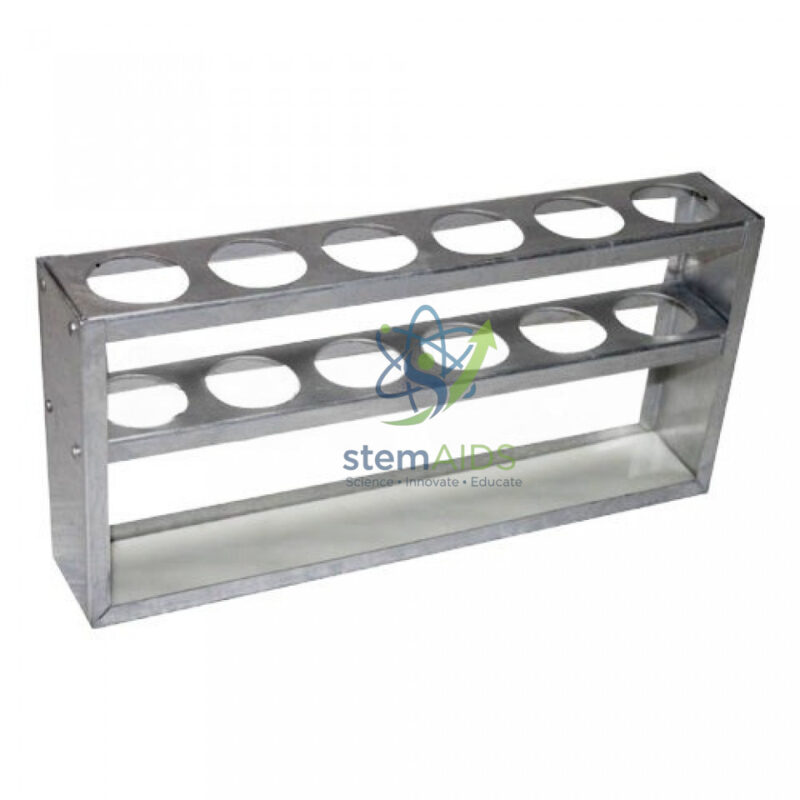
Quick Answer: The Nessler Cylinder Stand, Aluminium is a metal rack that holds Nessler cylinders upright in a row, so a test solution and its standards can be compared by looking down through the liquid columns. The listing image shows a two-tier aluminium frame with a row of openings in each tier.
Aluminium Compared with a Plastic Stand
LabEquip also lists a plastic Nessler cylinder stand. The aluminium version is a rigid metal frame that does not warp, keeps its openings in exact line, and is light to carry. Its limitation is chemical: aluminium is attacked by strong alkalis and by hydrochloric acid, and mercury compounds corrode it rapidly. Nessler’s reagent is both alkaline and mercury-based, so any drip on the frame must be wiped off at once.
The two tiers in the photograph hold each cylinder at two heights, so tall tubes stand vertical and cannot lean against each other. For a fair comparison all cylinders must share one diameter and be filled to the same mark, and they are viewed from above against a white tile or card placed beneath. The number of positions and the opening diameter are not in the title.
Use the stand with Nessler cylinders of matching diameter, and keep the standards in the same rack as the samples so the lighting on every tube is identical.
Applications
- Ammonia determination in water by Nesslerisation, comparing samples with standards
- Pharmacopoeial limit tests for chloride, sulfate and iron in pharmacy practicals
- Visual colour matching in food and water testing courses
Specifications
| Material | Aluminium |
| Design | Two tiers with a row of openings (as pictured) |
| Holds | Nessler cylinders upright, side by side |
| Chemical note | Wipe alkali, hydrochloric acid and mercury reagent spills at once |
| Number of positions and opening size | Confirm at enquiry |
Care & Handling
- Place a white tile or card under the aluminium Nessler cylinder stand for viewing.
- Rinse the frame with water after use and dry it; do not wash it with strong alkaline detergents.
- Collect Nessler’s reagent waste separately for mercury disposal, never down the sink.
- Check the openings for burrs that could scratch the cylinders.
Why Choose LabEquip
Water testing labs and pharmacy colleges running limit tests are the usual buyers of Nessler stands. LabEquip offers the aluminium stand in its General Lab Products range; contact us with your cylinder diameter.
Frequently Asked Questions
Why does aluminium need care with Nessler’s reagent?
Nessler’s reagent is an alkaline solution containing mercury. Alkalis remove the protective oxide on aluminium and mercury compounds then corrode the metal quickly, so spills must be wiped off straight away.
Aluminium or plastic Nessler stand: which should I choose?
Aluminium is rigid, keeps the cylinders in exact line and does not warp with age. Plastic resists alkalis and acids better. Choose aluminium for careful use in a dedicated area and plastic where spills are frequent.
How are Nessler cylinders compared?
Fill test and standard cylinders to the same mark, stand them side by side and look straight down through the liquid against a white background. The standard whose colour matches the sample gives the result.
Why is a two-tier stand used?
Two tiers hold each tall cylinder at two points, so it stays vertical. A leaning cylinder puts a different depth of liquid in the line of sight and spoils the comparison.
Can the stand be used for other tubes?
It holds any tubes close to the opening diameter, such as test tubes for a colour series. Tubes much narrower than the openings will lean.
How should the stand be cleaned?
Rinse it with water, wipe it dry and avoid strongly alkaline detergents, which dull and pit aluminium. Dry it fully before storage.
Last Updated: September 2026
You must be logged in to post a review.
Bestsellers





Reviews
There are no reviews yet.