









In Stock
Japanese Umbrella
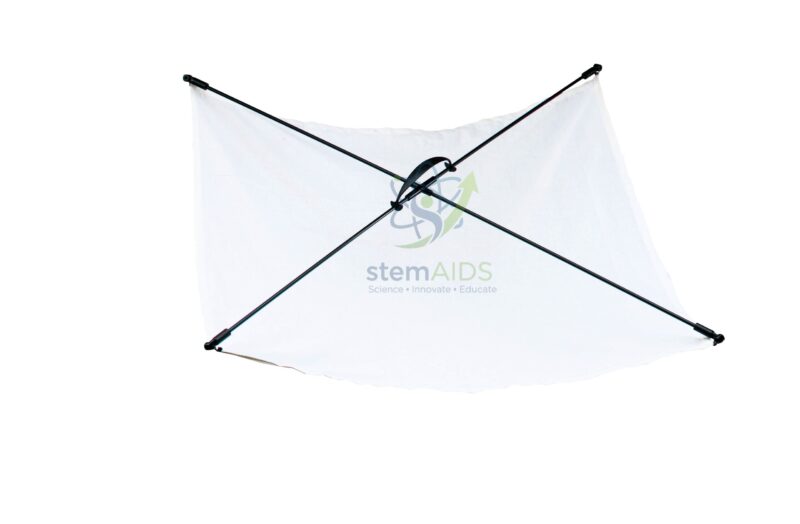
Parapluie japonais Constructed from a reinforced, chemically inert white textile that maximizes visual acuity for micro-arthropod detection while resisting material fatigue under prolonged outdoor exposure.
Collapsible Torsion-Resistant Frame Features a lightweight, precision-aligned cross-ribbed architecture designed for high-cadence field deployment, ensuring a taut, planar sampling surface for consistent specimen recovery in dense vegetation.
₹1,045.00
Quick Answer: The Japanese Umbrella is a beating tray: a square of pale cloth stretched on two crossed rods, as pictured, which is held under a branch while the branch is tapped with a stick. Insects and spiders that fall onto the cloth can then be seen, counted and collected for study.
How Beating Works
Many invertebrates on trees and shrubs cling to leaves or hide in bark and are hard to find by eye. A few sharp taps on a branch dislodge them, and the cloth held underneath catches what falls. The pale cloth makes caterpillars, weevils, bugs, lacewings and spiders stand out, and the square shape gives a large target that can be held with one hand at the crossing point of the rods.
The method is most productive in dry weather, when insects are not stuck to wet foliage. Tap each branch the same number of times, for example three sharp blows, so that samples from different trees or hedges can be compared. Work quickly, because some insects fly or run off the cloth within seconds.
Insects on the cloth are usually picked up with an Insect Vacuum aspirator or a soft brush and placed in pots for identification. The size of the cloth and the material of the rods are not stated in the title.
Specifications
| Type | Beating tray (Japanese umbrella) |
| Construction | Pale cloth stretched over two crossed rods, as pictured |
| Held | Beneath branches, gripped at the crossing point |
| Used with | Stick for tapping, aspirator, brush and collecting pots |
| Cloth size | Confirm at enquiry |
Care & Handling
- Tap branches firmly but without breaking twigs or stripping leaves.
- Brush debris off the cloth between samples so counts are not mixed.
- Dry the cloth before folding it away to prevent mildew and stains.
- Watch for stinging insects and irritant caterpillars on the tray, and use a brush rather than fingers to move them.
Survey Uses
- Comparing invertebrate numbers on native and non-native trees
- Surveying caterpillars and aphids on fruit trees or hedges through the seasons
- Collecting spiders and beetles for identification practicals
- Monitoring pests and their predators in school gardens and orchards
Why Choose LabEquip
Ecology teachers, agricultural colleges and field-study groups use a beating tray to sample the tree canopy without climbing or cutting. LabEquip stocks it in the General Lab Products range, with the Net Curtain hand net for sampling grassland at the same site.
Frequently Asked Questions
Why is it called a Japanese umbrella?
It is a traditional name, used especially in French-speaking entomology, for a beating tray made of cloth stretched on crossed ribs, which looks like an umbrella held upside down under a branch.
How many times should each branch be tapped?
Choose a fixed number, commonly three to five sharp taps, and use it for every branch in the survey. Keeping the effort the same is what makes counts from different trees comparable.
What kinds of animals fall onto the cloth?
Caterpillars, weevils, leaf beetles, shield bugs, aphids, lacewings, earwigs and many spiders are typical catches. The exact mix depends on the tree species, the season and the weather.
Can an ordinary umbrella be used instead?
An opened pale umbrella turned upside down works in a similar way, but a flat cloth on rods gives a larger, flatter surface where insects are easier to see and pick up.
How are the insects collected from the cloth?
Use an aspirator for small, fast insects and a soft paintbrush to move larger ones into pots. Work from the edges inwards, because disturbed insects run towards the rim.
Is beating harmful to trees or insects?
Firm taps with a stick do not harm healthy branches, and the insects are only dislodged. Avoid breaking twigs, return animals to the same tree after recording, and do not beat shrubs where birds are nesting.
Last Updated: September 2026
You must be logged in to post a review.
Bestsellers




Reviews
There are no reviews yet.