














In Stock
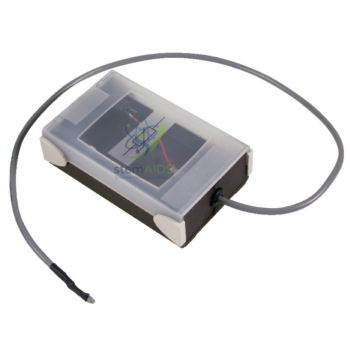
Convection Cell Model
Maquette cellule de convection, Optimized Fluid-to-Surface Ratio Supports the Analysis of convection-driven plate movement and buoyancy dynamics in Earth Science and Physics curricula.
Approche expérimentale progressive, Ruggedized Sealing and Chassis Integrity Ensures consistent Application of experimental protocols in high-occupancy laboratory environments, minimizing fluid bypass and reducing instructional maintenance requirements.
₹2,530.00
Quick Answer: The Convection Cell Model is a teaching model showing a fluid heated from below rising, spreading, cooling and sinking in a continuous loop. It is used to explain convection currents in liquids and gases and the mantle convection linked to plate movement.
Convection Cells Explained
When a layer of fluid is heated from below, the warmest fluid expands, becomes less dense and rises; at the top it spreads sideways, cools, becomes denser and sinks again. Once established, this circulation forms a convection cell. A convection cell model makes the flow visible, typically with a tracer such as fine particles or coloured dye, so students can follow the rising and sinking limbs of each cell.
Earth science uses the same idea to picture the mantle. Although mantle rock is solid, it creeps very slowly, and heat from the core and from radioactive decay drives large-scale convection over millions of years. Hot material rising beneath ocean ridges and cool plates sinking at subduction zones are both part of that circulation, which is why convection appears in nearly every explanation of plate tectonics.
The model is also a reminder of its own limits: water convects in minutes and the mantle over millions of years, and real mantle flow is far more complex than one tidy cell. The listing does not describe the heat source, tank or tracer used, so those should be confirmed before purchase.
Where the Model Fits in Teaching
- Introducing convection as a method of heat transfer in physics
- Explaining the forces behind plate tectonics in geography and geology
- Linking to weather: sea breezes, thunderstorm updrafts and atmospheric circulation
- Comparing convection with conduction and radiation
Specifications
| Type | Convection cell demonstration model |
| Principle | Density change with temperature drives a circulating flow |
| Shows | Rising warm fluid, sideways spreading, sinking cool fluid |
| Earth science link | Mantle convection and plate movement |
| Heat source, tank and tracer | Confirm at enquiry |
Safe Use
- Treat any heat source used with the model as hot during and after use, and let it cool before handling or packing.
- Use clean water and fresh tracer for each demonstration so the flow pattern stays easy to see.
- Set the model on a stable, level surface where it will not be knocked while warm.
- Empty and dry the tank after use to prevent residue and scale.
Why Choose LabEquip
Physics and geography departments both use convection models, one to teach heat transfer and the other to explain moving plates. LabEquip lists this model in General Lab Products next to the Convection Conduction Circuit, which compares convection with conduction, and the divergence model on the creation of an ocean.
Frequently Asked Questions
How can solid mantle rock convect?
Over very long timescales, hot mantle rock behaves like an extremely viscous material and flows by slow creep, at rates of a few centimetres a year. That is enough for convection to operate over millions of years.
What tracer shows the flow most clearly?
A few crystals of potassium permanganate dropped near the heat source give a clear purple plume in water, and fine particles show the circulating path. Use permanganate sparingly, wear gloves and dispose of the solution as your school guidance directs.
Why does warm fluid rise?
Heating makes the fluid expand, so the same mass takes up more volume and its density falls. The denser, cooler fluid around it sinks and pushes the warm fluid upward.
How is mantle convection linked to plate movement?
Rising hot mantle below ocean ridges and sinking cold slabs at subduction zones are both part of the convective circulation. Many geologists now see slab pull, the weight of sinking plates, as a major driving force within that overall system.
Where else does convection occur in nature?
In the atmosphere, where it drives sea breezes and thunderstorms; in the oceans; in the liquid outer core, where it helps generate Earth’s magnetic field; and in the Sun’s outer layers, visible as granulation.
Is this the same as a convection current demonstration in physics?
Yes, the principle is identical. Physics lessons emphasise heat transfer and density, while earth science lessons use the same flow to explain the mantle, so one model serves both subjects.
Last Updated: September 2026
You must be logged in to post a review.
Bestsellers




Reviews
There are no reviews yet.