









In Stock
Ball heater adapter block
₹560.00
Quick Answer: The Ball Heater Adapter Block is a heating mantle adapter block: a machined metal block with a hemispherical recess that holds a round-bottom flask on a hotplate stirrer. It lets the hotplate heat the flask directly, so a lab can do mantle-style heating without buying a separate electric heating mantle.
What “Ball Heater” Means on This Listing
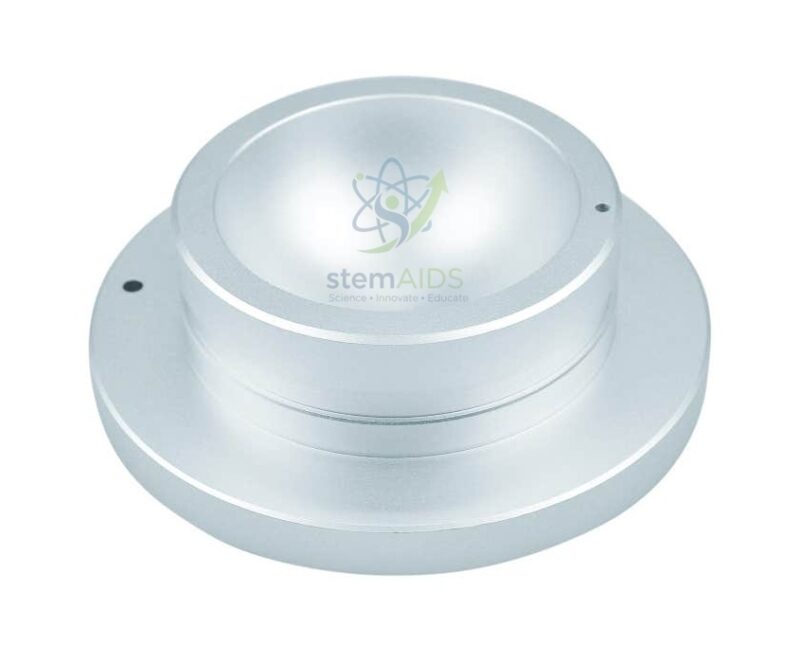
The English name is a literal translation from French. In French lab catalogues a round-bottom flask is a “ballon” and an electric heating mantle is a “chauffe-ballon”, so “ball heater adapter block” means an adapter block that does a heating mantle’s job. The listing photograph confirms this: a silver-coloured metal block with a wide flange at the base, a raised centre and a smooth hemispherical recess for the bulb of a flask, plus a small hole near the rim.
An electric heating mantle wraps a flask in a heated fabric shell and needs its own controller. The adapter block takes a different route: it sits on the flat top plate of a hotplate or hotplate magnetic stirrer that the lab already owns, and the hotplate supplies the heat. The practical difference is cost and flexibility, because one hotplate can serve a beaker on Monday and a flask in the block on Tuesday. A mantle, on the other hand, surrounds more of the flask and suits very large flasks better.
The listing does not state which flask size the recess is made for. Flask diameters change with capacity, and a snug fit matters because any gap between glass and metal slows heating, so tell us the flask you plan to use and we will confirm the match.
Care & Handling
- Place the flask in the recess before heating so glass and metal warm together, which reduces thermal stress on the flask
- Support the flask neck with a clamp; the recess locates the flask but does not hold it upright on its own
- Lift the block only with heat-resistant gloves until it has fully cooled
- Keep the recess clean and free of scratches, since burnt residue or dents create hot spots on the glass
Specifications
| Product type | Heating mantle adapter block for round-bottom flasks |
| Form (from photo) | Metal block with flanged base and hemispherical recess |
| Used on | Flat-top hotplates and hotplate magnetic stirrers |
| Heating method | Conduction from the hotplate through the block to the flask |
| Stirring | Possible with a stir bar, subject to block height and stirrer strength |
| Flask size the recess fits | Confirm at enquiry |
Typical Uses of the Adapter Block
- Refluxing an organic preparation in a round-bottom flask on an existing hotplate stirrer
- Evaporating or concentrating a solution in a flask before recrystallisation
- Running a student distillation where buying a heating mantle for every bench is not practical
- Holding a flask at a steady temperature during a timed reaction, with a probe in the liquid
Why Choose LabEquip
Colleges and teaching labs often buy this adapter block when they have hotplate stirrers on every bench but only a few heating mantles. LabEquip supplies it alongside heating magnetic stirrers and other general lab products, and if you send us your flask details our team can match the recess to your flask size before the order is placed.
Frequently Asked Questions
Why is it called a ball heater adapter block?
The name comes from French, where a round-bottom flask is a ballon and a heating mantle is a chauffe-ballon. In plain English it is a heating mantle adapter block for round-bottom flasks.
Do I still need a heating mantle if I buy this block?
Not for most small and medium flasks. The block uses your hotplate as the heat source. A heating mantle remains useful for very large flasks or where you want heat around more of the flask surface.
Which hotplates can the adapter block sit on?
Any hotplate or hotplate stirrer with a flat top plate larger than the block’s base flange. Check that your hotplate’s maximum temperature and load suit the block and flask before use.
Can the flask be stirred magnetically inside the block?
Yes, in most cases. The metal of the block does not block the magnetic field of a typical stirrer, but the added distance weakens coupling, so use a well-sized stir bar and moderate speeds.
What is the small hole near the rim of the block for?
On blocks of this style a small hole of that kind usually accepts a temperature probe or thermometer so the block temperature can be monitored. Check that your probe diameter fits before relying on it.
How should I clean the adapter block?
Let it cool fully, then wipe the recess with a damp cloth and a mild detergent and dry it. Avoid wire brushes or abrasive powders, which scratch the contact surface and create hot spots on the flask.
Last Updated: September 2026
You must be logged in to post a review.
Bestsellers




Reviews
There are no reviews yet.