






In Stock
Wireless Droplet Sensor Redy
Capteur Redy Compte-gouttes Synchronous Data-Logging Integration: Enables the technical evaluation of multi-parameter titration curves (pH/Conductivity vs. Volume) at the "Analyze" cognitive level, reinforcing evidentiary laboratory practices.
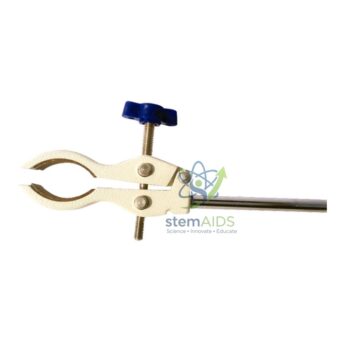
Standardized Burette Clamp Interface: Ensures ruggedized stability during high-cadence laboratory rotations, maintaining data reproducibility and minimizing systemic error in vocational training environments.
₹7,410.00
Quick Answer: The Redy wireless droplet sensor counts drops of liquid as they fall through it, typically from a burette, and converts the count into volume once calibrated. A wireless droplet sensor lets a titration curve be plotted automatically against volume, with no manual burette readings.
Counting Drops to Measure Volume
In an ordinary titration, students read the burette, add a little titrant, note the pH or the colour, and repeat, which is slow and error-prone when a whole curve is wanted. A drop counter removes the manual readings. Each drop that falls through its sensing gap, usually an infrared beam, is counted, and after a calibration that finds how many drops make one millilitre, the software records the volume added.
Combined with the wireless pH meter sensor, the result is a pH against volume curve logged drop by drop, showing the buffer region and equivalence point in detail. With the wireless conductivity sensor it produces conductometric titration graphs. The flask usually sits on a magnetic stirrer so each drop mixes in before the next reading.
Drop size depends on the burette tip, the liquid and the flow rate, which is why calibration is repeated for each set-up. The title does not describe the sensing method or how the sensor is mounted.
Specifications
| Counts | Drops falling through the sensor |
| Converts to | Volume, after calibration in drops per millilitre |
| Output | Wireless logging |
| Pairs with | A pH or conductivity sensor, a burette and a magnetic stirrer |
| Sensing method and mounting | Confirm at enquiry |
Applications
- Acid and alkali titration curves logged against volume with a pH sensor
- Conductometric titrations with a conductivity sensor
- Measuring flow rate from a dropping funnel or drip line
- Comparing strong and weak acid titration curves in college practicals
Care & Handling
- Align the burette tip so every drop falls cleanly through the sensing gap.
- Recalibrate whenever the burette, the titrant or the flow rate changes.
- Wipe the sensing gap dry after use; splashes block the beam and cause miscounts.
- Set a steady, moderate drip rate so drops are counted one by one.
Why Choose LabEquip
Chemistry departments moving titration practicals to data-logging, and college labs teaching curve analysis, are the usual buyers. LabEquip lists it as part of its chemistry lab equipment; mounting options can be discussed through the contact page.
Frequently Asked Questions
How does a drop counter know the volume added?
It counts drops and multiplies by the volume per drop found during calibration. Calibrate by counting the drops needed to deliver a measured volume, such as a few millilitres read from the burette.
Why must the droplet sensor be recalibrated?
Drop size changes with the burette tip, the liquid’s surface tension and the flow rate. A calibration from one set-up can be wrong for another, so repeat it whenever anything changes.
What drip rate should be used?
Slow enough that drops fall one at a time and each mixes before the next, but fast enough to finish in reasonable time. A steady rate of about one drop a second is a common starting point.
Can the droplet sensor be used without a pH sensor?
Yes. It can log volume on its own, for example to measure a flow rate, but its main value comes from pairing it with a pH or conductivity sensor to build a titration curve.
Why are some drops not counted?
Drops may miss the sensing gap, run down the outside of the tip, or fall too quickly to be told apart. Realign the burette, clean the tip and reduce the flow rate.
Does the droplet sensor work with coloured solutions?
Sensors that use a light beam detect the interruption as a drop passes, so coloured liquids are usually counted normally. Very opaque suspensions and bubbles can still cause errors.
Last Updated: September 2026
You must be logged in to post a review.
Bestsellers





Reviews
There are no reviews yet.