









In Stock
Regulator for Hofmann Electric Burner
₹2,536.00
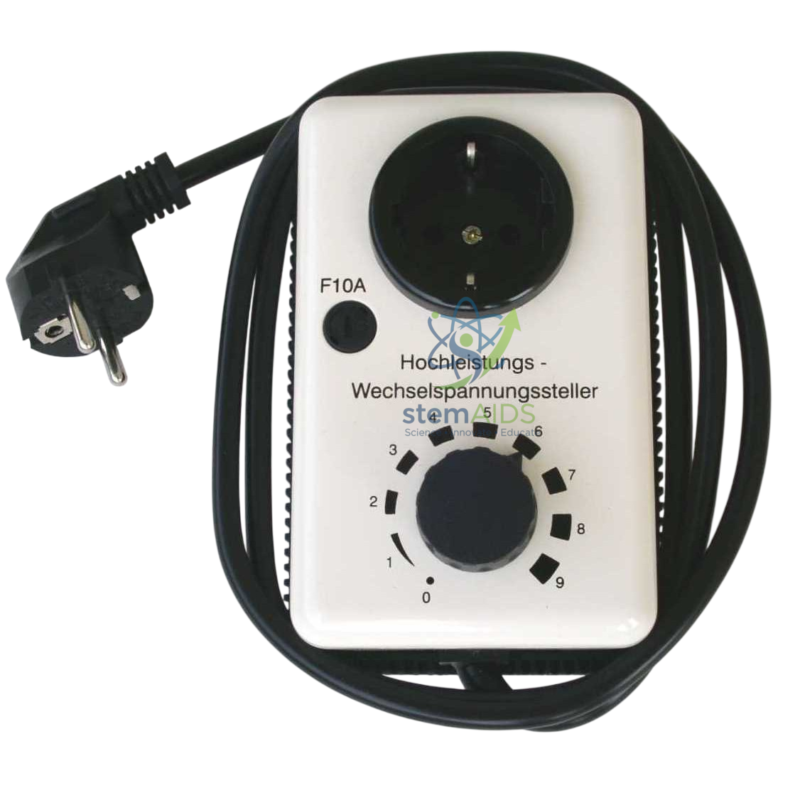
Quick Answer: The Hofmann electric burner regulator is a plug-in power control box. The listing photo shows a white unit with a mains socket on its face, a rotary dial with a printed scale and a cable with a plug, so the burner plugs into the regulator and its heat is set with the dial.
Turning a Fixed Burner into an Adjustable One
An electric burner without a control runs flat out whenever it is switched on. That suits sterilising a loop, but not warming a solution slowly or keeping a liquid just below the boil. An electric burner regulator sits between the wall socket and the burner and reduces the power reaching the heating core, which lowers its heat output.
The unit in the photo follows a common plug-in pattern. Its own cable goes to the wall socket, the burner’s plug fits the socket on the front of the regulator, and the dial beneath sets the level. Nothing has to be wired in, and the regulator can sit on the bench a safe distance from the heat.
The regulator is listed for the Hofmann electric burner, and a power controller should only be used with a heater it is rated for. Some burners in this range appear from their photos to have heat control built in, such as the knob on the LAB 2 electric Bunsen burner, and would not need a separate regulator.
Specifications
| Item | Plug-in power regulator for the Hofmann electric burner |
| Connections | Mains cable with plug; socket on the front for the burner (photo) |
| Control | Rotary dial with a printed scale (photo) |
| Function | Varies the power, and so the heat, delivered to the burner |
| Plug and socket standard | Confirm at enquiry |
Applications
- Evaporating a solution gently, without spitting, before crystallisation
- Holding a small beaker of water near a steady temperature for a heating-curve activity
- Keeping heat low for younger classes, then raising it for a teacher demonstration
- Warming heat-sensitive samples more slowly than full power would allow
Care & Handling
- Use the regulator only with the Hofmann burner or another heater within its stated rating; never connect kettles, hot plates or other appliances.
- Keep the regulator on the bench away from the burner’s heat and from any liquid.
- Turn the dial to its lowest setting before plugging in the burner, then raise it gradually.
- Unplug both units at the end of the session and include them in routine portable-appliance inspections.
Why Choose LabEquip
Teachers who already use the Hofmann burner and need finer control for evaporations or slow heating are the usual buyers of this regulator. It is listed in LabEquip’s chemistry lab equipment; tell us your country of use through the contact page so the plug and socket match your mains outlets.
Frequently Asked Questions
How does the regulator change the burner’s heat?
It controls how much electrical power reaches the burner’s heating core. Less power means a cooler core and gentler heating; turning the dial up delivers more power and more heat.
Can I use this regulator with a hot plate or other heater?
No. Use it only with the Hofmann burner it is listed for, or with another heater its label explicitly permits. Power controllers have load limits, and some appliances contain electronics that should not be run through one.
Why not just switch the burner on and off to control heat?
Switching on and off gives uneven heating with constant temperature swings, and it wears the switch. A regulator gives a steady reduced output, which is better for evaporating solutions and for keeping liquids just below boiling.
Does the regulator get hot?
It may become warm in use, which is normal for power control devices, but it should never become too hot to touch. Keep it away from the burner and do not cover it; if it runs hot or smells of burning, unplug it and have it checked.
Where should the regulator sit during a practical?
On the bench to one side of the burner, within easy reach but outside the heat zone, with both cables lying flat and away from the hot guard and the edge of the bench.
Which plug and socket does the regulator have?
The socket on the front must match the burner’s plug, and the regulator’s own plug must match your wall outlets. Mains standards differ by country, so state where the equipment will be used when you enquire.
Last Updated: September 2026
You must be logged in to post a review.
Bestsellers





Reviews
There are no reviews yet.