
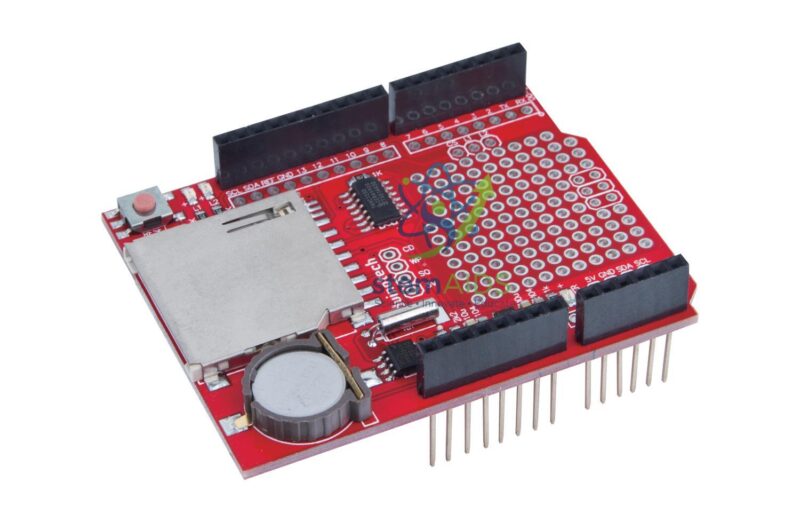
This module is suitable for Arduino-style projects, embedded systems training, IoT models, school STEM labs, electronics workshops, engineering practicals, and project-based learning. It helps students understand real-time data handling, time-based automation, I2C communication, scheduling logic, and electronic clock circuits.
Product Description
The StemAids Real-Time Clock Module is used when a project requires reliable time and date information. Unlike simple delay-based timing in programming, an RTC module keeps track of actual clock time. This makes it useful for projects such as automatic bell systems, attendance devices, irrigation timers, data recording systems, digital clocks, environmental monitoring projects, and timed automation models.
In educational laboratories, this module gives learners practical exposure to clock ICs, battery-backed memory, serial communication, time-based programming, and real-world embedded applications. It can be connected to a compatible microcontroller board through standard communication pins and programmed to read or set time values.
Key Features
- Brand: StemAids
- Designed for real-time clock and calendar-based electronics projects
- Useful for Arduino-style, microcontroller, robotics, and IoT experiments
- Maintains time and date data for automation and logging applications
- Supports time-based control of devices, sensors, alarms, and displays
- Suitable for STEM education, electronics training, and embedded systems learning
- Can be used in digital clock, timer, scheduler, and data logger projects
- Helps students learn I2C communication and real-time programming concepts
Product Specifications
| Product Name | Real-Time Clock Module |
|---|---|
| Brand | StemAids |
| Product Type | RTC Timekeeping Module |
| Function | Provides real-time clock and calendar data to microcontroller-based projects |
| Typical RTC IC | DS1307, DS3231, or equivalent RTC IC, depending on supplied model |
| Communication Interface | I2C interface for data communication |
| Supported Data | Seconds, minutes, hours, day, date, month, and year |
| Operating Voltage | Commonly suitable for 3.3V or 5V microcontroller systems, depending on module configuration |
| Backup Battery Support | Battery backup support may be available for maintaining time when main power is off |
| Application | Digital clocks, timers, data loggers, automation projects, IoT systems, robotics experiments |
| Learning Area | Embedded systems, timekeeping circuits, I2C communication, automation programming |
| Recommended Users | Students, teachers, makers, hobbyists, electronics trainers, and engineering learners |
How to Use the StemAids Real-Time Clock Module
- Check the Module Pins: Identify the VCC, GND, SDA, and SCL pins on the RTC module before connection.
- Connect Power: Connect VCC and GND to the compatible power pins of the microcontroller board.
- Connect Communication Pins: Connect SDA and SCL pins to the corresponding I2C pins of the controller board.
- Install Required Library: Use a suitable RTC library in the programming software for reading and setting time values.
- Set the Time: Upload a time-setting program to configure the current date and time on the RTC module.
- Read Time Data: Write a program to read seconds, minutes, hours, date, month, and year from the module.
- Use in Project Logic: Apply the real-time data to trigger alarms, activate devices, record sensor data, or display time on an LCD or OLED screen.
Educational Benefits
The StemAids Real-Time Clock Module supports activity-based STEM learning by helping students connect programming with real-world timekeeping applications. It improves understanding of digital communication, embedded control, time scheduling, automation logic, and data logging. Teachers can use it for practical demonstrations in electronics labs, robotics clubs, IoT workshops, and engineering training sessions.
Applications
- Digital clock projects
- Automatic school bell systems
- IoT-based monitoring projects
- Data logger experiments
- Timed relay control systems
- Smart irrigation models
- Alarm and reminder systems
- Robotics and automation projects
- Attendance and access-control prototypes
- STEM and embedded systems education
Why Choose StemAids Real-Time Clock Module?
StemAids provides practical and education-focused STEM learning products for schools, colleges, makerspaces, and technical laboratories. The Real-Time Clock Module is a valuable addition to electronics and microcontroller learning kits because it demonstrates a real industrial concept in a simple and hands-on format. It helps learners build useful projects that require time accuracy, event scheduling, and date-based automation.
SEO and E-E-A-T Focus
The StemAids Real-Time Clock Module is suitable for Arduino RTC projects, microcontroller timekeeping experiments, embedded systems learning, STEM electronics kits, IoT data logging, and automation training. Its use in real-time clock circuits, I2C communication projects, timer-based systems, and educational electronics makes it highly relevant for students, teachers, engineering labs, robotics workshops, and project developers.
Safety and Handling Instructions
- Use only the recommended operating voltage for the module.
- Check VCC and GND polarity before powering the circuit.
- Do not short the battery terminals or power pins.
- Use suitable jumper wires and avoid loose connections during experiments.
- Keep the module away from moisture, dust, and excessive heat.
- Use under teacher or trainer supervision in school laboratories.
Frequently Asked Questions
1. What is a Real-Time Clock Module?
A Real-Time Clock Module is an electronic module that keeps track of actual time and date for microcontroller-based projects.
2. What is the StemAids Real-Time Clock Module used for?
It is used for digital clocks, timer projects, automation systems, data loggers, IoT models, robotics projects, and STEM experiments.
3. Can this module work with Arduino-style boards?
Yes, the module is suitable for Arduino-style and other compatible microcontroller boards that support I2C communication.
4. Does the RTC module keep time when power is off?
Many RTC modules support a backup battery, allowing them to maintain time when the main circuit power is turned off. This depends on the supplied module configuration.
5. What communication interface does it use?
RTC modules commonly use the I2C communication interface, usually through SDA and SCL pins.
6. Is this product suitable for school STEM labs?
Yes, it is suitable for STEM labs, robotics clubs, electronics classrooms, engineering colleges, and microcontroller training workshops.
7. What projects can students make with this module?
Students can make digital clocks, alarm systems, data loggers, automatic bell systems, time-based relay controls, and IoT monitoring projects.
8. Is programming required to use this module?
Yes, basic programming is required to set and read time from the RTC module through a compatible microcontroller board.






Reviews
There are no reviews yet.