







Sale
In Stock
Plant Cell Structure EVA Model
Original price was: $5.64.$2.71Current price is: $2.71.
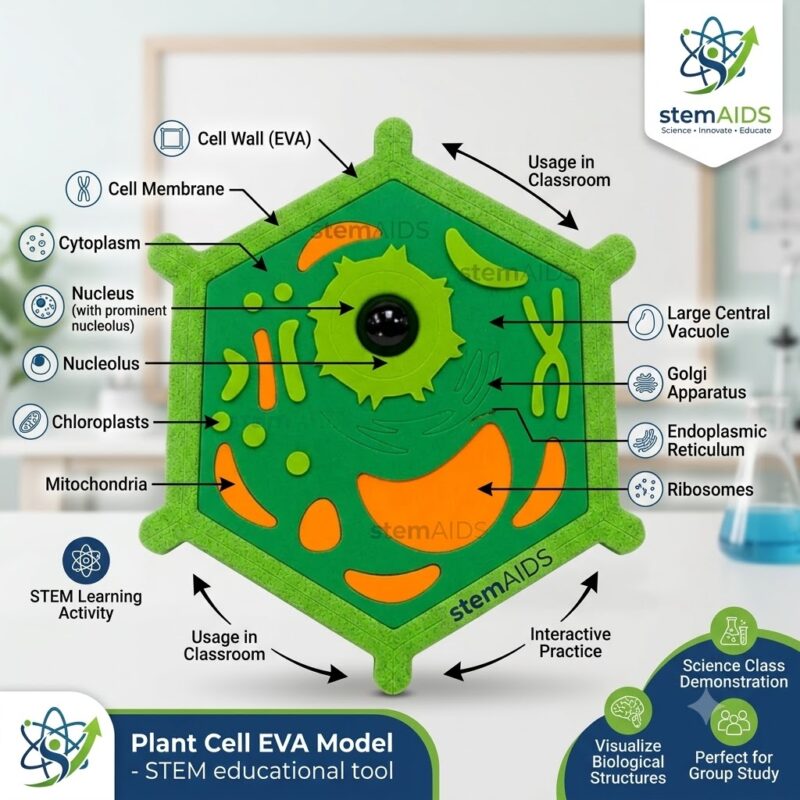
Quick Answer: The Plant Cell Structure EVA Model is a teaching model of a plant cell made from EVA foam, representing the main plant-cell structures, such as the cell wall, chloroplasts and large central vacuole, in a form students can hold and discuss. It is used in school biology lessons on cell structure.
What the Plant Cell Model Represents
A plant cell differs from an animal cell in three features every student must learn: a rigid cellulose cell wall outside the membrane, chloroplasts where photosynthesis takes place, and a large permanent vacuole filled with cell sap that keeps the cell firm. Plant cell models of this type show those differences at a size a whole class can see, alongside the structures both cell types share, such as the nucleus, cytoplasm, cell membrane and mitochondria.
EVA, short for ethylene-vinyl acetate, is a light, soft foam that resists water, so the model can be handled by young students, passed round the room and wiped clean, and it will not shatter if dropped. Foam models are often built from layered or fitted pieces that let students remove and name structures; whether this model has removable parts should be confirmed.
Teachers use the model before microscope work, so students know what to look for in onion epidermis or pondweed leaf slides, and afterwards to explain what the microscope could not show. A school light microscope reveals the cell wall, nucleus and chloroplasts, while mitochondria and ribosomes are too small to see clearly in routine preparations, a gap the model fills.
Specifications
| Item | Plant cell structure teaching model |
| Material | EVA (ethylene-vinyl acetate) foam |
| Represents | A generalised plant cell and its main organelles |
| Key plant features | Cell wall, chloroplasts, large central vacuole |
| Level | Middle and secondary school biology |
| Size, labelling and removable parts | Confirm at enquiry |
Teaching Uses
- Introducing organelles and their functions before microscope practicals
- Comparing plant and animal cells side by side
- Revision quizzes in which students point to and name each structure
- Explaining turgor and photosynthesis at the level of a single cell
Care & Handling
- Wipe with a damp cloth and mild soap; EVA foam tolerates water but not solvents.
- Keep the model away from heaters and direct sun, which can distort foam.
- Use removable labels rather than permanent markers on the surface.
- Store it flat in a box so thin parts are not bent.
Why Choose LabEquip
Biology teachers choose foam cell models because they survive years of handling by whole classes. LabEquip lists this one in the STEM kits range, and related teaching models are in the biology models section. Ask about class quantities on the contact page.
Frequently Asked Questions
What are the main differences between a plant cell and an animal cell?
Plant cells have a cellulose cell wall, chloroplasts and a large permanent vacuole. Animal cells lack all three, although both share a nucleus, cytoplasm, cell membrane and mitochondria.
What is EVA foam?
EVA stands for ethylene-vinyl acetate, a soft, light and flexible foam. It is water resistant and does not shatter, which makes it practical for models handled by young students.
Why is the vacuole so large in a plant cell?
The central vacuole stores water and dissolved substances. When full, it presses the cytoplasm against the cell wall and keeps the cell firm, or turgid, which helps the plant stay upright.
Can students see these structures under a school microscope?
The cell wall and nucleus are visible in stained onion skin, and chloroplasts in pondweed or moss leaves. Mitochondria and ribosomes are too small to see clearly in routine school preparations.
How should the model be cleaned?
Wipe it with a damp cloth and a little mild soap, then let it air dry. Avoid solvents and alcohol wipes on painted areas, as they can lift the colour.
Does the model have labels or removable parts?
That depends on the version. Whether this model has printed labels or detachable organelles should be confirmed at enquiry, so labelling activities can be planned.
Last Updated: September 2026
You must be logged in to post a review.
Bestsellers

Sale
Sale
Sale


Reviews
There are no reviews yet.