









In Stock
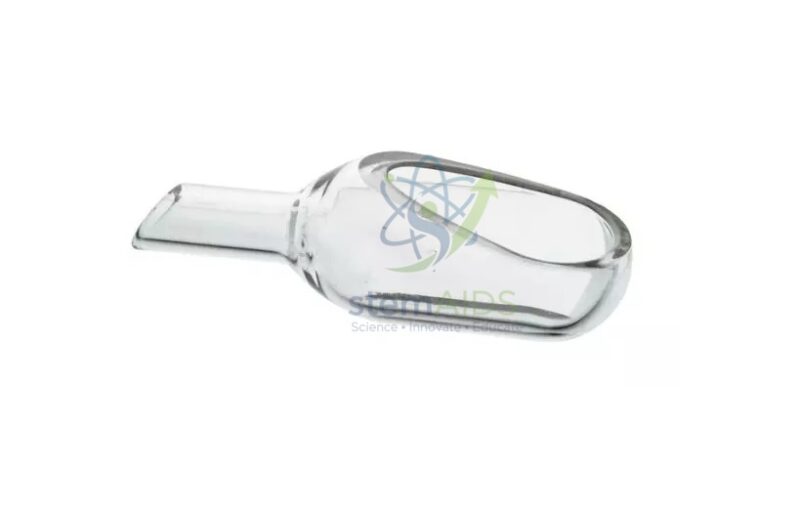
Weighing Scoop, Glass
Borosilicate 3.3 Composition: Fabricated from low-expansion, thermal-shock-resistant borosilicate glass, providing exceptional chemical resistance against aggressive reagents and ensuring dimensional stability during high-temperature sterilization or drying cycles.
Anti-Roll Tubular Geometry: Features a precision-ground flat base for stable positioning on balance pans and an integrated dispensing funnel neck designed to facilitate the smooth, quantitative transfer of powders without clumping or static interference.
₹265.00
Quick Answer: The LabEquip Glass Weighing Scoop features a hollow, tubular neck designed for precise, low-loss delivery of chemical reagents into narrow-necked flasks and vessels. Its chemically inert glass construction makes it suitable for reagents that should not contact plastic during weighing and transfer.
Product Description
The Glass Weighing Scoop is built for accurate quantitative transfer of chemical reagents on analytical and high-sensitivity balances. Its hollow, tubular neck is shaped to guide powders and crystalline reagents directly into narrow-necked vessels such as volumetric flasks and reagent bottles, reducing spillage and static-related loss during transfer.
Because it is made of glass rather than plastic, this scoop is chemically inert and resistant to staining, etching, or reaction with solvents and reagents that could otherwise interact with plastic surfaces. This makes it the preferred choice in analytical chemistry and pharmaceutical compounding settings where sample purity during weighing is critical.
What Makes This Scoop Distinct
This glass variant is intended for reagents and applications where chemical inertness matters more than impact resistance. Its tubular neck design differs from the flat, wide-mouthed delivery neck of our plastic weighing scoop, favouring a narrower, more controlled pour suited to sensitive analytical work. Where breakage risk or cost is the primary concern, our plastic weighing scoop is the more practical alternative.
Specifications
| Parameter | Detail |
|---|---|
| Material | Glass |
| Neck Design | Hollow, tubular neck for delivery into narrow-neck vessels |
| Primary Use | Quantitative transfer of chemical reagents onto analytical balances |
| Key Property | Chemically inert, resistant to staining and reagent attack |
| Sizes / Capacity | Please confirm available sizes with our sales team |
Care & Maintenance
- Rinse thoroughly with water after each use, especially between different reagents, to prevent cross-contamination.
- Handle carefully to avoid chipping or cracking the glass, particularly around the tubular neck.
- Dry completely before storage to prevent moisture-related residue inside the neck.
- Inspect for cracks or sharp chips before each use and discard if damaged.
Why Choose LabEquip
LabEquip supplies laboratory measuring and weighing accessories for analytical chemistry, pharmaceutical, and quality-control applications. Pair this scoop with our Plastic Weighing Scoop for general-purpose tasks, browse our full Measuring Instruments category, or complete your setup with our Brass Analytical Weight Set (1mg-100g).
Frequently Asked Questions
What is a glass weighing scoop used for?
It is used to measure and transfer chemical reagents, particularly powders and crystalline solids, onto an analytical balance or into a narrow-necked vessel with minimal loss.
Why choose glass over plastic for a weighing scoop?
Glass is chemically inert and will not react with, stain from, or absorb odours from aggressive reagents the way some plastics can, making it preferable for sensitive analytical work.
What is the purpose of the tubular neck?
The hollow, tubular neck is shaped to direct powders precisely into narrow-necked flasks and bottles, reducing spillage during transfer.
Is the glass scoop fragile?
Like any glass labware, it should be handled with care to avoid chipping or cracking; our plastic weighing scoop is a more impact-resistant alternative where breakage is a concern.
How should I clean a glass weighing scoop?
Rinse with water between reagents, dry thoroughly, and inspect regularly for chips or cracks before use.
What sizes are available?
Available sizes and capacities vary; please contact our sales team to confirm options for your requirement.
Last Updated: September 2026
You must be logged in to post a review.
Bestsellers

Sale


Sale


Sale



Reviews
There are no reviews yet.