


In Stock
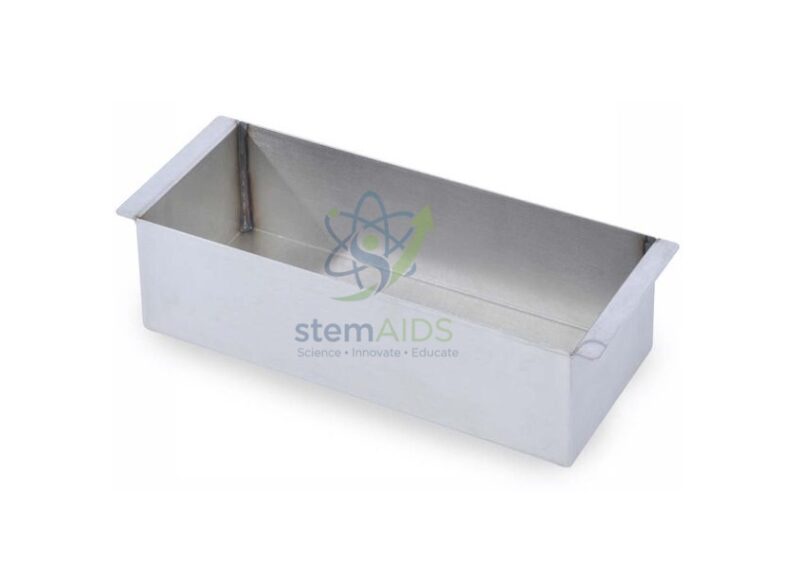
Stainless steel sand bath
₹12,350.00
The StemAids Stainless Steel Sand Bath is a laboratory heating apparatus designed for uniform and controlled heating of flasks, beakers, test tubes, crucibles, and other compatible laboratory vessels. Built with a stainless steel construction, it is suitable for chemistry laboratories, research institutions, quality control labs, pharmaceutical labs, and educational science laboratories where indirect heating is required.
Product Description
The StemAids Stainless Steel Sand Bath provides a practical method for gentle and even heating using sand as the heat transfer medium. Unlike direct flame heating, a sand bath distributes heat more gradually, helping reduce the risk of localized overheating and thermal shock to glassware. It is commonly used for evaporation, digestion, sample drying, heating reactions, and general laboratory heating applications.
Its stainless steel body offers durability, corrosion resistance, and ease of cleaning in routine laboratory environments. The sand bath is suitable for laboratories that require stable heating support for experiments involving glassware, samples, chemicals, and controlled thermal processes.
Product Specifications
| Parameter | Details |
|---|---|
| Product Name | Stainless Steel Sand Bath |
| Brand | StemAids |
| Product Type | Laboratory sand bath heating apparatus |
| Material | Stainless steel |
| Heating Medium | Clean dry laboratory sand |
| Application | Indirect heating, evaporation, digestion, drying, and sample heating |
| Compatible Vessels | Beakers, flasks, crucibles, test tubes, and compatible lab containers |
| Suitable For | School labs, college labs, research labs, chemistry labs, QC labs, and industrial laboratories |
Key Features
- Stainless steel construction for durability and laboratory use
- Provides indirect and uniform heating through sand medium
- Suitable for heating glassware and small laboratory vessels
- Helps reduce direct flame exposure to samples and containers
- Useful for evaporation, digestion, drying, and sample preparation
- Easy to clean, maintain, and operate in routine laboratory workflows
- Suitable for educational, research, pharmaceutical, and QC laboratories
How to Use
- Place the StemAids Stainless Steel Sand Bath on a stable and heat-resistant laboratory bench.
- Fill the bath with clean, dry laboratory-grade sand up to the recommended level.
- Place the required beaker, flask, crucible, or compatible vessel gently into the sand.
- Ensure the vessel is stable and partially surrounded by sand for better heat transfer.
- Switch on the heating source or sand bath unit as per the equipment design.
- Set or control the heating level according to the experiment requirement.
- Monitor the sample during heating to avoid overheating, spillage, or drying beyond requirement.
- After completion, switch off the unit and allow the sand and vessel to cool.
- Remove the vessel carefully using proper laboratory tongs or heat-resistant gloves.
- Clean the sand bath and replace contaminated sand when required.
Applications
- Indirect heating of laboratory glassware
- Evaporation of liquids and solvents
- Sample drying and moisture removal
- Chemical digestion procedures
- Heating of flasks, beakers, and crucibles
- School and college chemistry experiments
- Research and industrial quality control testing
Safety and Handling Guidelines
- Use only clean and dry sand as the heating medium.
- Do not touch the sand, vessel, or bath surface while hot.
- Use heat-resistant gloves, tongs, or suitable laboratory tools when handling heated vessels.
- Keep flammable materials away from the heating area.
- Do not overfill the bath with sand or sample vessels.
- Ensure glassware is heat-resistant and free from cracks before heating.
- Allow the sand bath to cool completely before cleaning or storage.
- Replace sand if it becomes contaminated with chemicals or residues.
FAQ
1. What is the StemAids Stainless Steel Sand Bath used for?
It is used for indirect heating of laboratory vessels such as flasks, beakers, crucibles, and test tubes during evaporation, digestion, drying, and sample heating procedures.
2. Why is sand used in a sand bath?
Sand acts as a heat transfer medium and helps distribute heat more evenly around the vessel compared to direct heating.
3. Is stainless steel suitable for laboratory sand baths?
Yes, stainless steel is suitable because it offers durability, corrosion resistance, and easy cleaning for routine laboratory use.
4. Can this sand bath be used for school chemistry laboratories?
Yes, it is suitable for school, college, research, quality control, pharmaceutical, and industrial laboratory applications.
5. What type of sand should be used?
Clean, dry laboratory-grade sand should be used. Contaminated or wet sand should be avoided because it may affect heating performance and safety.
6. Can cracked glassware be heated in a sand bath?
No, cracked or damaged glassware should not be heated because it may break during temperature changes.
7. How should the sand bath be cleaned?
Allow the bath to cool completely, remove contaminated sand if required, wipe the stainless steel surface with a clean cloth, and keep it dry before storage.
8. Is a sand bath better than direct flame heating?
A sand bath is useful when gradual and indirect heating is required. It helps reduce direct flame exposure and supports more uniform heat distribution.
Why Choose StemAids?
StemAids laboratory heating equipment is designed for practical laboratory workflows, reliable performance, and safe handling. The Stainless Steel Sand Bath supports uniform indirect heating and durable operation for educational, research, quality control, pharmaceutical, and industrial laboratory applications.
SEO Keywords
StemAids Stainless Steel Sand Bath, Laboratory Sand Bath, Stainless Steel Sand Bath for Lab, Sand Bath Heating Apparatus, Chemistry Laboratory Sand Bath, Indirect Heating Sand Bath, Laboratory Heating Equipment, Sand Bath for Beakers and Flasks
You must be logged in to post a review.
Bestsellers





Reviews
There are no reviews yet.