










In Stock
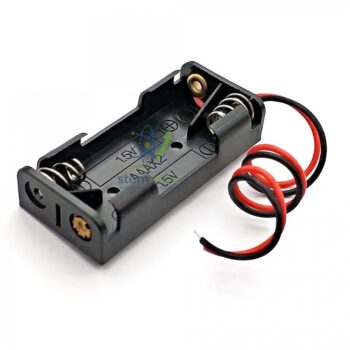
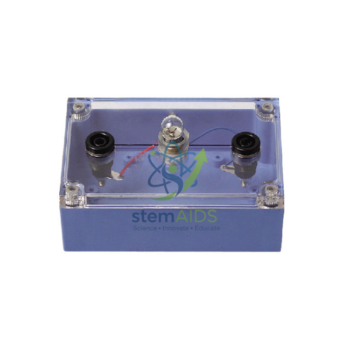
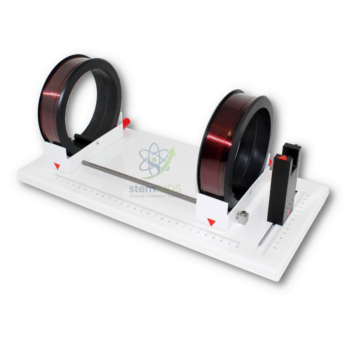
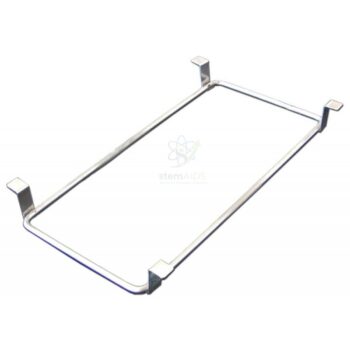
Seismograph Model
Maquette sismographe, Dual-Axis Configuration Compatibility supports the student's ability to differentiate between vertical and horizontal propagation vectors, essential for understanding P-wave and S-wave characteristics.
Ruggedized Damping Mechanism Simple et démonstratif, Ensures consistent Instructional Reliability in high-occupancy laboratory environments by allowing students to calculate the impact of energy dissipation on seismogram clarity.
$48.73
Quick Answer: The Seismograph Model is a teaching model of an earthquake recorder in which a heavy suspended mass stays nearly still while its frame shakes, so the relative movement can be traced as a seismogram. It explains how seismographs detect and record ground motion.
How a Seismograph Records Shaking
A seismograph relies on inertia. A heavy mass hangs from a frame on a spring or as a pendulum, so it is only loosely coupled to the ground. When the ground and frame shake, the mass tends to stay where it is, and the relative movement between mass and frame is what gets recorded. In classic mechanical designs a pen on the mass traces a line on a moving paper strip or drum; modern instruments sense the movement electronically.
A classroom seismograph model makes the principle visible. Students tap or shake the bench or the base and watch the trace change from a flat line to a burst of waves, then compare gentle and strong shaking. A simple model responds mainly to movement in one direction, which raises the question of why observatories record three components. The listing does not say how this model records, whether with a pen and paper strip or another method, so confirm that before ordering.
Seismograms also carry information about the earthquake: the faster P-waves arrive before the S-waves, and the gap between them grows with distance from the source. Distances from three stations are enough to locate the epicentre by triangulation, a classic geography exercise.
Specifications
| Type | Demonstration seismograph model |
| Principle | Inertia of a suspended mass relative to a shaking frame |
| Output | Trace of ground movement (seismogram) |
| Direction sensed | Mainly one direction, as is usual for simple designs |
| Recording method and consumables | Confirm at enquiry |
Applications
- Demonstrating inertia and how ground motion is detected
- Producing traces for gentle and strong shaking to compare amplitude
- Introducing P-wave and S-wave arrivals and epicentre location
- Supporting earthquake hazard and preparedness lessons
Care & Handling
- Stand the model on a firm bench, and support or lock the mass whenever the model is moved so the suspension is not strained.
- If the model uses a pen and paper, cap the pen after use and load fresh paper before the demonstration.
- Start with gentle shaking and build up rather than jolting the suspension.
- Store the model with the mass supported and the frame covered against dust.
Why Choose LabEquip
Geography teachers covering earthquakes and physics teachers covering inertia both use a seismograph model to show how shaking becomes data. LabEquip lists it in General Lab Products with the seismic wave propagation and shadow zone model, which shows what seismic waves reveal about Earth’s interior.
Frequently Asked Questions
Why does the mass stay still while the frame moves?
Because of inertia. The mass is only loosely connected to the frame through a spring or pendulum, so when the frame is shaken quickly the mass lags behind, and the relative movement is what the seismograph records.
What is the difference between a seismograph and a seismogram?
The seismograph is the instrument that detects and records ground motion. The seismogram is the record it produces, the wavy trace showing the shaking over time.
Why do P-waves arrive before S-waves?
P-waves are compressional waves and travel faster through rock than S-waves, which are shear waves. The further a station is from the earthquake, the larger the time gap between the two arrivals.
How is the epicentre located from seismograms?
The time gap between the P and S arrivals at each station gives its distance from the earthquake. Circles of those distances drawn around three stations on a map meet at the epicentre.
Why do real seismic stations use three sensors?
Ground motion happens in three dimensions, so stations record north-south, east-west and vertical components. A simple teaching model usually shows motion in one direction to keep the principle clear.
Does the size of the trace show the magnitude of an earthquake?
Trace amplitude reflects how strongly the ground shook at that station, which depends on both magnitude and distance. Magnitude scales correct for distance, so a model trace illustrates the idea rather than measuring magnitude.
Last Updated: September 2026
You must be logged in to post a review.
Bestsellers




Reviews
There are no reviews yet.