




In Stock
Safety Shoes with Direct Injection Polyurethane Sole
Monolithic Sole Architecture: Utilizes high-precision Direct Injection Process (DIP) technology to fuse the single-density Polyurethane (PU) sole directly to the upper, creating a permanent, leak-proof bond that eliminates adhesive failure and ensures superior hydrostatic resistance.
Advanced Kinetic Shielding: Integrated with an impact-resistant steel toe cap and a puncture-resistant midsole, housed within a high-denier grain leather upper optimized for anti-static (ESD) discharge and thermal regulation during prolonged high-mobility shifts.
₹1,230.00
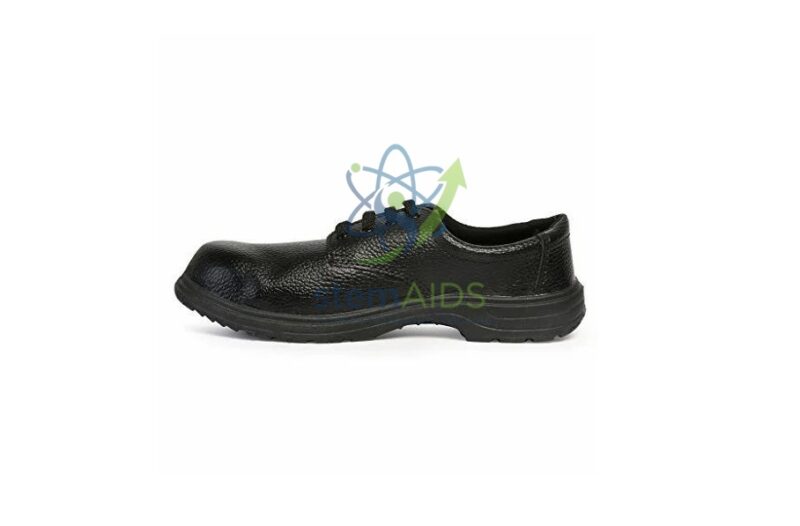
Quick Answer: The Safety Shoes with Direct Injection Polyurethane Sole are DIP sole safety shoes: protective work shoes whose polyurethane sole is injected in a mould directly onto the upper, bonding the two without stitching. The listing photograph shows a black, low-cut lace-up shoe for workshops, stores and laboratory floors.
How a Direct Injection Sole Is Made
In direct injection moulding, the finished upper is pulled over a last and lowered into a sole mould, and liquid polyurethane is injected so that it fills the mould and bonds to the upper as it sets. The sole ends up attached along its whole edge with no glue line or stitching to open, and the polyurethane can be poured in two densities: a firm, hard-wearing outer layer and a softer inner layer for cushioning.
Polyurethane soles are generally light, flexible and resistant to oils and many workshop fluids, which suits them to workshops, stores, kitchens and laboratories. They are less suited to very hot surfaces, where nitrile rubber soles are usually chosen. Slip resistance depends on the tread pattern and compound as well as the floor, so wet or oily floors still call for care in any shoe.
The title does not say whether a toe cap or a midsole plate is fitted, and those features decide which hazards the shoe protects against. The Executive version of this shoe is listed separately.
Where These Shoes Are Worn
- Engineering and ITI workshops where heavy parts or tools can be dropped.
- Stores and loading areas handling boxes of glassware and equipment.
- Laboratory preparation rooms with wet or oily floors.
- Maintenance and estates work around the campus.
Making Them Last
- Clean off oil, chemicals and mud after each shift, and dry wet shoes at room temperature, not on a heater, which can crack the upper.
- Check the tread regularly; a worn, smooth sole loses grip on wet floors.
- Replace shoes whose toe area is dented or cracked after a heavy impact.
- Treat the uppers with a polish suited to their material so they stay supple.
Specifications
| Type | Safety shoe with direct injection polyurethane (DIP) sole |
| Style in photograph | Black, low-cut lace-up |
| Sole attachment | Injection-moulded directly onto the upper |
| Sole properties | Light and oil-resistant, as is general for PU soles |
| Toe cap, midsole and sizes | Confirm at enquiry |
Why Choose LabEquip
Workshop instructors, stores staff and estates teams buy DIP-sole safety shoes as everyday protective footwear. LabEquip lists them in General Lab Products, and size runs for a group of staff or trainees can be arranged through the contact page.
Frequently Asked Questions
What does DIP mean on safety shoes?
DIP stands for direct injection polyurethane. The polyurethane sole is injected straight onto the upper in a mould, so it bonds along its whole edge without stitches or a separately glued joint.
Are PU soles suitable for hot surfaces?
Polyurethane softens at lower temperatures than nitrile rubber, so PU soles are not the choice for foundries, hot tar or standing on heated plates. For those tasks, look for a sole made and marked for heat.
Do these shoes have a steel toe cap?
The listing title does not say. Many safety shoes of this style carry a steel or composite toe cap, so confirm the toe protection when you enquire, since it decides what the shoe is suitable for.
How should safety shoes fit?
Leave about a thumb’s width between the longest toe and the end of the shoe, and make sure the toes do not touch the toe cap when walking. Try them on with work socks, later in the day when feet are slightly larger.
Are these shoes oil resistant?
Polyurethane soles generally resist oils and fuels well, which is one reason they are common in workshops. Oil resistance is not the same as slip resistance, so clean up spills rather than relying on the sole.
How often should safety shoes be replaced?
Replace them when the tread is worn smooth, the sole starts to separate, the upper is cut through, or after a heavy object has landed on the toe. Damage to the toe area may not be visible but can reduce protection.
Last Updated: September 2026
You must be logged in to post a review.
Bestsellers




Reviews
There are no reviews yet.