














In Stock
Rain Gauge
₹850.00
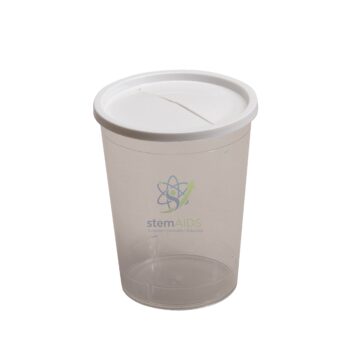
Quick Answer: A rain gauge is an open-topped collector with a measuring scale that catches falling rain so the depth of rainfall at one spot can be read directly. The pictured gauge is a clear, tapered plastic tube with a printed scale and a pointed stake, used for daily readings at school weather stations and gardens.
How a Rain Gauge Measures Rainfall
Rainfall is reported as a depth: the height the water would reach on flat ground if none soaked in, ran off or evaporated. Because a depth does not depend on the size of the opening, a slim gauge and a wide funnel gauge should agree, provided each scale is marked for its own shape. The tapered form of this gauge stretches the bottom of the scale over a greater height, so a light shower can be read more finely than in a straight-sided tube.
The listing photograph shows a clear tube with a dark printed scale rising to 5 and marked in halves, with the abbreviation for inches at the top, so the pictured gauge reads in inches, and a narrow lower end shaped into a slotted stake for pushing into the ground or fixing to a post. Schools that keep metric records should confirm the scale units with the order; one inch equals 25.4 mm, so inch readings can be converted.
Keeping a Rainfall Record
A rainfall record is only as good as its routine. Set the gauge level in open ground, keep the rim at the same height all season, read it at one fixed time each day and empty it after every reading. Dry days are still logged as zero, a wet day with too little water to measure is logged as a trace, and in hot weather the reading is taken soon after the rain stops, because water evaporates from an open gauge.
Applications
- Keeping a daily rainfall log as part of a school weather station, beside temperature and wind records
- Monsoon-season projects that total rainfall week by week and plot a cumulative graph
- Comparing the catch in open ground with the catch under a tree canopy to show interception
- Linking rainfall to soil moisture and watering decisions in a school garden
Specifications
| Item | Manual collecting gauge for rainfall |
| Body | Clear plastic tapered tube (as pictured) |
| Scale | Printed on the tube and read at the water line |
| Mounting | Pointed stake end with slots for fixing (as pictured) |
| Reading | Rainfall depth for each reading period; emptied after every reading |
| Scale units (inches or millimetres) | Confirm at enquiry |
Care & Handling
- Empty the gauge after every reading and rinse out leaves, insects and grit, which raise the water level.
- Check that the gauge is still upright after strong wind or heavy rain; a tilted gauge catches less than it should.
- In places with frost, bring a plastic gauge indoors before freezing nights, since ice can split the tube.
- Replace the gauge when the scale fades or the plastic yellows and cracks after long exposure to sun.
Why Choose LabEquip
Rain gauges are ordered by geography departments, eco-clubs and agriculture teachers setting up simple weather stations. For funnel-type gauges that need a separate measuring vessel, see the Cylinder, Rain Measure, and schools wanting automatic logging can look at the Connected Weather Station. More outdoor science equipment is listed under General Lab Products.
Frequently Asked Questions
Where should the gauge be placed?
In open, level ground away from buildings, trees and walls, ideally at a distance of at least twice the height of the nearest obstacle. The rim should be level, and the gauge should not stand on concrete or paving, where rain splashes in from around it.
Why is this gauge tapered at the bottom?
The narrow lower section makes a small amount of rain rise to a greater height, so the lowest graduations are spread out and light showers can be read more precisely than in a straight-sided tube.
What time of day should rainfall be read?
Read at the same time every day, usually in the morning, and record it as the total for the previous 24 hours. A fixed time means daily figures add up to weekly and monthly totals without overlaps or gaps.
How do I read the scale correctly?
Make sure the gauge is upright, bring your eye level with the water surface and read at the bottom of the curved meniscus. Record the value, then empty the gauge so the next reading starts from zero.
How do I convert inches of rainfall to millimetres?
Multiply by 25.4. A reading of half an inch, for example, equals 12.7 mm. Most weather services publish rainfall in millimetres, so converting makes school records easy to compare with official data.
What is the difference between a rain gauge and a rain measure cylinder?
A simple gauge like this one collects and reads rainfall in the same tube. Standard funnel gauges collect water in a bottle, which is then poured into a separately graduated measuring cylinder, called a rain measure, matched to the funnel diameter.
Last Updated: September 2026
You must be logged in to post a review.
Bestsellers




Reviews
There are no reviews yet.