








In Stock
Plastic Face Shield
Optic-Grade Polymer Composition: Utilizes a high-clarity, distortion-free PET visor with a double-sided anti-fog coating and 99.9% UV filtration, providing a full-width wrap-around barrier against fluid strike-through and chemical splashes.
Ergonomic Suspension Architecture: Features a reinforced polypropylene brow-guard with a multi-point adjustable ratchet suspension and hypoallergenic foam padding, engineered to maintain systemic structural stability and a secure fit during high-mobility clinical maneuvers.
$5.90
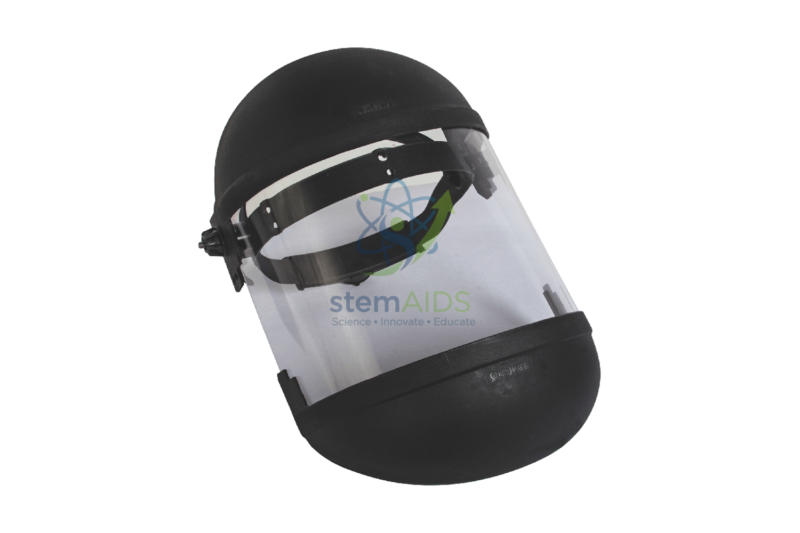
Quick Answer: The Plastic Face Shield is a clear plastic visor mounted on adjustable headgear with a brow guard, as shown in the listing photograph, worn in front of the face to protect it from chemical splashes, hot liquids and flying particles, usually over safety goggles or spectacles.
Protecting the Whole Face
Goggles protect the eyes, but a splash of acid or hot liquid can still reach the cheeks, mouth and neck. A plastic face shield puts a clear barrier in front of the whole face. The visor hangs from headgear that fits around the head, often with a ratchet or strap adjustment, and the brow guard stops splashes coming over the top. Many headgears let the visor tilt up when it is not needed.
A face shield is secondary protection: the visor is open at the bottom and sides, so liquid and particles can still reach the eyes from below or around it. Standard practice is to wear it together with goggles or safety spectacles, for example when pouring concentrated acids or larger volumes of corrosive liquid, dispensing liquid nitrogen, unloading an autoclave or using a bench grinder.
The visor material is not stated in the listing, and it affects use: polycarbonate visors resist impact well, while acetate and some other plastics withstand certain chemicals better. Choose by the main hazard, and look for an impact marking on the visor before using it for high-impact work.
When to Wear It
- Pouring and diluting concentrated acids and alkalis in preparation rooms.
- Handling liquid nitrogen and other cryogenic liquids.
- Unloading autoclaves and handling hot liquids and media.
- Bench grinding, chiselling and cutting in workshops.
Specifications
| Type | Face shield with clear plastic visor |
| Headgear | Adjustable, with brow guard (listing photograph) |
| Coverage | Face from brow to chin |
| Worn with | Safety goggles or spectacles underneath |
| Visor material and thickness | Confirm at enquiry |
Care & Handling
- Always wear goggles or safety spectacles under the shield.
- Clean the visor with mild soap, water and a soft cloth; solvents can cloud or crack plastic visors.
- Replace the visor when scratches or chemical marks blur vision.
- Hang the shield up or store it flat in a clean place, so the visor does not bend or scratch.
Why Choose LabEquip
Chemistry preparation rooms, microbiology labs with autoclaves, cryogenic stores and engineering workshops buy face shields for the tasks where a splash could reach beyond the eyes. LabEquip lists this plastic face shield in General Lab Products together with goggles such as the chemical, impact and dust protection goggles, and orders can be placed through the contact page.
Frequently Asked Questions
Can a face shield be worn instead of goggles?
No. A face shield is open at the bottom and sides, so splashes and particles can still reach the eyes. It should be worn over safety goggles or spectacles, adding protection for the rest of the face.
When is a face shield needed in a chemistry lab?
When handling larger volumes of corrosive liquids, pouring concentrated acids or alkalis, working with hot or pressurised liquids, or dispensing cryogenic liquids. In these tasks a splash could reach the cheeks, mouth or neck.
Can the visor be lifted when not in use?
Many face-shield headgears let the visor pivot up above the brow, so it can be raised between tasks without taking the headgear off. Lower it fully before starting a task that needs it.
How do I adjust the headgear?
Set the headband so it sits just above the eyebrows and grips firmly without pressure points, using the ratchet or strap at the back. The visor should hang clear of the face and goggles without touching the nose.
Which visor material resists chemicals most?
It depends on the chemical. Polycarbonate has high impact strength but is attacked by some solvents, while acetate and similar plastics tolerate a different set of chemicals. Match the visor material to the chemicals you use before relying on it.
How long does a visor last?
Until scratches, crazing or chemical marks make it hard to see through clearly. A visor that has taken a heavy impact, or been splashed with a solvent that marks it, should be replaced straight away.
Last Updated: September 2026
You must be logged in to post a review.
Bestsellers




Reviews
There are no reviews yet.