











In Stock
Modular Barrier System
High-Density Polyethylene (HDPE) Composition: Fabricated from UV-stabilized, impact-resistant HDPE featuring an interlocking lug system that allows for 360-degree articulation and continuous linear structural integrity without external fasteners.
Integrated Ballast-Ready Cavity: Designed with a hollow-core chassis for optional water or sand ballasting, coupled with recessed slots for retroreflective sheeting, ensuring high-wind stability and nocturnal visibility in high-velocity transit zones.
₹1,000.00
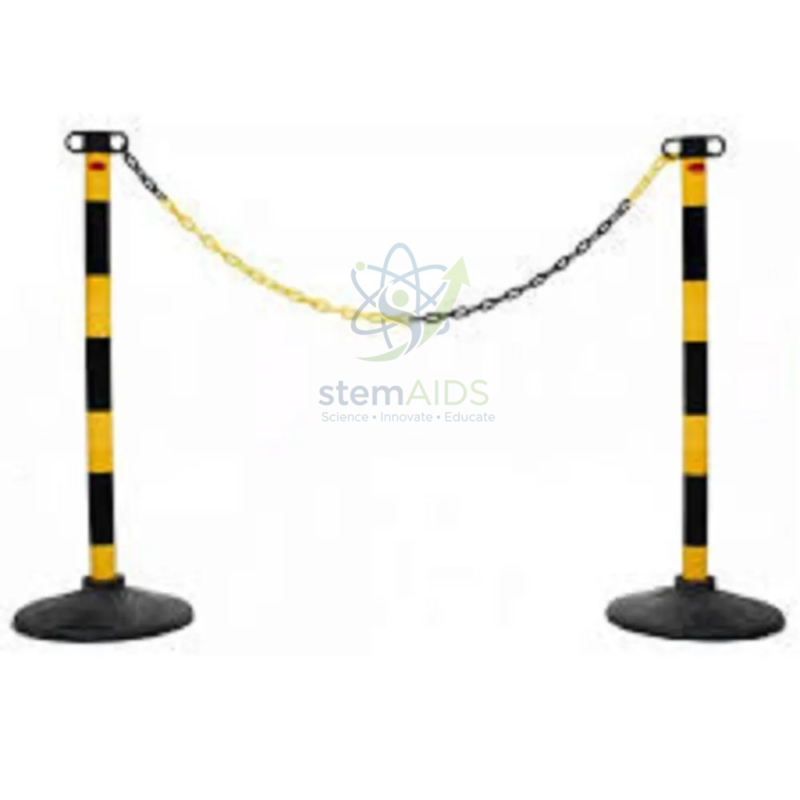
Quick Answer: The Modular Barrier System, as the listing photograph shows it, is a set of yellow-and-black striped posts standing on round weighted bases and linked by yellow-and-black plastic chain. Posts and chain lengths can be arranged into lines or enclosures of any shape to cordon off an area quickly.
Posts, Bases and Chain
Each post stands on a heavy base, so it stays upright without being fixed to the floor, and carries a hook or ring at the top that holds the chain. Adding posts and chain extends the line and removing them shortens it, which is what makes the system modular: the same kit can close a corridor, surround a spill or form a queue lane in one morning.
Plastic chain is light, does not rust and is easy to see thanks to its contrasting stripes. It is a visual barrier rather than a physical one: it tells people clearly where not to go, but it will not stop a determined person or a vehicle. Post-and-chain barriers therefore suit indoor areas and pedestrian spaces, while vehicle routes need heavier barriers.
The listing photograph shows the post-and-chain style only; the number of posts, chain length, post height and base material in a set are not given, so agree them for your layout. Outdoors on roads, traffic cones with a cone connecting bar do a similar job.
Specifications
| Type | Post-and-chain barrier system |
| Posts in photograph | Yellow and black striped, on round weighted bases |
| Chain | Yellow and black plastic chain |
| Layout | Extended by adding posts and chain lengths |
| Set contents and post height | Confirm at enquiry |
Where Barriers Are Set Up
- Cordoning off chemical spills or broken glass in corridors and labs until cleaned up.
- Closing a lab or workshop area during maintenance.
- Queue lanes for exam halls, admissions and events.
- Keeping pedestrians away from wet floors, lifts under repair or loading bays.
Setting Up and Storing
- Stand posts on level ground and keep the chain taut enough to be seen but not so tight that it pulls posts over.
- Hang a warning sign on the barrier so people know why the area is closed.
- Wipe posts and chain clean after use and coil the chain loosely for storage.
- Keep bases and posts together in a dry store so the kit is ready for the next spill or event.
Why Choose LabEquip
Estates teams, laboratory managers and exam offices buy post-and-chain barriers to close off areas quickly and neatly. LabEquip lists this system in General Lab Products, and the number of posts and chain length for your layout can be worked out through the contact page.
Frequently Asked Questions
Will a chain barrier stop people entering an area?
It marks the boundary clearly but is easy to step over or move aside. Use it where people simply need to be warned and guided, and use locked doors or rigid barriers where entry must be prevented.
Can the posts be used outdoors?
Plastic posts and chain do not rust and can be used outside, but wind can topple light posts on exposed sites. Stand them on level ground and bring them in after use so the plastic does not fade in the sun.
How many posts are needed for a given length?
Divide the length to be closed by the chain span you want between posts, then add one. Shorter spans give a neater, tauter line that is harder to push aside.
Is a chain barrier suitable around a laboratory spill?
Yes, as a way of keeping people away while the spill is dealt with. Set it up at a safe distance, add a sign, and remove it only after the area has been cleaned and checked.
Can the chain be attached to walls or door frames?
Chain can usually be hooked to any post, wall bracket or ring that accepts its links, so the line can end at a wall or a door frame. Make sure the fixing point holds the chain securely.
Why yellow and black stripes?
Yellow and black is a widely used hazard warning combination, because the strong contrast is visible to most people, including many with colour vision deficiency, and in poor light.
Last Updated: September 2026
You must be logged in to post a review.
Bestsellers






Reviews
There are no reviews yet.