












In Stock
Insect Vacuum
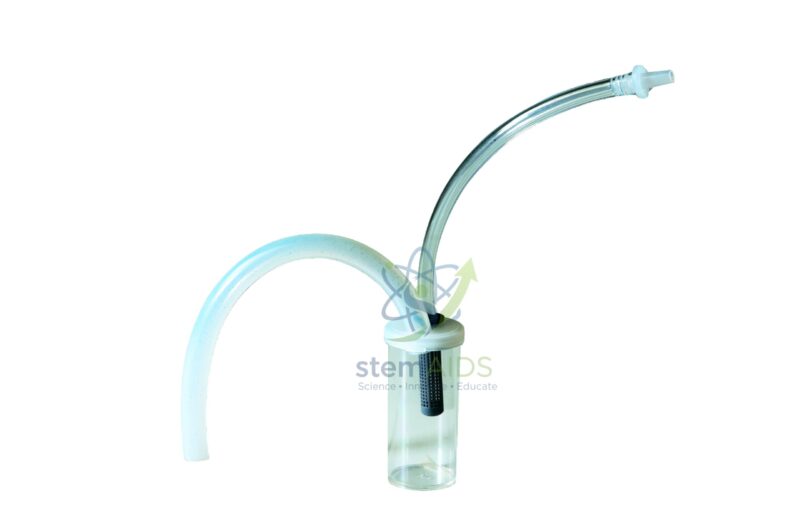
Aspirateur à insectes Features a high-density micro-mesh barrier that prevents the accidental inhalation of debris or specimens while maintaining optimal airflow for rapid, low-impact capture.
Chemical-Resistant Polycarbonate Reservoir Constructed from transparent, medical-grade polymers that allow for immediate visual taxonomic verification and withstand repeated sterilization for high-cadence field sampling and laboratory use.
₹650.00
Quick Answer: The Insect Vacuum is an insect aspirator, often called a pooter: a clear collecting vial with two tubes attached, one to suck through and one to draw the insect in. It lets students pick up small, fast or fragile insects from leaves, bark or a beating tray without crushing them.
How the Aspirator Works
Suction on one tube lowers the pressure inside the collecting chamber, so air rushes in through the second, open tube and carries a nearby insect with it. A piece of fine gauze across the inner end of the suction tube stops the catch from travelling any further, leaving the insect in the clear chamber where it can be seen. The listing photo shows the familiar layout: a clear vial with a stopper, a curved intake tube and a flexible suction tube.
Aspirators suit animals that are awkward to pick up with fingers or forceps, such as aphids, springtails, small flies, spiders and beetle larvae. The collecting vial can be removed and closed so the animals can be examined under a magnifier and later released. Holding the intake just above the insect, rather than pressing it on top, gives a cleaner pick-up.
Mouth-operated aspirators need sensible rules. The gauze must always be in place, and the aspirator should not be used on dusty material, mouldy leaf litter, animal droppings or anything that might carry spores or pathogens. Each student should have their own mouthpiece, cleaned between users. Paired with the Japanese Umbrella beating tray, it is the standard way to gather insects shaken from branches.
Specifications
| Type | Hand aspirator (pooter) for small insects |
| Pictured parts | Clear collecting vial with stopper, curved intake tube, flexible suction tube |
| Operation | Suction through the mouthpiece tube |
| Safeguard | Gauze on the suction side; check it is in place before each use |
| Suitable for | Aphids, springtails, small flies, spiders, larvae |
Fieldwork Uses
- Collecting insects shaken onto a beating tray from trees and shrubs
- Sampling invertebrates from a quadrat on grassland or a lawn
- Picking up soil animals from a tray of leaf litter
- Transferring tiny animals into magnifying boxes for observation
Care & Handling
- Check the gauze before each session and replace it if torn or clogged.
- Wash the mouthpiece and tubing in warm soapy water after use, rinse, and let them dry fully.
- Empty the collecting vial promptly and release live insects where they were found.
- Do not use the aspirator on stinging insects, hairy caterpillars that may irritate, or anything dusty or mouldy.
Why Choose LabEquip
Ecology teachers, field-study centres and entomology students rely on an insect aspirator because it collects small animals intact where forceps would damage them. LabEquip lists it in the General Lab Products range with other sampling tools.
Frequently Asked Questions
Is it safe to use a mouth-operated aspirator?
It is safe for normal fieldwork when the gauze filter is intact and it is used only on living insects in clean vegetation. It should never be used on dust, mould, droppings or soil that might carry spores or harmful microbes, and mouthpieces should not be shared without cleaning.
What insects can be collected with an insect aspirator?
Small, soft or quick animals up to a few millimetres long are ideal: aphids, springtails, small flies, thrips, spiders and larvae. Large beetles or butterflies are too big for the intake tube and are better caught by hand or with a net.
Why does the aspirator have two tubes?
One tube is for suction and has a gauze screen so nothing reaches the user; the other is the open intake that points at the insect. Separating the two paths lets the animal be drawn into the collecting chamber but no further.
How are the collected insects examined?
Close the collecting vial, or tip the catch into a small magnifying box or dish, and look at it with a hand lens or stereo microscope. Count and identify quickly, then release the animals near where they were collected.
Are there aspirators that do not use the mouth?
Yes. Some designs use a squeeze bulb or a small battery fan instead of the user’s breath, which is preferable for younger children or for dusty habitats. The collecting principle is the same.
How is the gauze replaced?
Remove the suction tube from the stopper, fit a new square of fine nylon mesh or muslin over the inner end, and secure it with a small rubber band or tape before refitting. Check that it is taut and has no holes.
Last Updated: September 2026
You must be logged in to post a review.
Bestsellers




Reviews
There are no reviews yet.