







In Stock
Helmet with Lamps
Advanced Material Composition: Fabricated from a high-impact ABS (Acrylonitrile Butadiene Styrene) thermoplastic shell featuring a 6-point textile suspension system designed to dissipate kinetic energy from vertical ballistic impacts.
Integrated Optoelectronics: Features a factory-mounted, Intrinsically Safe (IS) LED module with an IP67 ingress protection rating, delivering a high-lumen wide-angle beam powered by a high-density, rechargeable lithium-ion power cell.
₹695.00
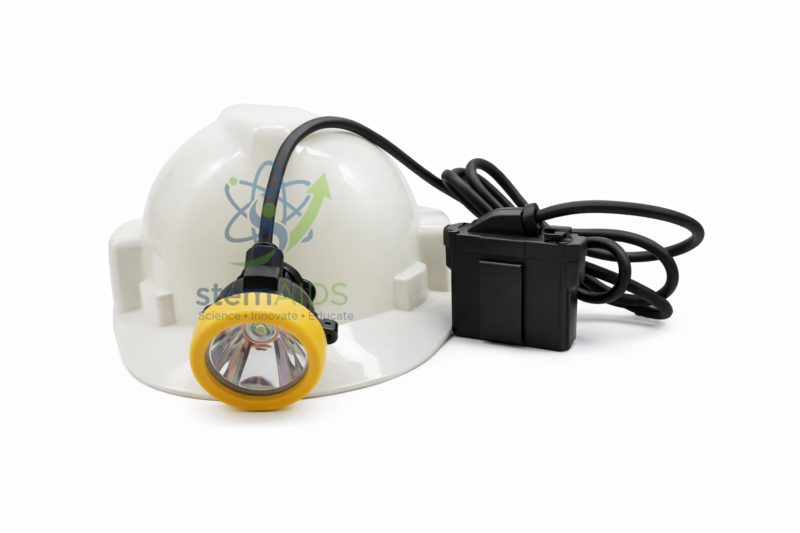
Quick Answer: The Helmet with Lamps is a hard hat with cap lamp: the listing photograph shows a white safety helmet with a lamp clipped to its front bracket and a cable running to a separate battery pack. It gives head protection and hands-free light wherever the wearer has to see into dark spaces.
Light Where the Wearer Looks
A lamp fixed to the front of a helmet points wherever the head turns, so the beam follows the eyes and both hands stay free for climbing, carrying or handling tools. That is why this layout has long been used in mines and tunnels. In the photograph, the lamp head sits on a bracket at the front of the shell and a cable leads to a battery pack, which is normally clipped to a belt so its weight stays off the head.
Keeping the battery off the helmet makes the lamp lighter on the neck during long shifts and allows a larger battery than a clip-on headlamp can carry. The drawback is the cable, which has to be routed over the shoulder so it cannot catch on fittings. The title says lamps while the photograph shows one lamp unit, and the lamp type, battery chemistry and charging method are not given in the listing.
One limitation is important: ordinary cap lamps are not suitable where flammable gas or dust may be present unless they are specifically approved for that use. For simple hands-free light without a hard hat, the LED Headlamp on an elastic band is a lighter option.
Uses for a Lamp Helmet
- Inspecting cable ducts, crawl spaces, basements and plant rooms.
- Supervised geology and caving club visits to caves and old mine workings.
- Night maintenance on campus grounds and work during power cuts.
- Showing mining safety equipment in earth science and engineering lessons.
Looking After Lamp and Battery
- Charge or change the battery according to its instructions before every trip, and carry a backup light underground.
- Route the cable behind the shoulder and under a strap so it cannot snag.
- Wipe the lamp lens clean; dust on the lens noticeably dims the beam.
- Inspect the helmet shell and harness as for any hard hat, and never drill it to add fittings.
Specifications
| Type | Safety helmet with front-mounted cap lamp |
| Helmet in photograph | White hard hat with lamp bracket |
| Power | Separate battery pack connected by cable |
| Carrying | Battery pack usually worn on a belt |
| Lamp type, battery and charger | Confirm at enquiry |
Why Choose LabEquip
Estates staff, field-study leaders and engineering departments buy lamp helmets when people must work or move in dark spaces while still wearing head protection. LabEquip lists it in General Lab Products with other helmets such as the Industrial Safety Helmet, and questions about the battery can go through the contact page.
Frequently Asked Questions
Why is the battery separate from the lamp?
A belt-worn battery keeps weight off the head and neck and can be larger than one built into the lamp, which usually means longer running per charge. The cable joins the two and should be routed behind the shoulder.
Can this helmet be used in a mine or where gas may be present?
Only lamps and batteries specifically approved for flammable atmospheres may be used where gas or combustible dust could be present. Treat a standard cap lamp as unsuitable for those places unless its approval marking says otherwise.
How is a lamp helmet different from a headlamp?
A headlamp is a small light on an elastic band with its batteries in the lamp body, and it gives no head protection. A lamp helmet combines a hard hat with a front-mounted lamp and a separate battery, so it suits places where falling objects or low ceilings are also a risk.
Can the lamp be removed from the helmet?
Cap lamps are usually held in a front bracket and slide out for charging or replacement, leaving the helmet usable on its own. Keep the bracket free of grit so the lamp seats firmly.
What should a group carry for a cave or tunnel visit?
Each person needs a primary light on a helmet plus at least one independent backup light, with spare batteries and a group first aid kit. Visits should be led by someone who knows the site, and a person on the surface should know the planned return time.
How do I stop the cable catching?
Run it from the lamp over the back of the helmet, down behind the shoulder and under a jacket or strap to the belt. Leave a little slack for head movement but no loose loop that could snag on fittings or machinery.
Last Updated: September 2026
You must be logged in to post a review.
Bestsellers




Reviews
There are no reviews yet.