















In Stock
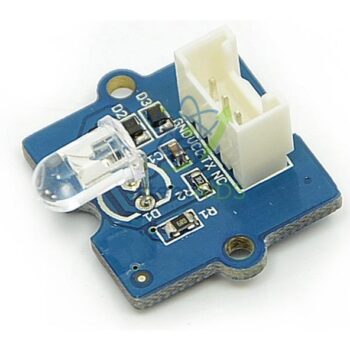
Wireless Ethanol Sensor Redy
Capteur Redy Ethanol Dual-Mode Digital Connectivity (BLE/USB) facilitates real-time statistical modeling and collaborative data synthesis on institutional networks, reinforcing "Evaluate" and "Analyze" level objectives in biochemical engineering.
Integrated Digital Calibration Baseline Ensures repeatable baseline accuracy across high-cadence laboratory rotations, maintaining data integrity for student-led research projects and institutional audits.
$95.38
Quick Answer: The Redy wireless ethanol sensor detects ethanol vapour in the air above a sample and logs its concentration wirelessly over time. A wireless ethanol sensor is mainly used to follow yeast fermentation, where ethanol builds up in the headspace of a sealed flask.
Following Fermentation Through the Headspace
When yeast ferments sugar without oxygen, it produces ethanol and carbon dioxide. Some of the ethanol evaporates into the air above the liquid, and a sensor held in that headspace records a rising concentration. The shape of the curve reflects the fermentation rate, so students can compare glucose with sucrose or lactose, or test how temperature affects the enzymes involved.
The sensor measures vapour, not liquid, so it must stay above the mixture and never be dipped in. Many ethanol gas sensors also respond to other volatile organic compounds, and readings depend on temperature, so conditions should be kept the same from run to run. The sensing technology, range and warm-up time are not stated in the title.
Fermentation also releases carbon dioxide, which the wireless CO2 air sensor can log in a parallel flask.
Specifications
| Measures | Ethanol vapour in air or headspace gas |
| Placement | Above the liquid, never immersed |
| Output | Wireless logging over time |
| Main use | Yeast fermentation and evaporation studies |
| Sensing method and range | Confirm at enquiry |
Care & Handling
- Keep the sensor out of the liquid and clear of the froth that rises in active fermentations.
- Allow any warm-up period before recording.
- Air the sensor in clean air between runs so the reading returns to its baseline.
- Keep ethanol and its vapour away from flames and hot surfaces.
Applications
- Comparing how fast yeast ferments different sugars
- Investigating the effect of temperature on anaerobic respiration in yeast
- Following the evaporation of ethanol and water mixtures
- Demonstrating vapour build-up above a volatile liquid in a closed container
Why Choose LabEquip
Biology and biotechnology teachers running fermentation practicals are the usual buyers. It is one of the sensors in LabEquip’s chemistry lab equipment range; questions on range and set-up can go through the contact page.
Frequently Asked Questions
How does the ethanol sensor show fermentation?
Yeast converts sugar to ethanol, and some of that ethanol evaporates into the sealed air above the culture. The sensor measures the vapour, so a rising reading shows fermentation under way.
Can the ethanol sensor be used as a breathalyser?
No. It is a teaching sensor for laboratory experiments and is not intended or calibrated for testing anyone’s breath alcohol.
Does it respond to other vapours?
Many ethanol gas sensors are also sensitive to other volatile compounds, such as acetone or other alcohols. Keep solvents out of the room during experiments so they do not affect the results.
Why does the reading drift before the experiment starts?
Gas sensors often need a warm-up period and are affected by temperature changes. Switch the sensor on in advance and wait for a stable baseline in clean air.
How should a fermentation flask be set up?
Use a flask with a stopper holding the sensor above the liquid, a measured volume of sugar solution and yeast suspension, and a water bath for steady temperature. Leave enough space above the liquid that froth cannot reach the sensor.
Is ethanol vapour a fire risk in these experiments?
The small amounts from yeast cultures are low, but ethanol itself is flammable. Keep flames away when using ethanol solutions and ventilate the room after evaporation experiments.
Last Updated: September 2026
You must be logged in to post a review.
Bestsellers





Reviews
There are no reviews yet.