

Quick Answer: This listing covers plain pipette tips and filter pipette tips for air-displacement micropipettes. Filter tips contain a porous barrier in the upper end that stops aerosols and splashes reaching the pipette shaft, protecting both the pipette and the next sample.
Plain Tips or Filter Tips?
When a micropipette draws up liquid, a little aerosol can rise with the air cushion towards the nozzle. For routine buffers and dilutions this does not matter. For PCR set-up, work with cultures, radioactive or hazardous samples and volatile liquids, it can carry traces into the pipette and from there into later samples. A filter tip places a porous plug, commonly of hydrophobic polyethylene, between the liquid and the pipette to intercept those droplets.
The title lists both types under one name. It gives no volume sizes or sterility, and the listing image is not available. Filter tips are usually bought pre-sterilised in racks, while plain tips come loose in bags or racked, sterile or non-sterile; confirm which forms and sizes are supplied.
Plain tips remain the economical choice for general work and are also listed separately as micropipette tips. Racked in a pipette tips box, either kind stays clean until the pipette picks it up.
Applications
- Setting up PCR reactions, where carry-over of DNA can give false positives
- Pipetting bacterial cultures in microbiology practicals
- Handling volatile solvents or corrosive samples that could damage the pipette piston
- Routine buffer and reagent dispensing with plain tips
Specifications
| Item | Disposable micropipette tips, plain and with filter |
| Filter | Porous barrier in the upper part of the tip (filter tips) |
| Material | Tips are usually polypropylene |
| Main use of filter tips | PCR, cultures, hazardous or volatile samples |
Care & Handling
- Do not draw liquid up to the filter; a wetted filter can block and the sample is lost.
- Keep filter tips in their closed rack until use, and shut the lid between tips.
- Read the pack before autoclaving filter tips; heat can affect some filter materials, and pre-sterilised racks need no further treatment.
Why Choose LabEquip
Molecular biology and microbiology teaching labs need both kinds: plain tips for everyday dispensing and filter tips where contamination would ruin an experiment. LabEquip lists them together in its chemistry lab equipment range; tell us your volumes and pipette model through the contact page.
Related Products
- Pipette Tips: Plain micropipette tips for routine work where an aerosol barrier is not needed.
- Pipette Tips Box: A racked tips box for fitting tips to the pipette without handling them.
- Centrifuge Tube, Micro, Plastic: Polypropylene microcentrifuge tubes with attached caps for the small samples handled with filter tips.
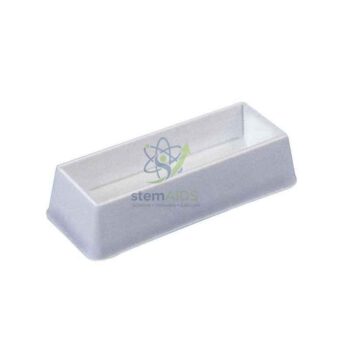
- Reagent Reservoir: A reagent reservoir for multichannel pipetting of buffer into plates.
Frequently Asked Questions
When do I need filter pipette tips rather than plain tips?
Use filter tips when aerosols could carry sample into the pipette and on to later samples: PCR set-up, work with cultures, radioactive or hazardous samples, and volatile liquids. For routine buffers and dilutions, plain tips from the same listing are sufficient.
How does the filter in a pipette tip work?
A porous plug sits in the upper part of the tip between the liquid and the pipette nozzle. Air moves through it freely, but fine droplets and splashes rising with the air cushion are trapped, protecting both the pipette shaft and the next sample.
Does a filter tip make pipetting more accurate?
Not by itself. The filter protects against contamination; accuracy still depends on the tip fitting the pipette, the right volume setting and good technique. Filter tips can make it more obvious when liquid is drawn up too fast, because the plug becomes wet.
What should I do if liquid touches the filter in the tip?
Discard the tip and the sample in it, because the liquid may not be delivered correctly and the filter has done its job of stopping it. Draw up more slowly next time and check that the volume setting is not larger than the tip.
Can filter tips be autoclaved after racking?
Filter tips are usually supplied ready to use and many are not intended for re-autoclaving, because heat and steam can affect the filter. Plain tips are normally the ones racked and autoclaved in the lab.
Are filter tips needed for school biology practicals?
Most school practicals with dyes, enzymes or buffers do not need them, and plain tips are cheaper. Filter tips become worthwhile where the class handles PCR, microbial cultures or samples that must not reach the pipette.
Last Updated: November 2026





Reviews
There are no reviews yet.