



In Stock
Overflow Can, Clear Acrylic
₹678.00
Quick Answer: The clear acrylic overflow can is a transparent displacement vessel with a short side spout near the rim and a printed volume scale. Because the wall is clear, students can watch the water level and the immersed object while the displaced water runs from the spout into a measuring cylinder or beaker.
Seeing Displacement Happen
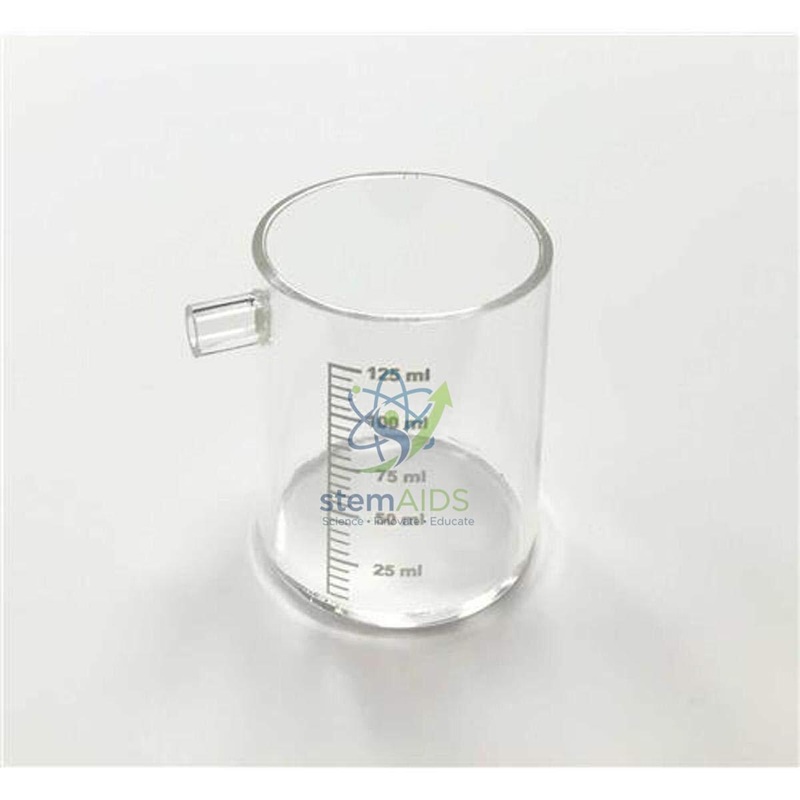
An overflow can works on a simple rule: once it is full to the spout, any object lowered in pushes out its own volume of water. In a metal can that happens out of sight. The acrylic version, shown in the listing photo as a transparent cylinder with a tube-like spout near the top and graduations on its side, lets the class see the object go under, the level reach the spout and the water begin to run.
That visibility helps when teaching the method itself. Students can see why the can must be filled until it overflows and then left to stop dripping, why an object must be fully submerged to displace its whole volume, and how a floating object settles only until it has displaced its own weight of water. The printed scale gives a quick visual check of the level, but the displaced volume is measured in a measuring cylinder.
Acrylic is lighter than metal and will not dent, although it scratches more easily and must not be used with hot water or solvents. For weighing displaced water directly with a spring balance, the metal overflow can and bucket set is the better choice; the density cube set supplies regular solids to test.
Specifications
| Item | Transparent overflow (displacement) can |
| Material | Clear acrylic, as stated in the title |
| Spout | Short side spout near the rim (photo) |
| Scale | Printed volume graduations on the wall (photo) |
| Capacity | Confirm at enquiry |
Care & Handling
- Fill the clear acrylic overflow can with cold or lukewarm water only, as hot water can distort acrylic.
- Clean with water, mild detergent and a soft cloth; solvents and abrasive pads craze or scratch the plastic.
- Lower heavy or sharp objects on a thread so they do not crack the base.
- Dry the can and store it upright where it will not be knocked over.
Applications
- Measuring the volume of stones, keys and other irregular solids by displacement
- Showing why a floating object displaces less water than a sunken object of the same size
- Density practicals pairing displacement volume with mass from a balance
- Demonstrations shown on a visualiser, where the whole class must see the water level
Why Choose LabEquip
Primary and lower-secondary teachers introducing displacement and floating choose the clear overflow can because students can see every stage. LabEquip lists it with its chemistry lab equipment; class quantities can be requested on the contact page.
Frequently Asked Questions
Why choose a clear overflow can instead of a metal one?
The clear wall lets students watch the object and the water level during displacement, which helps them understand the method. A metal can is more robust and suits heavier objects and more frequent use.
How do I get an accurate displacement reading?
Fill the can until water runs from the spout, wait for the dripping to stop, place the collecting cylinder, then lower the object slowly on a thread. Read the collected volume at eye level at the bottom of the meniscus.
Can the printed scale replace a measuring cylinder?
It gives a rough visual guide to the water level. For the displaced volume itself, collect the water from the spout in a measuring cylinder, which is graduated for that purpose.
Can hot water be used in the can?
No. Acrylic softens at relatively low temperatures, and hot water can distort or crack it. Use water at room temperature.
Why does a floating object displace less water?
A floating object sinks only until the water it displaces weighs as much as the object. A denser object of the same size sinks completely and displaces its full volume.
How should the acrylic be cleaned?
Rinse with water, wash with a mild detergent and a soft cloth, and let it air dry. Avoid alcohol, acetone and scouring pads, which cloud or crack the plastic.
Last Updated: September 2026
You must be logged in to post a review.
Bestsellers





Reviews
There are no reviews yet.