

In Stock
Micro Bio-observation Kit
₹1,065.00
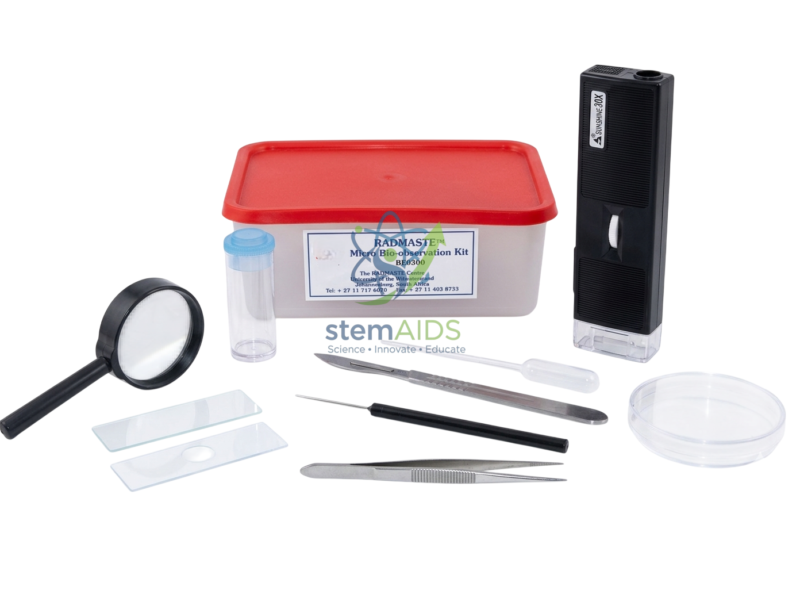
Quick Answer: The LabEquip Micro Bio-observation Kit is a handheld biology observation kit with a hand lens or compact microscope, specimen containers and collection tools for studying plants, leaves and small specimens, built for school and college nature-study practicals.
Description
The LabEquip Micro Bio-observation Kit is an educational biology observation and microscience kit built around observation skills, biological specimens, plant and animal structure, microscopy, classification, comparison, biodiversity, habitats and field study. It is designed for primary school through senior secondary students, science clubs and teacher-training programs.
Using a handheld microscope or magnifying glass, specimen containers, slides, coverslips, droppers, forceps and collection tools, students observe and compare leaves, stems, roots, seeds, flowers, fibres, soil particles, pond-water samples and other safe biological specimens as part of field study or classroom practicals.
Kit Contents & Specifications
| Category | LEP Kits (Lab Experiment Practice Kits) |
| Product type | Educational biology observation and microscience kit |
| Core learning concepts | Observation skills, biological specimens, plant and animal structure, microscopy, classification, comparison, biodiversity, habitats and field study |
| Typical components | Handheld microscope, magnifying glass, specimen containers, slides, coverslips, droppers, forceps, collection tools, labels, worksheets and observation guide, depending on kit configuration |
| Observation tools | Hand lens, compact microscope or specimen viewer, depending on the supplied model |
| Specimen type | Leaves, stems, roots, seeds, flowers, fibres, soil particles, pond-water samples, small insects and other safe biological specimens |
| Storage | Supplied in a storage box, tray or compartment case, depending on kit version |
| Suitable for | Schools, colleges, science clubs, STEM labs and biology departments |
Most observation tools and accessories are reusable after proper cleaning. Blank slides and coverslips may be included depending on supply configuration.
Safety Note
- Use under teacher supervision, especially during outdoor field-collection activities.
- Follow clean specimen handling and safe collection practices; avoid handling unknown insects or plants without guidance.
- Dispose of biological material (specimens, plant/soil samples) hygienically after each session.
- Handle slides, coverslips and collection tools carefully to avoid cuts or breakage.
- Clean and dry reusable components before returning them to the storage case.
Why Choose LabEquip
LabEquip supplies practice-based biology and science observation kits to schools, colleges and institutional buyers across India. Explore our full LEP Kits (Lab Experiment Practice Kits) range, learn more about LabEquip, or see how we support institutional and tender supply for schools and government science labs. For bulk or institutional orders, reach our team at [email protected].
Frequently Asked Questions
What is included in the Micro Bio-observation Kit?
It typically includes a handheld microscope or magnifying glass, specimen containers, slides, coverslips, droppers, forceps and collection tools, with the exact list depending on kit configuration.
What can students observe with this kit?
Students can observe and compare leaves, stems, roots, seeds, flowers, fibres, soil particles, pond-water samples and small insects, among other safe specimens.
Is this kit suitable for younger students?
Yes. It spans primary school through senior secondary levels and is also used in science clubs and teacher-training programs, with activities adjusted for age.
What observation tools come with the kit?
Depending on the supplied model, it may include a hand lens, compact microscope or specimen viewer.
Are the components reusable?
Yes, most observation tools and accessories are reusable after proper cleaning between sessions.
What safety precautions apply to field-collection activities?
Field collection should be done under teacher supervision, following clean specimen handling practices and proper disposal of biological material afterward.
Last Updated: September 2026
You must be logged in to post a review.
Bestsellers


Reviews
There are no reviews yet.