




In Stock
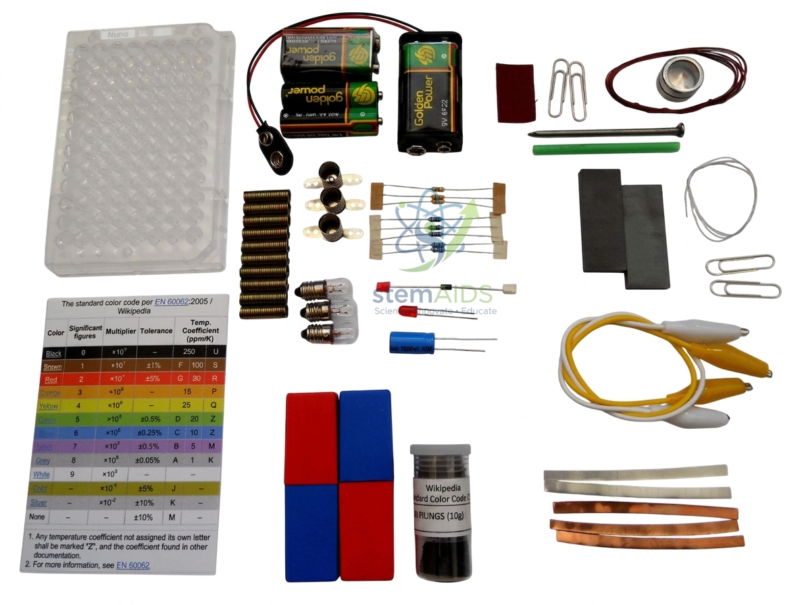
Basic Microelectricity Kit
₹1,055.00
The StemAids Basic Microelectricity Kit is an educational science kit designed for hands-on learning of current electricity, simple circuits, resistance, voltage, conductors, insulators, magnetism, electromagnetism, and low-voltage electrical experiments. It is suitable for schools, colleges, STEM laboratories, physics departments, science clubs, teacher demonstrations, and practical classroom activities.
Product Description
The StemAids Basic Microelectricity Kit helps students build and test small-scale electric circuits using compact components and low-voltage battery power. It allows learners to observe how current flows, how switches control circuits, how bulbs and LEDs respond to voltage, and how resistance affects circuit behaviour.
This kit is ideal for microscale physics experiments where safe, economical, and repeatable practical learning is required. Students can explore series circuits, parallel circuits, conductor and insulator testing, simple electromagnets, magnetic effects of current, and introductory electrical measurement with supporting meters.
The kit is designed to reduce bulky apparatus requirements and make electricity experiments easier to manage in classrooms with limited laboratory space. It supports individual learning, pair work, small-group activities, and teacher-led demonstrations.
Product Specifications
| Parameter | Details |
|---|---|
| Product Name | Basic Microelectricity Kit |
| Brand | StemAids |
| Product Type | Educational microscale electricity and magnetism experiment kit |
| Subject Area | Physics, electricity, magnetism, electromagnetism, STEM education, and science practicals |
| Learning Level | Middle school, secondary school, senior secondary introductory physics, teacher training, and STEM labs |
| Core Concepts | Current, voltage, resistance, polarity, open circuit, closed circuit, series circuit, parallel circuit, conductors, insulators, magnetic effect of current, and basic electromagnetism |
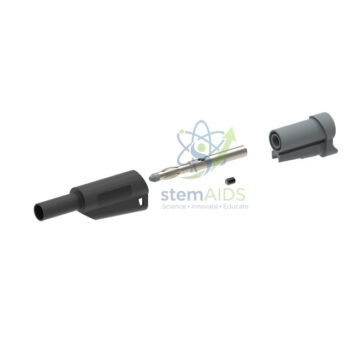
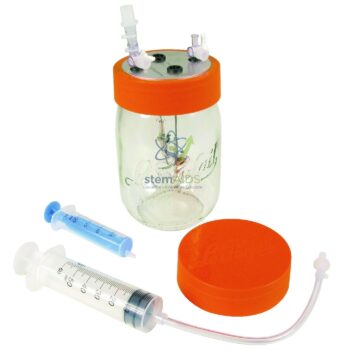
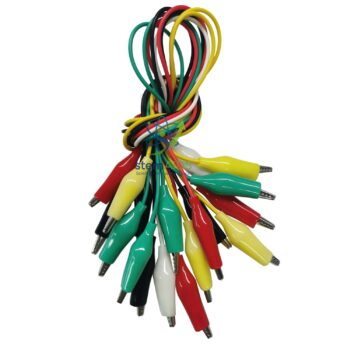
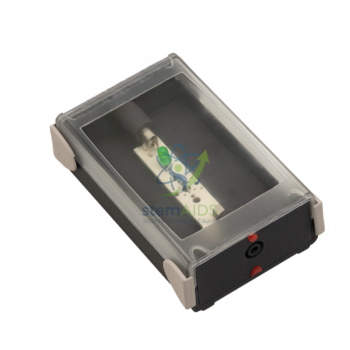
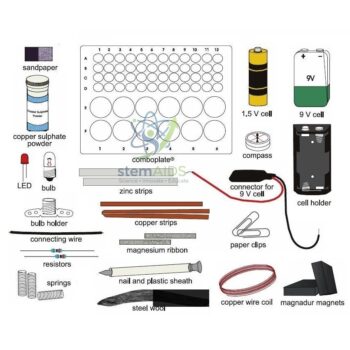
| Typical Components | Microwell plate or circuit base, battery holder, connecting wires, crocodile clip leads, switches, bulbs, LEDs, resistors, buzzer, small motor, coil, magnets, compass, electrodes, connectors, and experiment guide depending on kit configuration |
| Recommended Measuring Instruments | Multimeter, ammeter, or voltmeter depending on experiment requirement; may be supplied separately |
| Power Source | Low-voltage dry cells or battery holder, depending on configuration |
| Typical Voltage Range | Low-voltage classroom range, commonly 1.5 V to 6 V depending on experiment setup |
| Connection Method | Clip leads, spring connectors, plug-in connectors, or micro-circuit connection points depending on supplied kit |
| Reusable Components | Yes, most components are reusable after proper handling and storage |
| Manual / Guide | Student worksheet, experiment manual, or teacher guide depending on supply configuration |
| Storage | Supplied in kit box, tray, or compartment case depending on configuration |
| Safety Requirement | Use under teacher supervision with low-voltage batteries only; do not connect to mains electricity |
| Application | Microscale circuit building, electricity experiments, magnetism demonstrations, STEM practicals, and physics learning activities |
| Suitable For | Schools, colleges, physics labs, science clubs, STEM labs, teacher-training institutes, and educational laboratories |
Key Features
- Designed for microscale electricity and magnetism experiments
- Supports hands-on learning of circuits, current, voltage, resistance, and polarity
- Useful for series circuit, parallel circuit, conductor, and insulator demonstrations
- Supports introductory magnetism and electromagnetism activities depending on kit contents
- Low-voltage operation supports safer classroom experimentation
- Compact components reduce bench space and storage requirements
- Reusable parts support repeated practical sessions
- Suitable for individual, pair, or small-group classroom learning
- Ideal for STEM education, physics practicals, and teacher demonstrations
How to Use
- Read the experiment worksheet or teacher guide before starting the activity.
- Place the StemAids Basic Microelectricity Kit on a clean, dry, and stable table.
- Select the required components such as battery holder, wire, switch, bulb, LED, resistor, coil, magnet, or motor.
- Insert the recommended batteries into the battery holder with correct polarity.
- Build a simple closed circuit using the battery, switch, wires, and load.
- Close the switch and observe the bulb, LED, buzzer, or motor response.
- Open the switch and observe how breaking the circuit stops current flow.
- Build series and parallel circuit arrangements to compare circuit behaviour.
- Use a multimeter, ammeter, or voltmeter where required to measure current and voltage.
- For magnetism experiments, use coils, magnets, or compass components as instructed in the manual.
- Record observations, circuit diagrams, readings, calculations, and conclusions.
- After the experiment, disconnect batteries, organise all components, and store the kit safely.
Applications
- Basic electric circuit experiments
- Open and closed circuit demonstrations
- Series and parallel circuit practicals
- Conductor and insulator testing
- Current and voltage measurement activities
- Resistance and bulb brightness comparison
- Simple motor and buzzer circuit experiments
- Magnetic effect of electric current demonstrations
- Electromagnet and coil-based activities
- STEM, physics, and science club learning
- Teacher training and classroom practical sessions
Safety and Handling Guidelines
- Use only low-voltage batteries recommended for the kit.
- Do not connect the kit to 220 V / 230 V mains electricity.
- Use the kit only under teacher, instructor, or trained adult supervision.
- Check wires, clips, switches, coils, battery holders, and components before use.
- Do not use damaged wires, loose connectors, cracked holders, or overheated components.
- Avoid direct short-circuiting of battery terminals.
- Remove batteries after use to prevent leakage and accidental heating.
- Connect meters with correct polarity and suitable measurement range.
- Do not touch terminals or components with wet hands.
- Keep liquids away from electrical components and batteries.
- Allow bulbs, resistors, and coils to cool before touching them after use.
- Store the kit in a dry, dust-free place after every practical session.
Quality and E-E-A-T Notes
The StemAids Basic Microelectricity Kit supports evidence-based physics education by helping students build circuits, measure electrical quantities, compare circuit behaviour, observe magnetic effects, and connect classroom theory with practical results. For reliable learning outcomes, experiments should be performed with correct polarity, clean connections, suitable low-voltage power, proper circuit diagrams, and teacher-supervised safety procedures.
FAQ
1. What is the StemAids Basic Microelectricity Kit used for?
It is used for teaching basic electricity, circuits, current, voltage, resistance, conductors, insulators, magnetism, and introductory electromagnetism through hands-on experiments.
2. How is a microelectricity kit different from a regular electricity kit?
A microelectricity kit uses compact components and small-scale setups, making experiments easier to organise, store, distribute, and perform in classroom conditions.
3. Is this kit suitable for school students?
Yes, it is suitable for school laboratories, STEM classrooms, science clubs, and introductory physics practicals under teacher supervision.
4. What experiments can be performed?
Students can perform experiments on open and closed circuits, series circuits, parallel circuits, conductor-insulator testing, bulb brightness, switches, motors, buzzers, coils, and basic electromagnetism.
5. Does the kit include batteries?
Battery supply depends on the selected kit configuration. Some kits may include cells, while others may require batteries to be purchased separately.
6. Can this kit be connected to mains electricity?
No, the kit is intended only for low-voltage battery experiments. It must never be connected directly to mains electricity.
7. Can students measure voltage and current?
Yes, voltage and current can be measured when a compatible multimeter, voltmeter, or ammeter is used correctly with the circuit.
8. Can this kit demonstrate magnetism?
Yes, if the supplied configuration includes magnets, coils, and compass components, it can demonstrate magnetic effects of electric current and basic electromagnetism.
9. Are the components reusable?
Yes, most components are reusable when handled carefully, cleaned if required, and stored properly after use.
10. What safety precautions are important?
Use only low-voltage batteries, avoid short circuits, keep the kit dry, check wire condition, use correct meter settings, and work under teacher supervision.
11. How should the kit be maintained?
Keep components clean and dry, remove batteries after use, check wires and terminals regularly, replace damaged parts, and store everything in the kit box.
12. Why is it useful for STEM learning?
It encourages circuit building, troubleshooting, observation, measurement, teamwork, problem-solving, and practical understanding of electricity and magnetism.
Why Choose StemAids?
StemAids educational science kits are selected for practical learning, classroom usability, and curriculum-supportive laboratory work. The StemAids Basic Microelectricity Kit supports hands-on physics learning, safe low-voltage experimentation, student participation, STEM skill development, and economical lab operation for schools, colleges, science clubs, teacher-training institutes, and institutional laboratories.
SEO Keywords
StemAids Basic Microelectricity Kit, Basic Microelectricity Kit, Micro Electricity Kit, School Electricity Kit, Physics Circuit Kit, STEM Electricity Kit, Microscale Electricity Kit, Basic Circuit Experiment Kit, Electricity and Magnetism Kit, Educational Physics Kit, Low Voltage Circuit Kit, Science Lab Electricity Kit
You must be logged in to post a review.
Bestsellers


Reviews
There are no reviews yet.