






In Stock
UV Resistant Goggles
Broad-Spectrum Attenuation: Utilize high-impact polycarbonate lenses integrated with a specialized UV-absorption matrix that filters 99.9% of radiation up to 400nm (UV400), ensuring sustained retinal protection in high-irradiance settings.
Pneumatic Seal Integrity: Features a panoramic wrap-around chassis with indirect ventilation ports and an adjustable elasticated headband, engineered to maintain a hermetic peripheral seal while facilitating airflow to eliminate lens fogging.
₹435.00
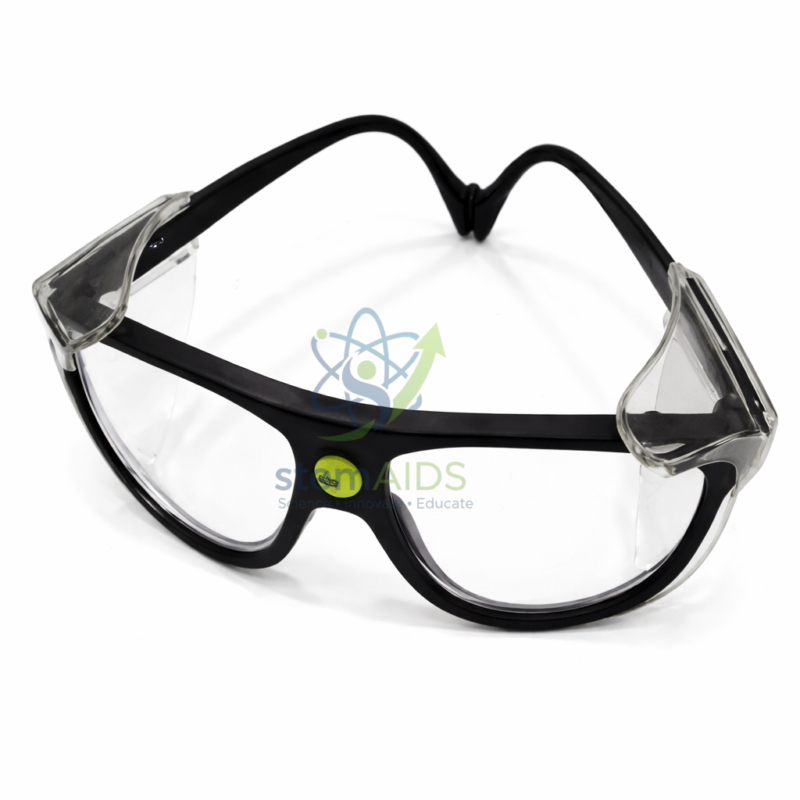
Quick Answer: The UV Resistant Goggles are clear-lensed eye protectors intended to block ultraviolet light; the listing photograph shows a black-framed, spectacle-style design with side shields, worn when working with UV lamps, transilluminators and UV cabinets, and outdoors in strong sun.
Why Ultraviolet Needs Its Own Protection
Ultraviolet light is invisible, so the eyes give no warning of exposure. Short-wave UV from germicidal lamps and UV transilluminators can cause a painful inflammation of the cornea, known as welder’s flash or snow blindness, a few hours after even a brief unprotected look. Repeated exposure to UV-A and UV-B, including from sunlight, is also linked with long-term eye damage.
UV-protective lenses are made of materials that absorb ultraviolet while letting visible light through, which is why they can look perfectly clear. Polycarbonate, the usual lens material for safety eyewear, absorbs most UV by nature. The listing does not state the lens material, the wavelengths covered or a rating, so look for the UV marking on the eyewear, and for strong sources such as transilluminators add a UV-rated face shield.
The listing photograph shows a spectacle-style frame with side shields rather than a sealed goggle. That can suit UV work, since light does not creep round the edges the way liquids do, although UV reflected from nearby surfaces can still reach the eyes from the side. In lessons on radiation and sun safety, a UV-A and UV-B sensitive dosimeter badge makes exposure visible next to the UV resistant goggles.
UV Sources in the Lab
- Viewing DNA gels on a UV transilluminator in biotechnology labs, together with a face shield.
- Checking TLC plates under a UV lamp in chemistry practicals.
- Working near germicidal UV lamps in laminar flow cabinets and UV chambers, when the lamp must be on.
- Field work in bright sun near water, sand or snow, where reflected UV adds to direct exposure.
Specifications
| Type | UV-protective eyewear, spectacle style (listing photograph) |
| Lenses | Clear |
| Frame | Black, with side shields |
| Hazard addressed | Ultraviolet light from lamps and the sun |
| Lens material and UV rating | Confirm at enquiry |
Care & Handling
- Switch UV lamps off before opening cabinets whenever possible; eyewear is the last line of defence, not the first.
- Clean the lenses with soap, water and a soft cloth, and avoid solvents that can cloud them.
- Keep the eyewear in a case beside the UV equipment so it is always to hand.
- Replace eyewear that is cracked or badly scratched.
Why Choose LabEquip
Biotechnology and molecular biology labs with transilluminators, chemistry departments running TLC and microbiology labs with UV cabinets buy UV-protective eyewear to keep beside that equipment. LabEquip lists it in General Lab Products, and the lens specification can be requested through the contact page before ordering.
Frequently Asked Questions
Why do UV resistant goggles have clear lenses?
Ultraviolet protection does not need a dark tint. Lens materials such as polycarbonate absorb ultraviolet while letting visible light through, so the wearer sees normally and is still shielded from UV.
Are ordinary safety glasses enough for a UV transilluminator?
Not on their own. A transilluminator emits strong short-wave UV that can burn the skin of the face as well as the eyes. Use UV-rated eyewear together with a UV face shield, or keep the transilluminator’s own cover closed.
What happens if eyes are exposed to strong UV?
Strong UV can inflame the cornea, causing pain, watering and a gritty feeling that usually starts a few hours later. Anyone with these symptoms after UV exposure should get medical attention.
Can these be used for welding?
No. Welding produces intense visible light and infrared as well as UV, and needs dark shaded filters. Clear UV-protective lenses block ultraviolet but do nothing about the glare of a welding arc or flame.
Do they protect against sunlight outdoors?
UV-absorbing lenses cut the UV part of sunlight, which helps on field trips near water, sand or snow, where reflection adds to exposure. Clear lenses do not reduce glare, so tinted lenses may be more comfortable in bright sun.
How can I tell if eyewear blocks UV?
Look for the UV marking on the frame or lens, or test it with a UV lamp and UV-sensitive beads: beads shaded by a UV-blocking lens stay pale while unshaded beads change colour.
Last Updated: September 2026
You must be logged in to post a review.
Bestsellers




Reviews
There are no reviews yet.