




In Stock
Rock Light
Ingress Protection & Thermal Management: Features a heavy-duty die-cast aluminum housing with an IP68-rated waterproof seal and integrated oversized heat sinks, ensuring stable optoelectronic performance under high-thermal stress and liquid submersion.
Luminous Flux & Optical Precision: Utilizes high-efficacy Solid-State LED technology delivering high-intensity output with a 120-degree flood beam pattern, providing wide-angle peripheral illumination for hazardous zones and under-chassis mechanical inspections.
$5.87
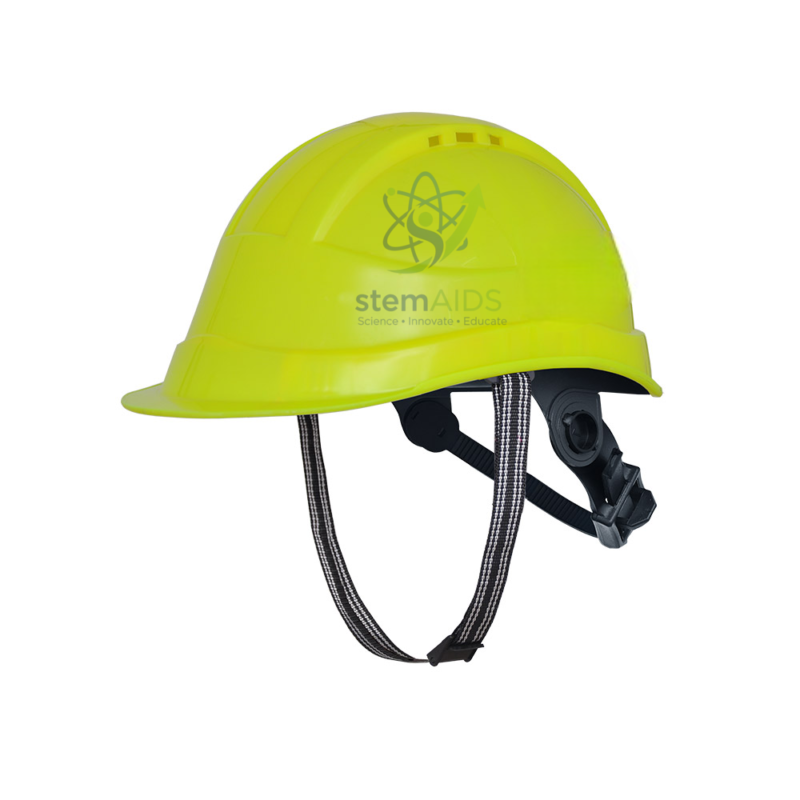
Quick Answer: Rock Light is the name of this listing, and its photograph shows a Rock Light safety helmet in high-visibility lime yellow, with small vents near the crown, a ratchet head harness at the back and a textile chin strap. It suits outdoor, field and site work where the wearer should stay visible and the helmet must stay on.
What the Photograph Shows
Compared with a plain hard hat, the helmet pictured has three details that change how it is used. The shell is a fluorescent lime yellow, a colour that stands out against foliage, rock and grey site backgrounds. Small vents near the crown let warm air escape on hot days. And a two-point textile chin strap holds the helmet on when the wearer bends, climbs or works in wind.
The harness is tightened by a ratchet knob at the back, which is easier to set with one hand than a pin-and-hole band. That makes it practical for groups where helmets pass from person to person, such as geology field trips or site visits, because each wearer can set the size in seconds.
Vents bring one restriction: a vented shell is not suited to work near exposed live electrical parts, where an unvented helmet is needed instead; the plain Industrial Safety Helmet is the standard hard hat in this range. The name Rock Light does not state the shell material, weight or impact category, so confirm those details for your application.
Specifications
| Type | Safety helmet (listing photograph) |
| Colour in photograph | High-visibility lime yellow |
| Ventilation | Small vents near the crown |
| Harness | Ratchet adjustment at the back |
| Retention | Textile chin strap |
| Shell material and weight | Confirm at enquiry |
Keeping It in Service
- Fasten the chin strap whenever you climb or lean over an edge; an unfastened strap gives no retention.
- Keep the vents clear of dirt and do not cover them with stickers.
- Fluorescent colours fade in strong sunlight, so store the helmet indoors and replace it once the colour and surface turn dull and chalky.
- Check that the ratchet clicks positively and the strap buckle locks before each outing.
Where This Helmet Fits In
- Geology and geography field trips to quarries, road cuttings and rocky slopes.
- Outdoor site work and grounds maintenance where drivers need to see the wearer.
- Work on ladders, platforms and slopes, where the chin strap keeps the helmet on.
- Campus construction visits by students and staff.
Why Choose LabEquip
Field trip leaders, grounds teams and site supervisors choose a hi-vis vented helmet like this when people will spend long periods outdoors. LabEquip lists it with the other helmets in General Lab Products, and orders can be discussed on the contact page.
Frequently Asked Questions
What is the Rock Light?
It is a safety helmet listed under the name Rock Light. The listing photograph shows a lime yellow vented shell, a ratchet harness and a textile chin strap, a combination suited to outdoor and field work where visibility and a secure fit matter.
Why does a helmet need a chin strap?
A chin strap keeps the helmet on when the wearer bends down, looks up, climbs or is caught by a gust of wind. Without it, a helmet can fall off at the moment it is needed, for example during a slip on a slope.
Are vented helmets less protective?
Against falling objects, small vents placed to keep the shell’s structure intact do not remove its protective role. They do matter for electrical hazards, because a vent opens a path to the head, so vented helmets are kept away from exposed live parts.
Why choose a high-visibility colour for a helmet?
Fluorescent lime yellow stands out in daylight against greenery, rock and concrete, helping site drivers and group leaders spot the wearer. After dark, visibility depends on retroreflective material rather than colour, so add a reflective vest or band.
How tight should the ratchet be?
Turn the ratchet until the helmet stays put when you nod and shake your head, then stop. Over-tightening causes headaches over a long day and adds no protection.
Can ear muffs or a visor be fitted to this helmet?
Only if the shell has accessory slots and the accessory is made for that helmet. The photograph does not show whether slots are present; for combined protection, the slot-fix helmets in the same range are designed to take ear muffs and face shields.
Last Updated: September 2026
You must be logged in to post a review.
Bestsellers




Reviews
There are no reviews yet.