



In Stock
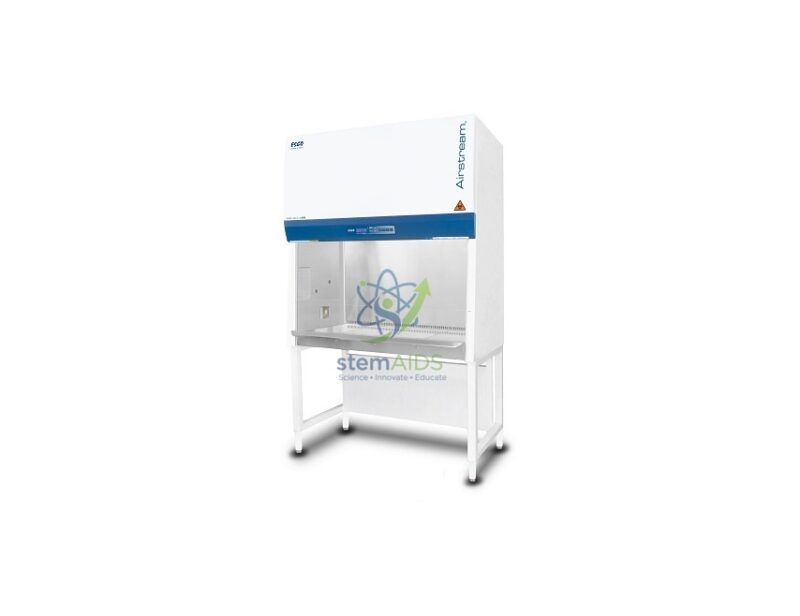
PSM (Microbiological Safety Cabinet)
₹55,426.00
The StemAids PSM Microbiological Safety Cabinet is a laboratory containment cabinet designed for safer handling of microbiological samples, cell cultures, clinical specimens, non-volatile biological materials, and sterile laboratory procedures. It provides personnel protection, product protection, and environmental protection through controlled airflow and HEPA / ULPA filtration.
Product Description
The StemAids PSM, also known as a Microbiological Safety Cabinet or Biological Safety Cabinet, is suitable for microbiology laboratories, biotechnology labs, pathology labs, pharmaceutical QC labs, diagnostic centers, hospitals, research institutions, universities, and teaching laboratories.
This cabinet is designed to create a controlled work zone by drawing room air through the front opening, passing air through high-efficiency filters, and maintaining clean vertical airflow over the work surface. It helps reduce contamination risk to the operator, sample, and surrounding laboratory environment when used correctly.
Important Note: A microbiological safety cabinet is not the same as a chemical fume hood. It should not be used for volatile toxic chemicals, flammable vapours, radioactive materials, or explosive procedures unless the selected cabinet and exhaust configuration are specifically designed and approved for that use.
Product Specifications
| Parameter | Details |
|---|---|
| Product Name | PSM Microbiological Safety Cabinet |
| Brand | StemAids |
| Product Type | Microbiological Safety Cabinet / Biological Safety Cabinet |
| Cabinet Class | Class II Type A2 style configuration, depending on selected model |
| Protection Provided | Personnel protection, product protection, and environmental protection |
| Airflow Pattern | Inflow through front opening, vertical downflow over work area, and filtered exhaust |
| Typical Airflow Distribution | Approx. 70% recirculated air and 30% exhausted air in Type A2 style cabinets |
| Typical Inflow Velocity | Approx. 0.45 to 0.50 m/s, depending on standard and model |
| Typical Downflow Velocity | Approx. 0.25 to 0.50 m/s, depending on cabinet design and certification |
| Filtration | HEPA or ULPA filter for downflow and exhaust air |
| Work Zone | Clean filtered work area for microbiological and sterile handling procedures |
| Work Surface | Stainless steel work tray / worktop, depending on configuration |
| Sash | Front safety glass sash with working opening |
| Lighting | LED or fluorescent work area illumination, depending on model |
| UV Lamp | Optional UV germicidal lamp with safety interlock, depending on configuration |
| Control System | Microprocessor control panel with airflow, filter, alarm, and operation indicators |
| Alarm System | Airflow alarm, sash alarm, filter alarm, and system fault alarm depending on model |
| Available Widths | Commonly 900 mm, 1200 mm, 1500 mm, or 1800 mm depending on selected cabinet size |
| Application | Microbiology, cell culture, sample preparation, sterile handling, diagnostic work, and biological research |
| Suitable For | Microbiology labs, biotechnology labs, hospitals, diagnostic labs, pharmaceutical labs, universities, research labs, and teaching laboratories |
| Standards Reference | NSF/ANSI 49, EN 12469, or other applicable biosafety cabinet standards depending on supplied model |
Key Features
- Designed for microbiological safety and contamination control
- Supports personnel, sample, and environmental protection
- HEPA / ULPA filtered vertical airflow over the work zone
- Front inflow helps reduce escape of aerosols from the cabinet
- Filtered exhaust helps protect the laboratory environment
- Stainless steel work surface supports easy cleaning and disinfection
- Safety glass sash provides visibility and physical barrier support
- Alarm system supports safer airflow and sash-position monitoring
- Suitable for microbiology, biotechnology, diagnostic, and research workflows
- Available in multiple working widths for different laboratory requirements
How to Use
- Place the StemAids PSM Microbiological Safety Cabinet in a low-traffic laboratory area away from doors, fans, windows, and strong air currents.
- Switch on the cabinet blower before starting work and allow the airflow to stabilize.
- Check the airflow indicator, sash position, alarm status, and filter condition before use.
- Disinfect the internal work surface with a suitable laboratory disinfectant.
- Place only the required materials inside the cabinet to avoid airflow obstruction.
- Arrange clean materials on one side and waste or used materials on the opposite side to maintain workflow direction.
- Keep the front grille and rear air vents clear at all times.
- Work slowly and keep hand movements controlled to avoid disturbing airflow.
- Keep all manipulations at least 10 cm inside the front opening where practical.
- After completing work, seal samples and containers before removing them from the cabinet.
- Disinfect the work surface, inner walls, and used equipment according to laboratory SOP.
- Allow the cabinet to run for a short purge period after work before switching off.
Applications
- Microbiological sample handling
- Cell culture work
- Bacterial and fungal culture handling
- Clinical and diagnostic sample preparation
- Sterile media preparation
- Pharmaceutical microbiology testing
- Biotechnology research workflows
- Pathology and hospital laboratory work
- Educational microbiology demonstrations
- Research sample protection from contamination
Safety and Handling Guidelines
- Use the cabinet only after proper installation, certification, and airflow verification.
- Do not use the cabinet if airflow alarm, sash alarm, or filter alarm is active.
- Do not block front grille, rear grille, side vents, or exhaust filter area.
- Do not use open flames inside the cabinet because flames disturb airflow and may damage filters.
- Do not use for volatile toxic chemicals unless the exact cabinet and exhaust configuration are approved for that purpose.
- Wear suitable PPE such as lab coat, gloves, mask, and eye protection as required by SOP.
- Disinfect surfaces before and after every work session.
- Use proper biological waste containers and decontamination procedures.
- Keep movements slow to maintain airflow stability.
- Do not store unnecessary items inside the cabinet.
- Perform routine filter inspection and cabinet certification according to laboratory safety requirements.
- Allow only trained personnel to operate, clean, certify, and maintain the cabinet.
Quality and E-E-A-T Notes
The StemAids PSM Microbiological Safety Cabinet supports evidence-based biosafety practice through controlled airflow, HEPA / ULPA filtration, certified cabinet performance, documented cleaning procedures, and trained user operation. For reliable protection, laboratories should maintain cabinet certification records, airflow verification reports, filter integrity test records, decontamination logs, SOPs, and user training documentation.
FAQ
1. What is the StemAids PSM Microbiological Safety Cabinet used for?
It is used for safer handling of microbiological samples, cell cultures, clinical specimens, sterile materials, and biological research samples.
2. What does PSM mean?
PSM commonly refers to Poste de Sécurité Microbiologique, meaning Microbiological Safety Cabinet.
3. Is a PSM the same as a biosafety cabinet?
Yes, PSM and microbiological safety cabinet are commonly used for biological safety cabinets designed for microbiology and contamination-control work.
4. What protection does the cabinet provide?
A Class II style cabinet provides personnel protection, product protection, and environmental protection when installed, certified, and used correctly.
5. What filters are used?
The cabinet uses HEPA or ULPA filters for filtered downflow and exhaust air, depending on the supplied model.
6. Can this cabinet be used for chemical fumes?
It should not be used like a chemical fume hood. Volatile toxic chemicals require a properly designed chemical fume hood or a certified cabinet configuration approved for that use.
7. Can an open flame be used inside the cabinet?
Open flames are not recommended because they disturb airflow, increase fire risk, and may damage HEPA / ULPA filters.
8. Is UV light required?
UV light is optional and does not replace proper cleaning and disinfection. If provided, it should be used only when the sash is closed and no personnel are exposed.
9. How often should the cabinet be certified?
Certification is commonly performed at installation, after relocation, after filter replacement, after major service, and at regular intervals according to laboratory SOP and applicable standards.
10. What should be checked before use?
Check airflow status, sash position, alarms, work surface cleanliness, filter condition, and availability of disinfectant and waste containers.
11. Can it be used in school and college laboratories?
Yes, it is suitable for educational microbiology laboratories when used under trained supervision and proper biosafety procedures.
12. How should the cabinet be cleaned?
Clean and disinfect the work surface, side walls, rear wall, and equipment surfaces before and after work using a disinfectant suitable for the biological material being handled.
Why Choose StemAids?
StemAids laboratory safety equipment is selected for practical workflows, contamination control, and institutional laboratory requirements. The StemAids PSM Microbiological Safety Cabinet supports microbiology work, sterile sample handling, cell culture protection, diagnostic testing, pharmaceutical microbiology, biotechnology research, and educational laboratory safety for schools, colleges, hospitals, research centers, and quality-control laboratories.
SEO Keywords
StemAids PSM Microbiological Safety Cabinet, PSM Cabinet, Microbiological Safety Cabinet, Biological Safety Cabinet, Class II Biosafety Cabinet, Class II Type A2 BSC, HEPA Filter Safety Cabinet, Microbiology Laboratory Cabinet, Cell Culture Safety Cabinet, Laboratory Biosafety Cabinet, StemAids Laboratory Safety Equipment
You must be logged in to post a review.
Bestsellers




Reviews
There are no reviews yet.