



In Stock
Phosphate Dosing kit
₹1,120.00
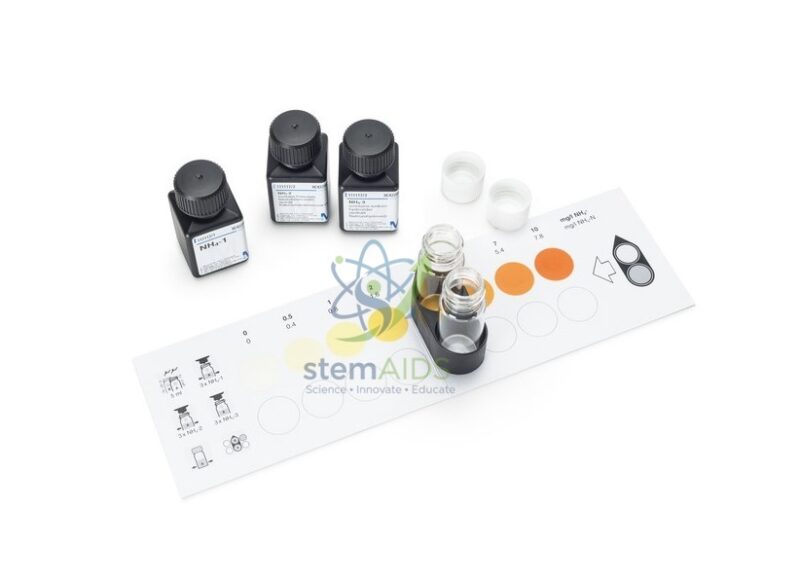
Quick Answer: The Phosphate Dosing kit is a phosphate test kit: here dosing means determining how much phosphate a sample contains, not adding phosphate to water. The listing photograph shows small reagent bottles, test tubes and a colour comparator card, used to measure phosphate in water by the depth of a blue colour.
The Chemistry Behind the Blue Colour
Kits of this kind usually rely on the molybdenum blue reaction. In acid solution, phosphate ions combine with molybdate to form a phosphomolybdate complex, and a reducing agent such as ascorbic acid turns that complex an intense blue. The more phosphate in the sample, the deeper the blue, so matching the colour against a comparator card gives an approximate concentration.
Phosphate is one of the main nutrients behind eutrophication. When fertiliser runoff, sewage or detergent residues raise phosphate levels in lakes and slow rivers, algae can grow rapidly, then die and decay, using up dissolved oxygen. Measuring phosphate at different points along a stream, or before and after rain, shows students where nutrients are entering the water.
Because phosphate is also present in some laboratory detergents, tubes washed with them can give falsely high readings, so rinse them thoroughly with distilled water. The measuring range and number of tests are not stated in the listing. For a broader set of tests in one case, see the Water Purity Kit.
Phosphate Investigations
- Eutrophication studies comparing water above and below farmland or outfalls.
- Testing runoff from fertilised and unfertilised plots in agriculture practicals.
- Comparing phosphate-containing and phosphate-free detergents in chemistry projects.
- Monitoring aquarium or pond water where algae grow quickly.
Specifications
| Type | Colour-comparison phosphate test kit |
| Contents in photograph | Reagent bottles, test tubes, colour comparator card |
| Principle | Blue colour whose depth rises with phosphate content |
| Samples | Rivers, ponds, runoff, aquarium water |
| Range and number of tests | Confirm at enquiry |
Getting Reliable Results
- Rinse test tubes with distilled water, not with phosphate-containing detergent, before each test.
- Wait for the reaction time given in the instructions before comparing colours, and view against a white background in daylight.
- Filter cloudy samples or let them settle first, since suspended matter makes colour matching difficult.
- Wear eye protection when handling the acidic reagents and dispose of test solutions as the safety data sheets direct.
Why Choose LabEquip
Environmental science, chemistry and agriculture teachers buy a phosphate kit when a project centres on nutrients and algal growth. LabEquip lists it in General Lab Products, and the range and number of tests can be discussed through the contact page.
Frequently Asked Questions
Does this kit add phosphate to water?
No. In this product name, dosing means determining the amount present. The kit measures phosphate in a sample by colour comparison; it does not supply phosphate for water treatment.
Why does phosphate matter in rivers and lakes?
Phosphate is a plant nutrient, and extra phosphate from fertilisers, sewage or detergents can trigger algal blooms. When the algae die and decay, bacteria use up dissolved oxygen, which can harm fish and other animals.
Why did my distilled water blank turn blue?
The tube was probably contaminated, often by phosphate-containing detergent or traces of an earlier sample. Rinse the tubes well with distilled water and repeat the blank before testing samples.
Does the kit measure total phosphorus?
Colour kits of this type usually measure dissolved orthophosphate, the form that reacts directly with the reagents. Total phosphorus, including phosphorus bound in particles and organic matter, needs a digestion step first.
Can soil phosphate be tested with this kit?
Only after phosphate has been extracted from the soil into a clear solution, which needs a separate extraction method. The kit itself is designed for water samples.
How quickly should samples be tested?
As soon as possible, ideally on the day of collection, because algae and bacteria in the sample can take up or release phosphate. Keep samples cool and dark if there is a delay.
Last Updated: September 2026
You must be logged in to post a review.
Bestsellers





Reviews
There are no reviews yet.