




In Stock
Peli Stud
High-Tensile Structural Substrate: Engineered from premium-grade, corrosion-resistant aluminum alloy capable of withstanding dynamic compression loads exceeding 20 tons without structural deformation or mechanical failure under heavy-axle vehicle traffic.
Hermetically Sealed Optics: Features high-index PMMA (polymethyl methacrylate) prismatic lenses integrated with a specialized protective coating, ensuring a high coefficient of luminous intensity and sustained retroreflectivity despite prolonged UV exposure and abrasive road conditions.
₹320.00
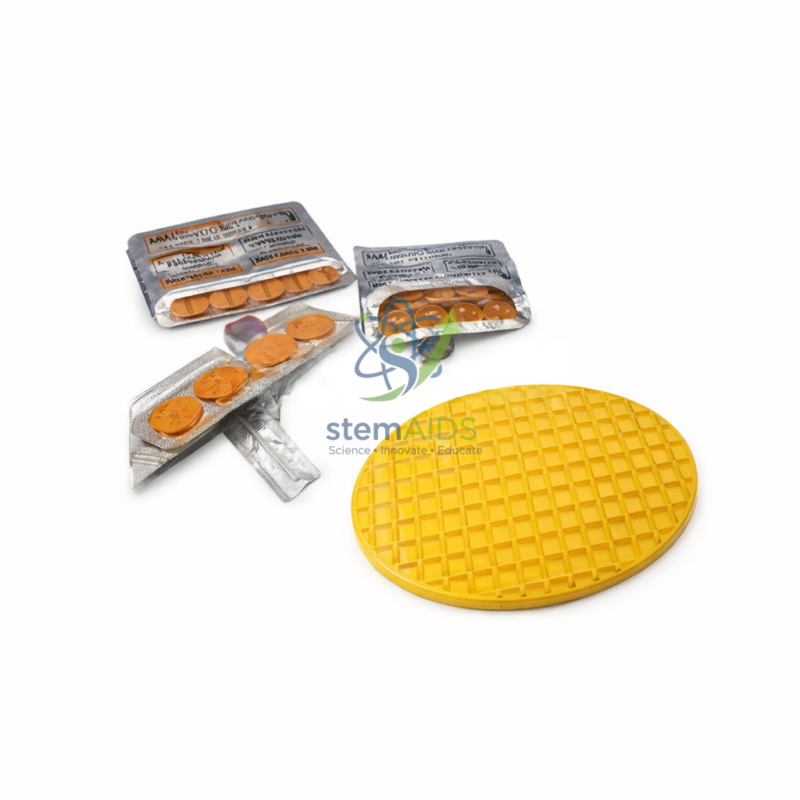
Quick Answer: The Peli Stud is a road stud: a small raised marker fixed to the road surface, fitted with reflective lenses that shine back in vehicle headlights to outline lanes, road edges and obstacles at night. The listing photograph shows metal-bodied studs with reflectors alongside a round yellow stud.
How Raised Markers Guide Drivers
Painted lines are hard to see at night and in heavy rain, when a film of water covers them. A stud stands slightly proud of the surface, so its reflectors stay above the water, and its lenses are retroreflective: they return light towards its source, so each stud appears as a bright point to the driver whose headlights reach it. A row of studs along a line traces the road far ahead.
Studs are felt as well as seen. Driving over them produces a rumble that warns a driver who is drifting across a lane or off the edge. On campuses and private roads they mark speed humps, lane dividers, the edges of pedestrian crossings and car park aisles.
The listing does not state the body material, reflector colours or fixing method. Studs are usually bonded to the road with a suitable adhesive on a clean, dry surface, and some designs add a shank set into a drilled hole. Reflector colour conventions for lane lines, edges and medians are set by the local road authority, so follow those when choosing. Flexible Road Flexi Posts are often used alongside studs on the same line.
Where Studs Are Fitted
- Lane and centre lines on campus roads and driveways.
- The edges of speed humps and pedestrian crossings.
- Car park aisles and bay entrances.
- Road-safety and physics lessons showing how reflectors return light to its source.
Specifications
| Type | Raised pavement marker with reflectors |
| Items in photograph | Metal-bodied studs with reflector lenses; a round yellow stud |
| Visibility | Retroreflective lenses shine back in headlights |
| Fixing | Adhesive bonding to the road; some designs also anchored |
| Body material and reflector colours | Confirm at enquiry |
Installation and Upkeep
- Fix studs to a clean, dry, dust-free surface, and keep traffic off them until the adhesive has set.
- Position studs where they will not be struck by sweeping machines or kerbside maintenance equipment.
- Clean the reflectors periodically, since road film dims them.
- Replace studs that are loose, cracked or missing reflectors, as a loose stud can be flicked out by a tyre.
Why Choose LabEquip
Estates departments and contractors maintaining campus roads buy these markers to outline lanes, humps and crossings. LabEquip lists them in General Lab Products, and quantities and colours can be agreed through the contact page.
Frequently Asked Questions
What is a Peli stud?
It is the name used in this listing for a raised road stud, the small reflective marker fixed to road surfaces to mark lines and edges. Such studs are also widely known as cat’s eyes or raised pavement markers.
How do the reflectors work?
The lenses are retroreflective: tiny prisms or glass beads inside them send light back in the direction it came from. A driver therefore sees the stud shine when their own headlights reach it.
What colour reflectors should be used?
Colour conventions differ between road authorities, for example to distinguish lane lines, road edges and medians. On public roads follow the local rules; on a campus, keep colours consistent so drivers learn what each one means.
How are the studs fixed?
Most are bonded to the surface with a purpose-made adhesive such as a bitumen or epoxy compound, applied to a clean, dry surface. Some designs also have a shank that sits in a drilled hole for extra grip.
Can studs be used on speed humps?
Yes, studs along the leading edge or crest of a hump make it visible at night. Place them where tyres cross the hump and fix them firmly, since humps take heavy impacts.
Can a stud demonstrate reflection in a physics lesson?
Yes. Shining a torch at a stud from different angles shows that it always returns light towards the torch, a practical example of retroreflection that students can compare with a plane mirror.
Last Updated: September 2026
You must be logged in to post a review.
Bestsellers





Reviews
There are no reviews yet.