











In Stock
Helmet with Slot Fix Face Shield
Kinetic Energy Dissipation: Features a high-impact ABS thermoplastic shell with a 6-point textile suspension and ratchet-adjustment system designed to neutralize multi-axial vertical and lateral impacts.
Optic-Grade Visor Integration: Utilizes a clear, high-density polycarbonate visor secured via precision pivot-lock hinges that snap into universal 30mm side-slots, providing a stable, hands-free barrier without compromising the helmet's structural integrity.
₹1,350.00
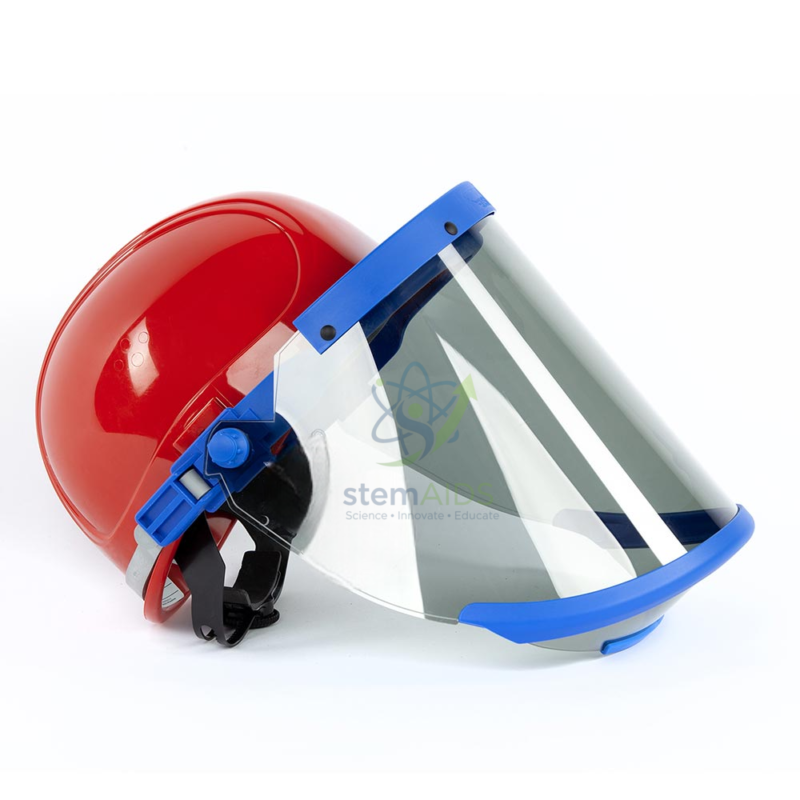
Quick Answer: The Helmet with Slot Fix Face Shield is a safety helmet with face shield attached: a clear visor held in a carrier that plugs into the helmet’s side slots, pictured as a red helmet with a blue carrier. The visor lifts clear when not needed and drops over the face for grinding, cutting and splash tasks.
Tasks Needing Face and Head Protection
- Angle grinding and cutting on construction and maintenance jobs.
- Handling and pouring chemicals in plant areas where hard hats are required.
- Chiselling, breaking out and demolition work that throws chips.
- Showing combined PPE in site-safety courses.
Visor and Hard Hat as One Unit
A headgear face shield is awkward with a hard hat, because its own headband sits where the helmet harness goes. Here the visor carrier plugs into slots on each side of the helmet, so the visor pivots from the helmet itself. It flips up over the brim while the wearer moves around and flips down over the face when the task begins.
In the photograph the visor is clear, which suits flying particles from grinding, chiselling and cutting, and splashes of liquid. A clear visor is not a welding filter, and a face shield is open at the bottom and sides, so safety spectacles or goggles are still worn underneath. The visor material is not stated in the listing; polycarbonate is common where impact is the main hazard, while some other plastics resist particular chemicals better.
For the same helmet with ear muffs added, see the combination Helmet with Slot Fix, Face Shield and Ear Muffs. Where no hard hat is needed, the Plastic Face Shield on its own headgear is lighter to wear.
Specifications
| Type | Safety helmet with slot-mounted face shield |
| Helmet in photograph | Red helmet, blue visor carrier |
| Visor | Clear, on a carrier fixed into the side slots |
| Operation | Pivots up over the brim and down over the face |
| Visor material | Confirm at enquiry |
Care & Handling
- Clean the visor with water, mild soap and a soft cloth; solvents, and dry-wiping gritty dust, scratch it.
- Replace a visor that is cracked, pitted or cloudy, since poor vision tempts people to lift it while working.
- Check that the carrier holds the visor securely in both the raised and lowered positions.
- Store with the visor raised or covered so it is not scratched against other kit.
Why Choose LabEquip
Maintenance teams, contractors and engineering colleges buy helmet-and-visor sets for jobs such as grinding on site, where two items of PPE are needed together. LabEquip lists it in General Lab Products, and visor type and quantities can be discussed on the contact page.
Frequently Asked Questions
Do I need goggles under the face shield?
Yes for most tasks. A face shield covers the face but is open below and at the sides, so particles and splashes can still reach the eyes. Wear safety spectacles or goggles underneath, especially when grinding.
Is a clear visor suitable for welding?
No. A clear visor stops particles and splashes but does not filter the intense light and ultraviolet of an arc. Welding needs a shaded filter, as on the helmet with welding shield.
How do I stop the visor fogging?
Fogging is worst in cold or humid conditions and during heavy work. Keep the visor raised between tasks, and use an anti-fog wipe or spray if it is compatible with the visor plastic.
Can the visor be replaced on its own?
Slot-mounted visors are usually held in the carrier by pegs or clips, so a scratched visor can be changed without replacing the helmet or the carrier. The replacement must match the carrier’s fixing pattern.
Is this suitable for chemical splashes?
A clear visor worn over goggles is the usual protection when pouring or mixing corrosive liquids. Chemical resistance varies with the visor plastic, so check it against the chemicals you handle.
How far should the visor come down?
When lowered it should cover the face from the brow to below the chin. If it stops short, adjust the carrier position or the helmet harness so that the chin and throat are covered.
Last Updated: September 2026
You must be logged in to post a review.
Bestsellers




Reviews
There are no reviews yet.