


In Stock
Heating magnetic stirrer MS-H280-PRO DLAB + Accessories
₹8,650.00
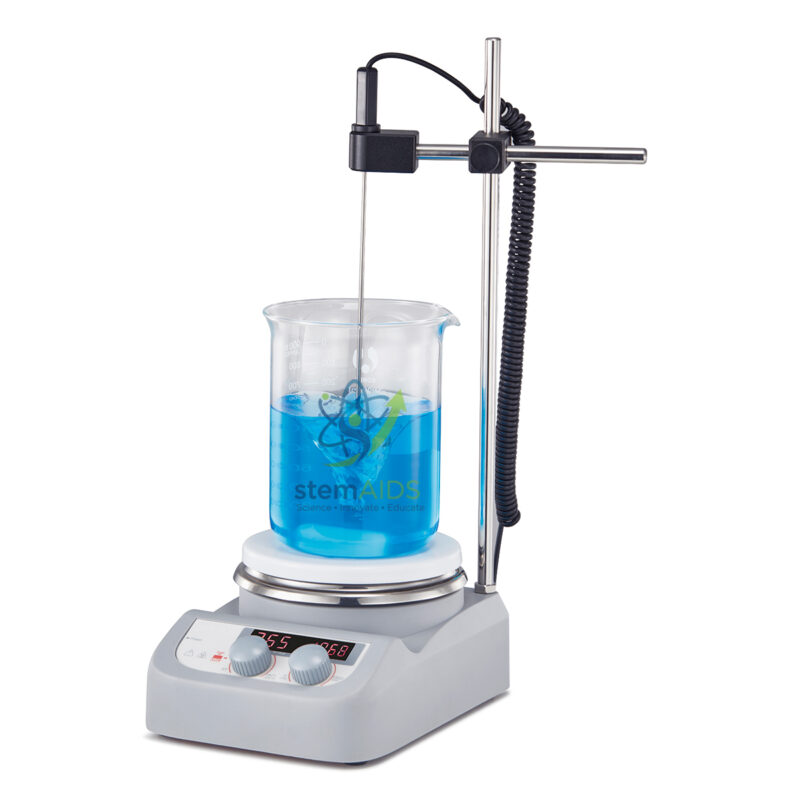
Quick Answer: Heating magnetic stirrer MS-H280-PRO DLAB + Accessories is a DLAB hotplate stirrer that heats and stirs a liquid at the same time, supplied here with accessories. The MS-H280-Pro heating magnetic stirrer is used for warm solution work and heated reactions where temperature needs to be set rather than guessed.
Plate Temperature Versus Liquid Temperature
The number that matters in most practicals is the temperature of the liquid, not of the plate beneath it. On any hotplate stirrer the plate runs hotter than the solution, and the gap grows with vessel size, glass thickness and stirring speed. DLAB’s digital hotplate stirrers of this kind can take an external temperature sensor dipped into the liquid, so the controller regulates the solution itself instead of the plate.
The 280 in DLAB’s model code refers to an upper plate temperature of about 280 °C. That is higher than most school work needs; in practice the limit is set by the glassware, the solvent and the method. Borosilicate beakers and flasks tolerate hotplate heating, whereas thick-walled bottles, volumetric glassware and plastic vessels should stay off a hot plate.
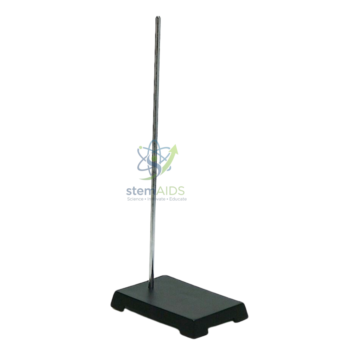
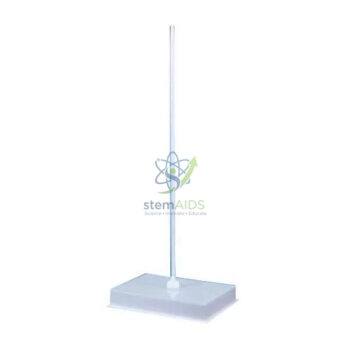
The title states that accessories are included. For a heating stirrer these commonly mean a temperature probe, a support rod to hold it and one or more stir bars, but the exact set should be confirmed when ordering so the probe and holder are not bought twice.
Heated Work Suited to This Stirrer
- Holding a solution at a set temperature for enzyme or reaction-rate practicals, with the probe in the liquid
- Dissolving solids with poor cold-water solubility, for example when making saturated solutions for crystal growing
- Warming buffers and media components to the temperature a method specifies
- Reducing the volume of an aqueous solution by stirred heating, in a fume cupboard where vapours need removing
Specifications
| Model | DLAB MS-H280-Pro |
| Function | Heating and magnetic stirring in one unit |
| Plate temperature | Model code indicates up to 280 °C |
| Temperature control | Plate control, or liquid control with an external probe |
| Suited vessels | Flat-bottomed borosilicate beakers and flasks |
| Accessories included | Confirm at enquiry |
Safe Heating Practice
- Place the probe in the liquid before switching to probe control; a probe lying on the bench reads room temperature and the plate keeps heating.
- Never heat flammable solvents on an open hot plate; use a water or oil bath inside a fume cupboard.
- After switching off, treat the plate as hot until it has cooled, because a hot top plate often looks no different from a cold one.
- Keep the mains lead away from the hot top and the probe cable clear of the plate edge.
Why Choose LabEquip
This model suits college and senior school laboratories that want set-point heating with probe feedback rather than a simple heat knob. LabEquip supplies it in its General Lab Products range; glassware such as a borosilicate conical flask completes the set-up, and quotes including the accessory set come through the contact page.
Frequently Asked Questions
What is the advantage of an external temperature probe?
The controller reads the liquid instead of the plate, so it cuts the heating as the solution reaches the set point. This limits overshoot and keeps temperature-sensitive practicals, such as enzyme work, closer to the intended value.
Can I use the stirrer without heating?
Yes. Heating and stirring are set separately on hotplate stirrers of this type, so the unit can stir a room-temperature solution with the heater left off.
Which glassware is safe on the heated plate?
Flat-bottomed borosilicate beakers and conical flasks are the usual choice. Avoid soda-lime glass, thick-walled bottles, volumetric flasks and most plastics, and never place a cold vessel on a plate that is already very hot.
Why is the solution cooler than the set plate temperature?
Heat is lost through the glass walls and from the liquid surface, and stirring spreads it through the whole volume. Without a probe, measure the liquid with a thermometer and adjust the plate setting.
Can round-bottom flasks be heated on this stirrer?
Not directly, because only a small point touches the plate. Seat the flask in a heating block, or in a water or oil bath standing on the plate, and stir with an oval bar.
What does the 280 in the model code mean?
It refers to the maximum plate temperature of about 280 °C. Most school and college methods need far less, and the working limit is set by the glassware and the chemicals being heated.
Last Updated: September 2026
You must be logged in to post a review.
Bestsellers




Reviews
There are no reviews yet.