
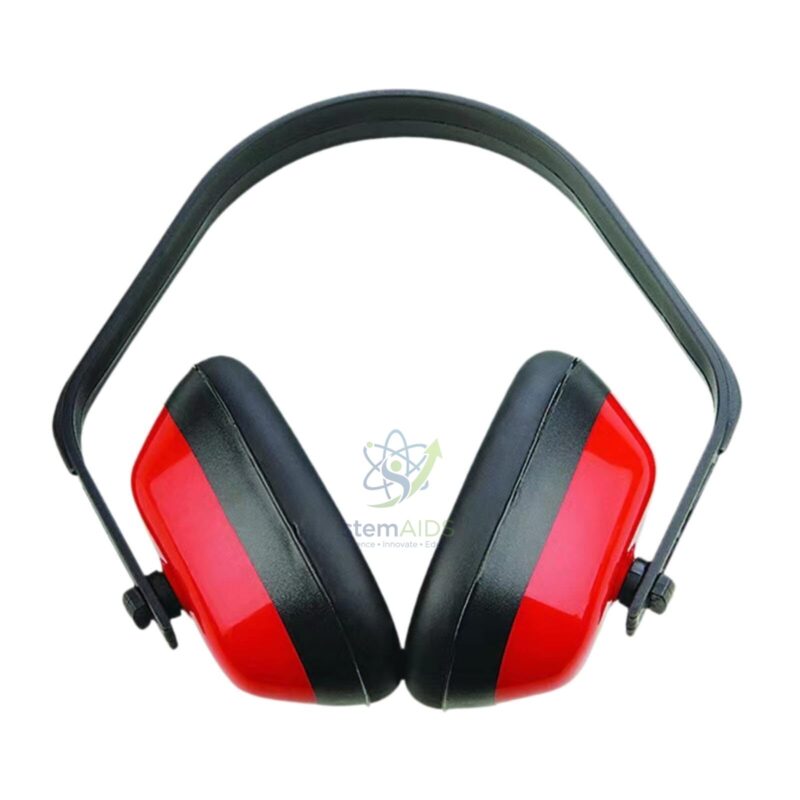
Quick Answer: These are over-ear earmuffs for hearing protection: two padded cups, red in the photo, joined by an adjustable headband, that seal around the ears to cut the noise reaching them. They are worn in workshops, engineering labs and plant rooms where machines run loudly.
How Over-Ear Protectors Reduce Noise
Each cup is a hard shell lined with sound-absorbing foam, and a soft cushion presses against the head around the ear. Sound has to pass through the shell or leak past the cushion to reach the ear, and both routes lose much of its energy on the way. The tighter and more complete the cushion seal, the more noise is blocked, which is why fit matters as much as the protector itself.
Muffs are quick to put on and take off, which suits people who move between noisy and quiet areas, such as a technician walking from a machine workshop to an office. One size fits most heads, and supervisors can see from across a room that they are being worn. Muffs and plugs can also be combined for very loud tasks.
Protection is rated by the noise reduction figure printed on hearing protectors. Ask LabEquip for the attenuation rating of this model so it can be compared with the noise levels measured in your workshop.
Where They Are Worn
- Engineering and TVET workshops with lathes, grinders, saws or compressors
- Plant rooms housing generators, pumps or air handling units
- Lab areas with loud equipment such as ultrasonic cleaners, mills or vacuum pumps
- School technology rooms during power-tool sessions
Specifications
| Product | Earmuffs (over-ear hearing protectors) |
| As pictured | Red cups with a black adjustable headband |
| Fit | Cushioned cups sealing around each ear |
| Used in | Workshops, engineering and TVET labs, plant rooms |
| Attenuation rating | Confirm at enquiry |
Fit, Hygiene & Care
- Check cushions for cracks or hardening and replace them, or the whole muff, once they no longer seal
- Wipe cushions with a damp cloth or hygiene wipe, especially when the set is shared
- Do not stretch the headband open for storage, as it loses its clamping force
- Store away from heat, sunlight and solvents, which harden plastic and foam
Why Choose LabEquip
Workshops and training centres buy hearing protectors in class sets so every learner at a machine is covered. LabEquip’s general lab products range pairs these earmuffs with earplugs with cord and helmets with slot-fix ear muffs for sites that also need head protection; quantities can be arranged through the contact page.
Frequently Asked Questions
Should I choose earmuffs or earplugs?
Muffs are easy to fit correctly and quick to remove, so they suit intermittent noise and shared use. Plugs are lighter, fit under other equipment and are cooler in hot workshops. Very loud tasks may need both together.
Do glasses affect how well they work?
Yes. Spectacle arms and thick hair under the cushions break the seal and let noise in. Thin-armed safety glasses reduce the effect; check that the cushions sit flat against the head.
Can the muffs be shared between students?
They can, provided the cushions are wiped clean between users. Replaceable hygiene covers are another option for classes that share a set.
How do I know if they fit properly?
The cushions should surround each ear completely without pressing on it, and the headband should hold them firmly. With a machine running, the noise should drop noticeably when they are on.
How long do the cushions last?
That depends on use and storage. Replace them when they become hard, cracked or flattened, since they then stop sealing. Heavy daily use wears them faster than occasional use.
When must hearing protection be worn?
Follow your workplace noise assessment and local rules. As a rough sign, if you have to raise your voice to talk to someone an arm’s length away, the noise is likely loud enough to need protection.
Last Updated: October 2026




Reviews
There are no reviews yet.