
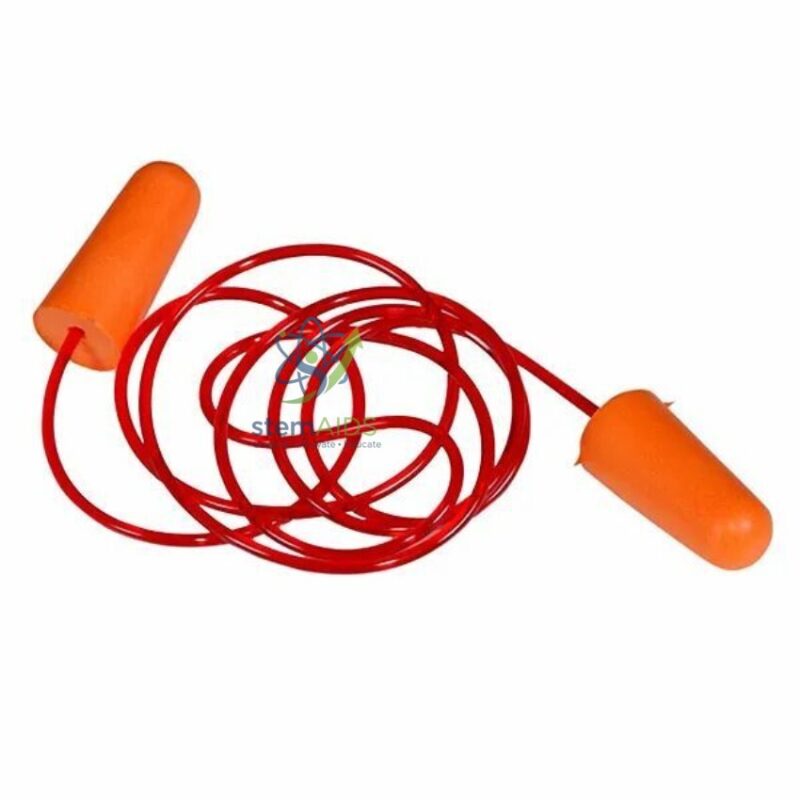
Quick Answer: Earplugs with cord are a pair of foam hearing-protection plugs, orange in the photo, joined by a flexible cord. Each plug is rolled thin, inserted into the ear canal and expands to seal it; the cord keeps the pair together and lets them hang around the neck when not in use.
Fitting Foam Plugs Correctly
Foam plugs only protect when they are inserted deeply enough. Roll the plug between clean fingers into a thin, tight cylinder. Reach over the head with the other hand and pull the top of the ear up and back to straighten the canal, then slide the plug in and hold it with a fingertip while the foam expands. A well-fitted plug sits mostly inside the canal, with only the end visible.
The cord solves two common problems. Loose foam plugs are easily dropped and lost, and once one touches a workshop floor it should not go back into an ear. With a cord, a worker can let the plugs hang around the neck between noisy tasks and refit them without hunting in pockets. Corded pairs are also easy for supervisors to spot.
In one situation the cord itself is a hazard: near rotating machinery such as lathes, pillar drills or mixers, a hanging cord can be caught. In those areas, tuck the cord inside clothing or use uncorded plugs or earmuffs.
Hygiene & Replacement
- Fit them with clean hands, since dirt pressed into the ear canal can cause irritation
- Discard plugs that are dirty, torn or no longer expand slowly after rolling
- Never share plugs between people
- Keep them in a clean case or bag rather than loose in a pocket
Specifications
| Product | Earplugs with cord (one pair) |
| As pictured | Orange tapered foam plugs on a red cord |
| Fitting | Rolled, inserted and allowed to expand in the ear canal |
| Typical use | Workshops, engineering labs, plant rooms |
| Attenuation rating and pack quantity | Confirm at enquiry |
Applications
- Machine shop and fabrication training in TVET institutes
- Technicians working near compressors, pumps and generators
- Lab tasks with loud equipment such as sonicators and grinders
- Visitors touring noisy production or plant areas
Why Choose LabEquip
Training workshops and maintenance teams buy corded plugs in bulk so they can be issued daily to learners and visitors. LabEquip also supplies reusable ear plugs in its general lab products range for staff who prefer a washable option, and bulk quantities can be arranged through the contact page.
Frequently Asked Questions
How long can foam earplugs be reused?
Foam plugs are generally intended for short-term use. Replace them when they are dirty, damaged or slow to expand, and always after they have fallen on the floor.
Why is the cord useful?
It keeps the pair together, lets the plugs hang around the neck between tasks and makes them easy to see. Fewer plugs are lost, and fewer are replaced with dirty ones picked up from a bench.
Are earplugs with cord safe near machines?
Take care near rotating machinery, where a loose cord could be caught. Tuck the cord into clothing, or choose uncorded plugs or earmuffs for work at lathes and drills.
How do I know the plug is inserted correctly?
A correctly fitted plug sits mostly inside the canal, and your own voice sounds louder and muffled. If much of the plug sticks out, remove it, roll it again and reinsert it while pulling the ear up and back.
Can plugs be worn under earmuffs?
Yes. For very loud tasks, wearing plugs under earmuffs adds protection, although the combined reduction is less than the two ratings added together.
Are foam plugs suitable for younger students in school workshops?
Plugs must fit the user’s ear canal, and smaller canals may need smaller plugs. Earmuffs that adjust to the head are often easier for younger students to fit correctly.
Last Updated: October 2026




Reviews
There are no reviews yet.