






In Stock
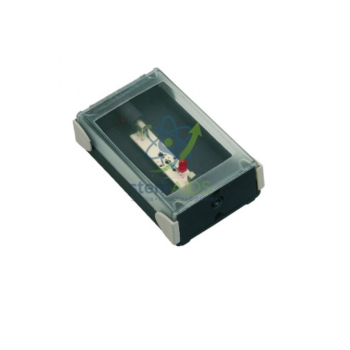
Convection Conduction Circuit
Enceinte convection conduction, Multi-Port Thermometric Access Supports the Synthesis of quantitative datasets for calculating thermal conductivity coefficients and convective heat transfer variables.
Ruggedized Integrated Heating Element Enhances student Application of the First Law of Thermodynamics within a controlled, repeatable experimental environment, ensuring instructional reliability.
₹3,450.00
Quick Answer: The Convection Conduction Circuit is a heat-transfer teaching apparatus that lets students compare conduction, the passage of heat through a solid, with convection, the carrying of heat by a moving fluid, in one set-up.
Comparing Two Ways Heat Moves
Conduction and convection both move heat from hot to cold, but by different mechanisms. In conduction, vibrating particles pass energy to their neighbours, and in metals free electrons carry it quickly; the material itself stays in place. In convection, part of a fluid is heated, expands, becomes less dense and rises, taking its energy with it and setting up a circulating current. An apparatus that places the two side by side makes the difference in speed and pattern obvious.
The word ‘circuit’ in the title suggests a closed loop, as in the classic convection loop: a rectangular tube filled with water that circulates when one corner is heated. The listing does not describe the construction, so confirm whether this convection conduction circuit is a loop of that kind, how conduction is shown and which heat source is needed.
In earth science, the same comparison explains how heat leaves the planet. It crosses the rigid outer layer, the lithosphere, mainly by conduction, while the mantle beneath moves it by slow convection. That makes the apparatus useful in geography as well as in physics.
Experiments and Demonstrations
- Showing a convection current with a drop of dye in circulating water
- Comparing how quickly heat arrives by conduction and by convection
- Discussing why fluids transfer heat mainly by convection and solids by conduction
- Explaining heat flow through Earth’s lithosphere and mantle
Specifications
| Type | Heat-transfer apparatus comparing convection and conduction |
| Conduction | Energy passed through a solid without the material moving |
| Convection | Energy carried by a circulating fluid |
| Subjects | Physics (thermal energy), geography (Earth’s heat flow) |
| Construction and heat source | Confirm at enquiry |
Safety and Care
- Heat gently, and never heat a completely sealed vessel of liquid, which can burst.
- Let all parts cool before handling or emptying, and use heat-resistant gloves where needed.
- Clamp any glass parts securely and keep them away from the bench edge.
- Rinse out dye after use so it does not stain the apparatus.
Why Choose LabEquip
Physics teachers covering thermal energy and geography teachers explaining Earth’s interior can share one apparatus. LabEquip lists it in General Lab Products with the Convection Cell Model, which focuses on convection cells alone, and construction details can be checked through the contact page.
Frequently Asked Questions
Why are metals good conductors of heat?
Metals have free electrons that move through the structure and carry energy quickly from hot to cold regions, as well as vibrations passed between atoms. Non-metals rely on vibrations alone, so they conduct heat much more slowly.
Why does convection not happen in solids?
Convection needs the heated material itself to move, and the particles in a solid are held in fixed positions. Solids pass heat on by conduction, and by radiation from their surfaces.
How does a convection loop show a current?
When one side of a closed loop of water is heated, the warm water rises on that side and cooler water flows in to replace it, so the water circulates around the loop. A drop of dye makes the direction of flow visible.
Which moves heat faster in a demonstration, conduction or convection?
In liquids and gases, convection usually spreads heat much faster than conduction, because water and air are poor conductors. In a metal bar, conduction is quick. The comparison depends on the materials used.
How does this relate to heat flow in the Earth?
Heat crosses the rigid lithosphere mainly by slow conduction, while the hotter mantle below transfers heat by slow convection. The contrast helps explain why plates behave as rigid slabs riding on a slowly moving mantle.
How is insulation related to conduction and convection?
Good insulators such as foam, wool or trapped air are poor conductors, and they also stop convection by preventing air from circulating. Double glazing and loft insulation work on these principles.
Last Updated: September 2026
You must be logged in to post a review.
Bestsellers




Reviews
There are no reviews yet.