


In Stock
Compost Pile
Stock compost features a cured, pathogen-screened carbon-to-nitrogen ratio optimized for microbial inoculation and consistent plant-available nutrient release in controlled laboratory assays.
Industrial-Grade 5L Hermetic Reservoir Housed in high-density, moisture-sealed packaging that maintains structural porosity and prevents anaerobic drift or external environmental contamination during extended institutional storage cycles.
₹1,204.00
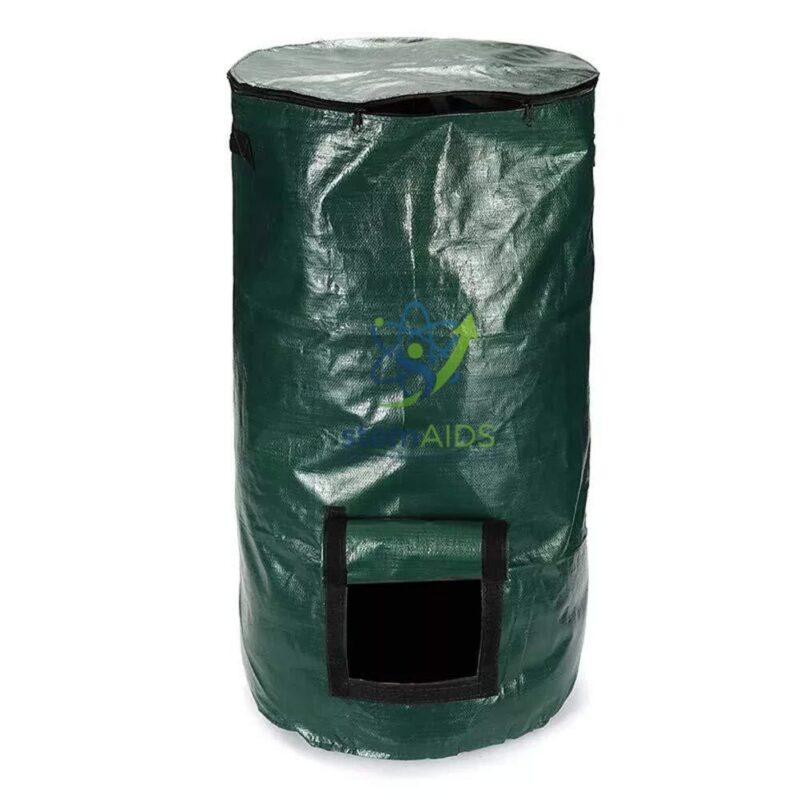
Quick Answer: The Compost Pile is a garden composter, pictured as a tall green composting bag with a flap near the base for taking out finished compost. Schools use a composting bag like this to recycle garden and kitchen scraps and to study decomposition, soil organisms and nutrient cycling first hand.
How Composting Works
Composting is controlled decomposition. Bacteria and fungi break down plant material, followed by larger decomposers such as woodlice, worms and springtails. They work fastest when the heap has a balance of nitrogen-rich green material, such as grass clippings and vegetable scraps, and carbon-rich brown material, such as dry leaves, straw and shredded paper, with enough moisture and air.
An enclosed bag keeps the material together, holds warmth and moisture, and stops scraps from blowing around a school garden. Material goes in at the top, and finished, crumbly compost comes out through the flap at the bottom, as shown in the listing photo, while newer material continues to rot above it. The capacity and fabric of the bag are not given in the title.
A compost heap makes a long-running class investigation. Students can record the temperature in the middle with a soil thermometer, track pH and moisture, and watch how quickly different materials disappear. The Compost 3 Stages of Decomposition set shows the same process in prepared stages for lessons in any season.
Learning with a Compost Heap
- Recording temperature changes as decomposition warms the heap
- Comparing how fast leaves, fruit peel, paper and cardboard break down
- Collecting decomposers from compost for identification
- Using finished compost in germination and plant-growth experiments
- School waste-reduction and sustainability projects
Specifications
| Type | Garden composter |
| Pictured | Tall green composting bag with lower access flap |
| Loading | Open top for adding material |
| Emptying | Finished compost taken out through the lower flap |
| Capacity, dimensions and material | Confirm at enquiry |
Care & Handling
- Keep a mix of green and brown materials, and add dry leaves or paper if the contents become wet and smelly.
- Leave out meat, dairy, oily food and pet waste, which attract pests and can carry harmful organisms.
- Stir the contents occasionally to let air in and speed up decomposition.
- Wear gloves when handling compost and wash hands afterwards.
Why Choose LabEquip
Primary and secondary schools, eco clubs and agriculture training centres use a composter to link classroom ecology to a real outdoor process. LabEquip lists this Compost Pile in the General Lab Products range.
Frequently Asked Questions
How long does compost take to be ready?
Anything from a few months to a year, depending on the materials, the mix, moisture, temperature and how often the contents are turned. Compost is ready when it is dark, crumbly and smells earthy, with few recognisable scraps left.
Why does a compost heap get warm?
Microbes release heat as they break down organic matter. In a well-mixed, moist heap of sufficient size, the centre can become noticeably warm, which speeds decomposition and can kill some weed seeds.
Why does compost sometimes smell bad?
A strong sour or rotten smell usually means the contents are too wet and short of air, so anaerobic microbes take over. Mixing in dry brown material and turning the contents normally fixes it.
What should not go into a school composter?
Leave out meat, fish, dairy, oily food, pet waste, diseased plants and glossy or plastic-coated paper. These attract pests, spread disease or do not break down properly.
Can worms be added to speed things up?
Earthworms arrive naturally if the composter stands on soil. Adding composting worms helps break down kitchen scraps, but they need moist conditions and cannot survive in the hottest part of an active heap.
How can students measure decomposition?
Weigh a set amount of a material, such as leaves in a mesh bag, bury it in the compost and check it every few weeks. Recording the loss over time gives a rate that can be compared between materials.
Last Updated: September 2026
You must be logged in to post a review.
Bestsellers




Reviews
There are no reviews yet.