
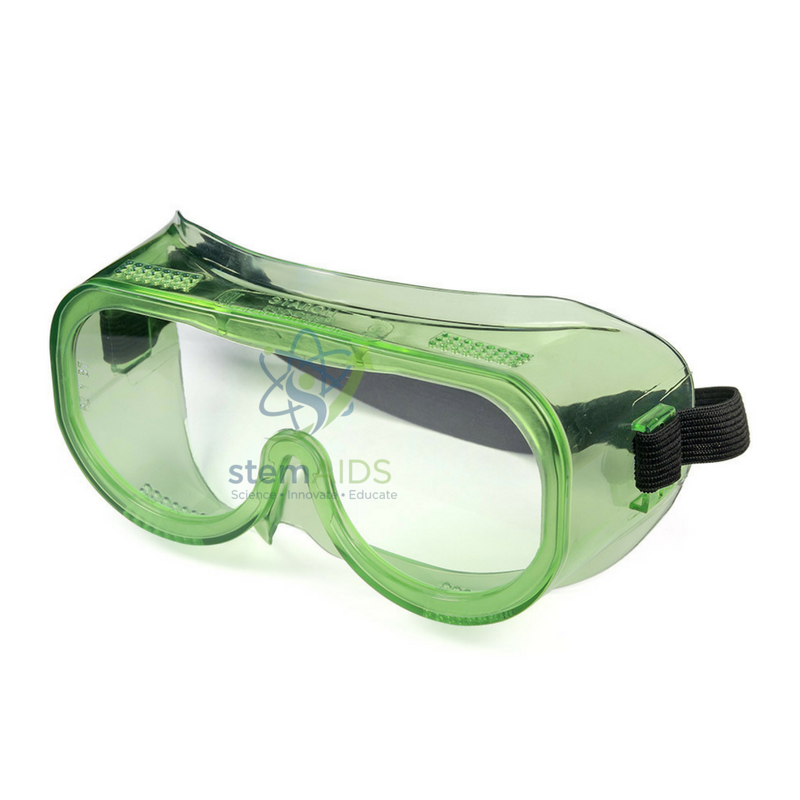
Quick Answer: The Chemical/Impact/Dust Protection Goggles are chemical splash goggles with a wide, clear one-piece lens in a soft frame that seals against the face and an elastic strap, worn to protect the eyes from liquid splashes, flying particles and dust in laboratories and workshops.
Three Hazards, One Sealed Goggle
Spectacle-style safety glasses leave gaps around the lenses. Goggles of this type close them: a flexible frame, green-tinted clear plastic in the listing photograph, presses against the face around both eyes, and a single wide lens covers the whole area in front of them. That seal is what suits the goggle to the three hazards in its name: liquids that could run or splash in, particles thrown at speed, and fine dust that drifts.
For chemical work the ventilation matters. Goggles with direct vents, open holes in the frame, let liquid in and are meant for impact only; chemical splash goggles use indirect vents, covered ports that let air circulate while blocking liquid, or have no vents at all. The listing does not state which design this is, so look at the vents before relying on the goggles for corrosive liquids.
The wide lens gives good side vision and often leaves room for spectacle frames underneath, one reason goggles of this shape are common in school chemistry labs. Where vapours and gases rather than splashes are the concern, the red rubber gas tight goggles are the unvented alternative.
Typical Tasks
- Pouring and diluting acids and alkalis in school and college chemistry.
- Titrations and other bench work where splashes are possible.
- Grinding, sanding and sweeping in workshops and soil labs, where dust and particles fly.
- Preparing solutions in pharmacy and microbiology preparation rooms.
Specifications
| Type | Sealed safety goggles with a one-piece lens |
| Frame | Flexible plastic, green-tinted in the listing photograph |
| Lens | Clear, wide single lens |
| Protects against | Liquid splashes, flying particles, dust |
| Retention | Elastic headband |
| Ventilation type and lens material | Confirm at enquiry |
Care & Handling
- Pull the strap evenly so the frame seals all round without pressing on the bridge of the nose.
- After a splash, rinse the outside of the goggles with water before taking them off, so the chemical is not carried to your hands or face.
- Wash with mild soap and water and let them dry in air; solvents and paper towels scratch and cloud the lens.
- Store away from sunlight, which stiffens the soft frame over time.
Why Choose LabEquip
School and college chemistry departments, pharmacy and microbiology preparation rooms and workshops buy sealed goggles like these as their main eye protection for splash and dust tasks. LabEquip lists them in General Lab Products, a class quantity can be arranged through the contact page, and a wall-mounted eye wash near the chemical benches completes the set-up.
Frequently Asked Questions
What is the difference between safety glasses and these goggles?
Safety glasses guard mainly against objects from the front and sides but leave gaps. These goggles seal against the face all round, so they also keep out liquid splashes and dust, which is why goggles are required for pouring corrosive chemicals.
Are these goggles suitable for acids?
They are designed for splash protection, provided the ventilation is indirect or absent. Look at the vents: open holes let liquid through. If acid does splash onto the goggles, rinse them with water before taking them off.
Why do goggles fog up, and how can it be prevented?
Fogging happens when warm, moist air from the face condenses on the cooler lens. Indirect vents reduce it, as does an anti-fog wipe or spray on the inside of the lens. Short breaks away from the bench also help clear it.
Can I wear these over my prescription glasses?
Wide goggles like these often fit over spectacle frames, but it depends on the size of the frame. Try them on with your glasses and make sure the seal still sits flat against the face and the goggles do not push the glasses into your nose.
What protection do they give against dust?
The sealed frame keeps airborne dust away from the eyes during grinding, sanding or handling powders. The goggles protect only the eyes, so a dust mask or respirator is still needed if the dust should not be breathed in.
How often should the goggles be replaced?
Replace them when the lens is scratched or cloudy enough to affect vision, when the frame has hardened or cracked and no longer seals, or when the strap has lost its stretch. Goggles that have been hit hard should also be replaced.
Last Updated: September 2026




Reviews
There are no reviews yet.